Employee RelationsJun 9, 2026 02:44by AI SoloHR Team4 min read
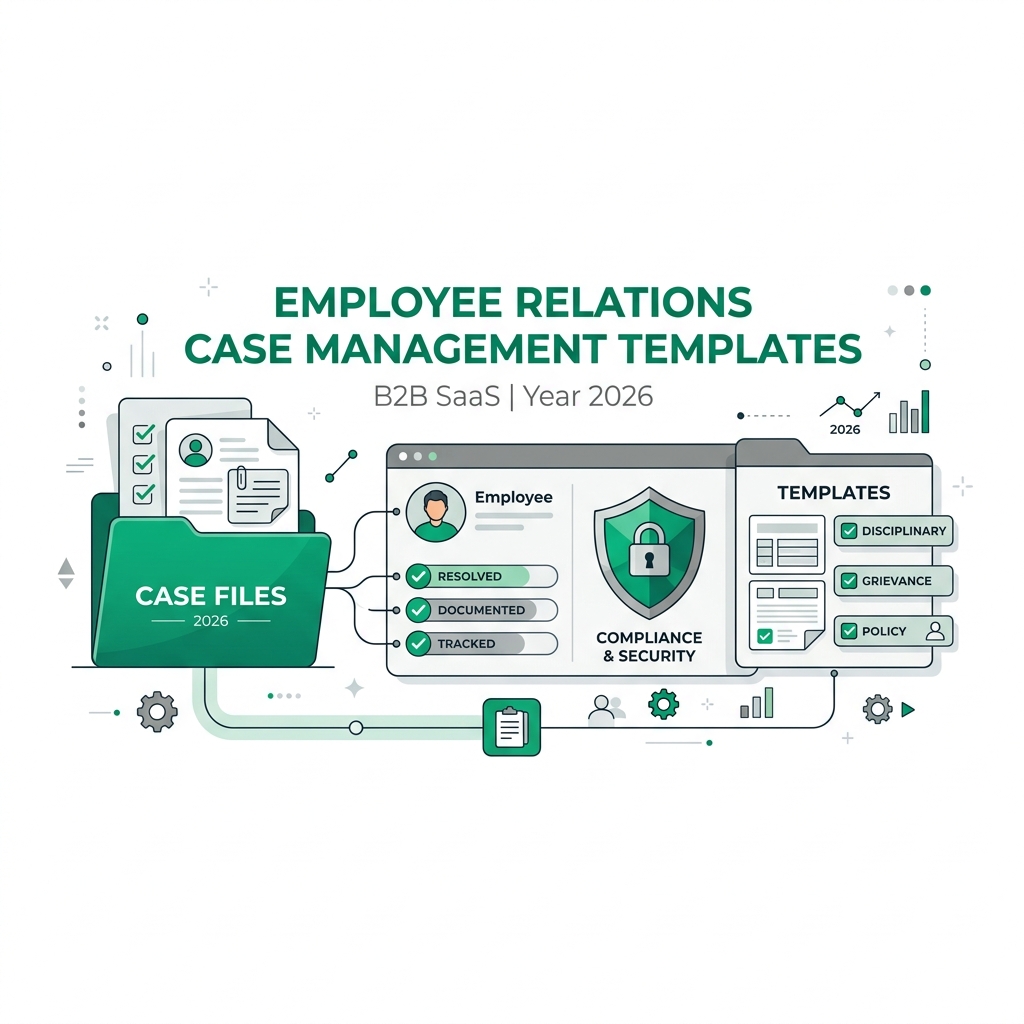
Free Employee Relations Case Management Template & Intake Form (2026)
For U.S. employers and small-business HR teams.
#employee relations tracking#hr case management template#employee relations tracker#hr intake form
Fact-Checked & Regulatory AuditVERIFIED E-E-A-T
Verified by AI SoloHR Compliance & Editorial Team (U.S. Employment Law & Regulatory Compliance Research Group)
Last Audit: Oct 22, 2026 15:44
Free Employee Relations Case Management Template & Intake Form (2026)
Click to expand
Workplace investigations, harassment complaints, and performance disputes are high-risk events for any human resource department. When an employee raises a formal complaint, HR must act quickly to capture factual data, record meeting notes, and establish a verifiable timeline.
Relying on disorganized notebook scribbles or scattered email threads exposes the organization to massive legal liability.
To help lean HR teams build an organized, legally defensible record, we at AI SoloHR have developed a comprehensive
Sources and review notes
This article is written for U.S. small-business HR teams in 2026 and should be checked against your own policy, state requirements, and counsel guidance before use in a contested employment decision. AI SoloHR provides workflow structure, reviewed drafting support, and educational resources; it does not provide legal advice or make final employment decisions.
Statutory Sources & Regulatory Citations
This compliance document references official regulatory guidance from federal employment enforcement agencies:
and intake protocol designed for 2026 compliance standards.
1. The Free Employee Relations Case Management Template Framework
Click to expand
A solid employee relations program begins with structured, consistent documentation. Every complaint, witness statement, and corrective action must follow the same intake and tracking format.
Structuring Your Employee Relations Case Records
To stand up to EEOC scrutiny or a potential lawsuit, a case file should capture the facts chronologically. Your case tracking sheet should isolate key data points immediately, including the complaint date, the primary issue category (e.g. discrimination, policy violation, or wage dispute), the parties involved, and the assigned case investigator.
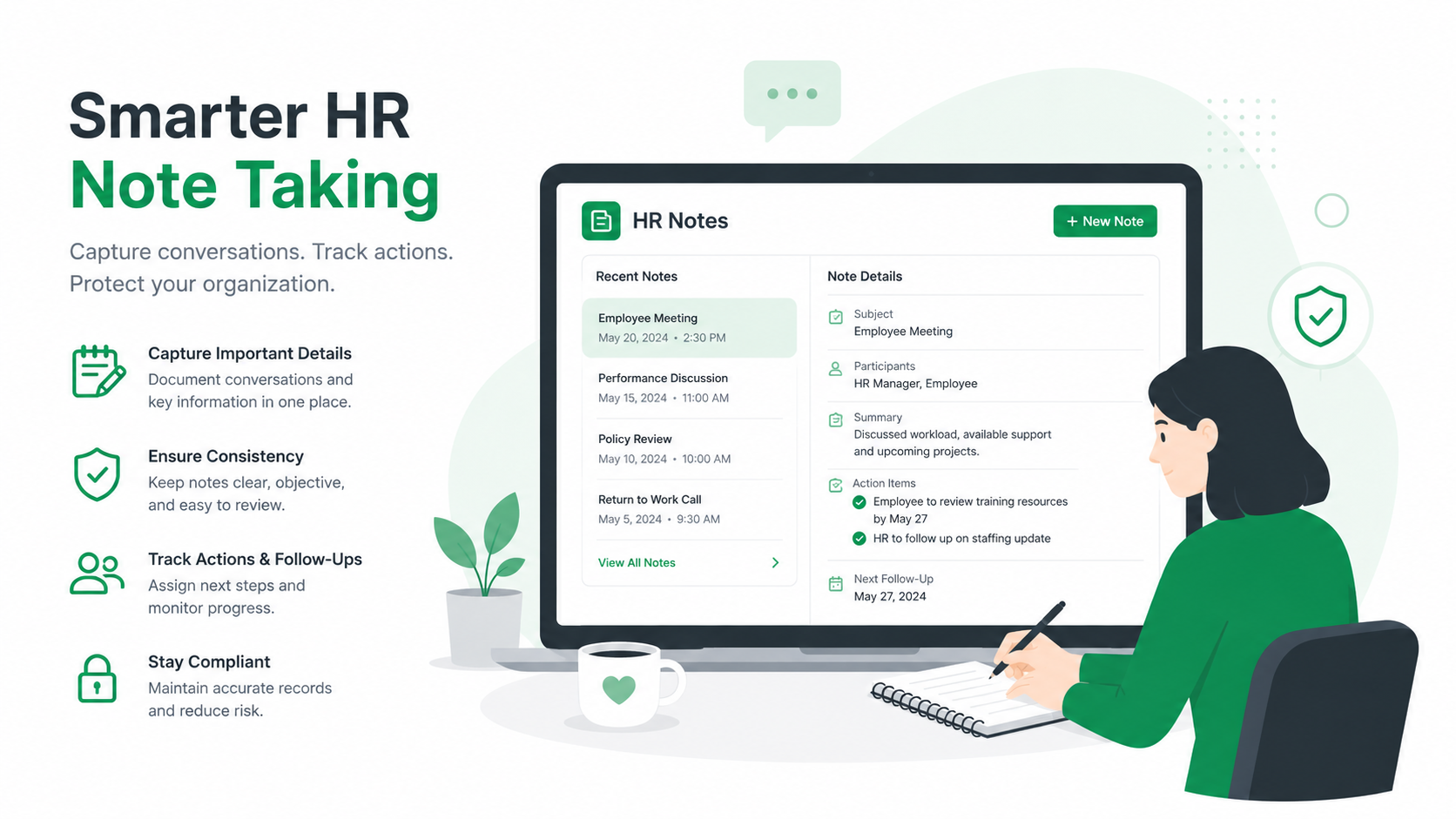
Furthermore, you must maintain a clear, unalterable log of events. Every phone call, interview, and document review must be recorded with the date, the author, and factual description of what occurred, leaving personal opinions entirely out of the record.
Designing the Standard Workplace Investigation Intake Form
An investigation can fail before it starts if the initial facts are logged poorly. Every formal incident should begin with a standardized hr intake form. This form must document the location, date, and specific description of the event, as well as a list of potential witnesses and any supporting physical evidence (such as emails or chat logs).
By requiring employees or supervisors to fill out a uniform intake sheet, HR ensures that crucial initial details are preserved while memories are fresh, reducing the likelihood of changing stories later in the investigation.
2. Transitioning to Digital Employee Relations Tracking
Click to expand
While a free Word or Excel template is an excellent starting point for very small teams, manual templates present severe administrative risks as your company scales.
The Defensibility Risks of Manual Spreadsheet Files
The primary problem with tracking employee relations in spreadsheet files is the lack of strict security and audit control. If a case manager accidentally overwrites an interview note or changes an investigation date, there is no system log showing who made the change or when.
In court, if an employee claims that you fabricated or altered notes after they filed a lawsuit, presenting a spreadsheet that has no built-in timestamp verification makes it difficult to prove your good-faith compliance. Additionally, spreadsheets are prone to data leaks, as separating confidential medical information from general HR folders is difficult.
Why Automated Case Logging Outpaces Handheld Logs
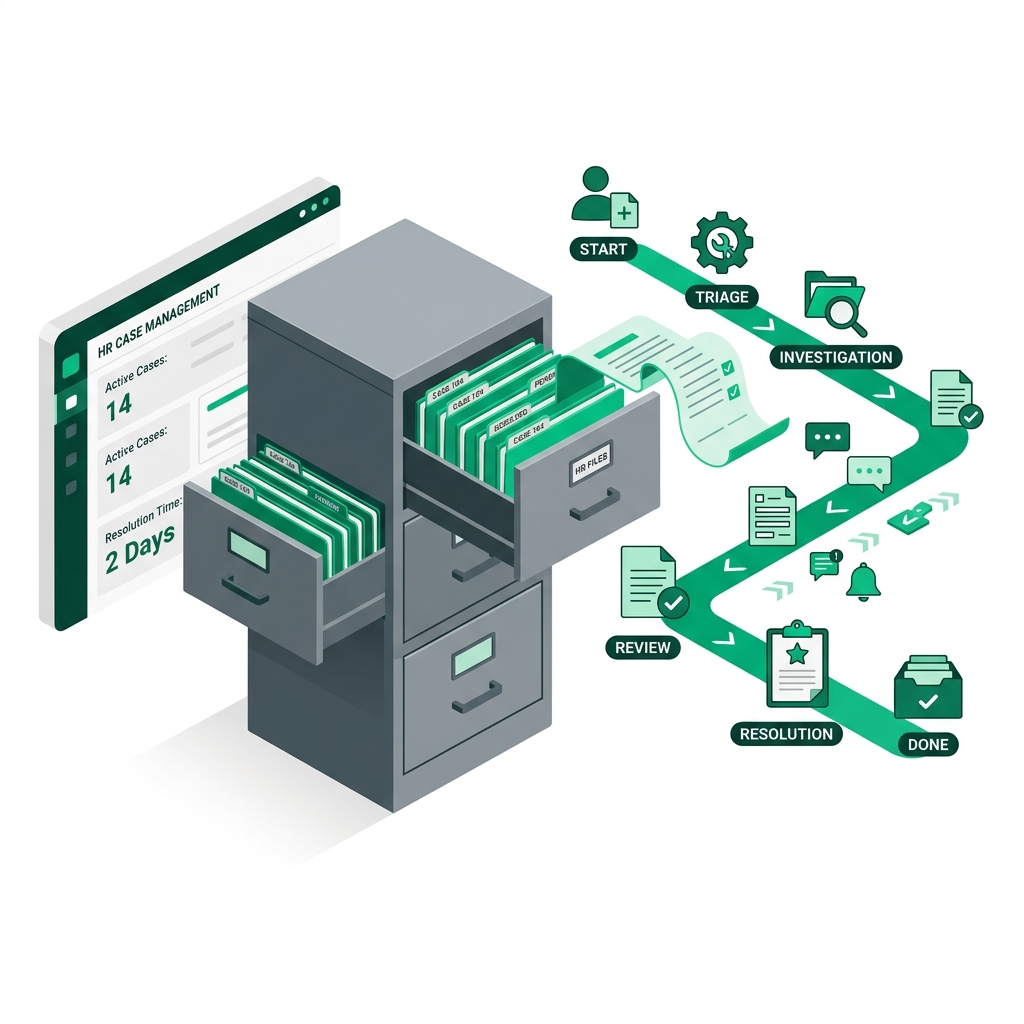
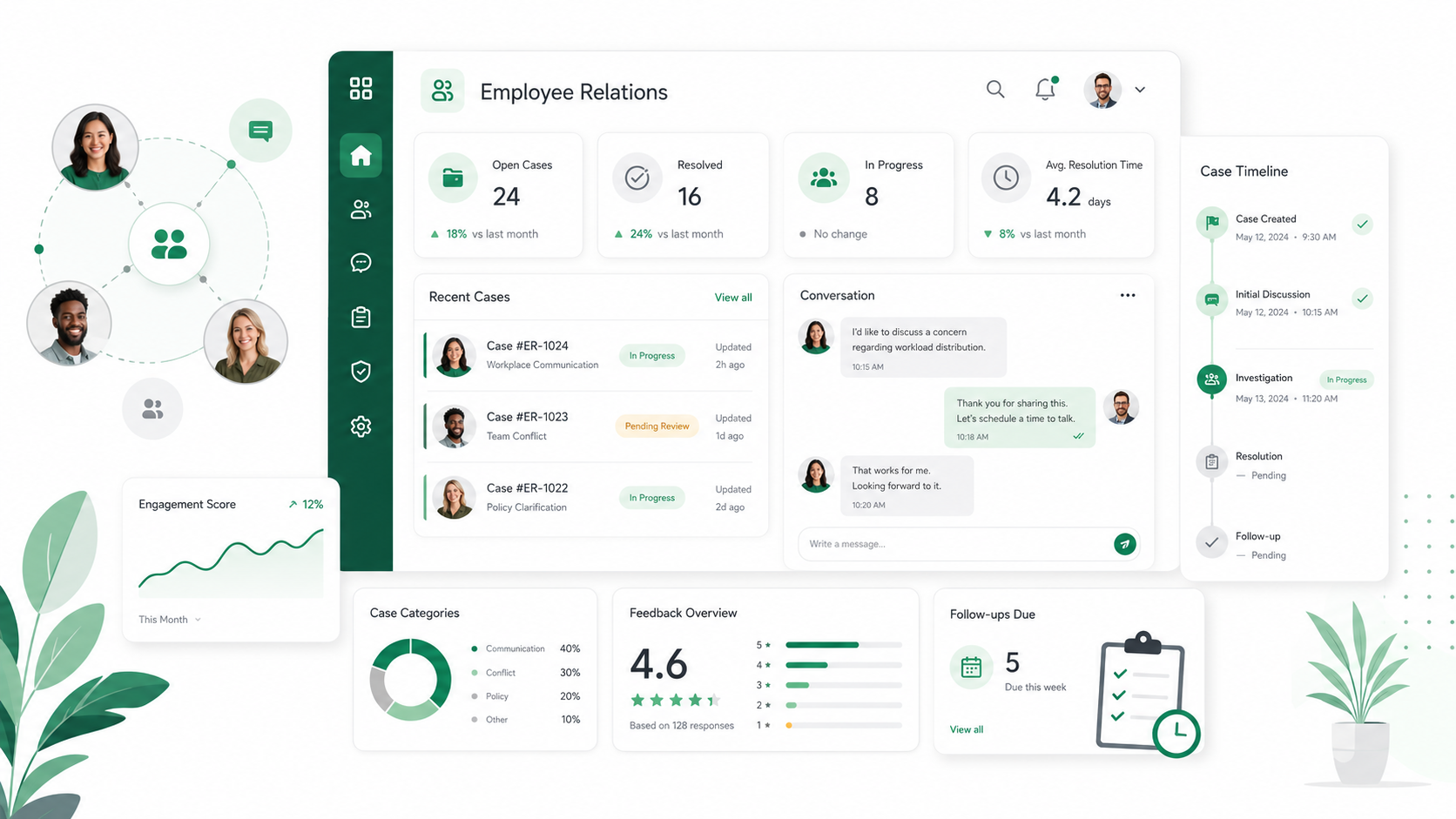
Upgrading to an automated employee relations tracking system eliminates these digital safety risks. AI SoloHR compiles intake forms, investigator notes, uploaded files, and email communication into a single, encrypted case folder.
The system automatically timestamps every entry, creating an unalterable audit log that serves as a powerful legal defense. By restricting access based on user roles, we ensure that sensitive workplace investigation files remain visible only to authorized HR managers, shielding your organization from compliance audits and costly legal actions.
Frequently Asked Questions
What should be included in an employee relations case file?
An employee relations case file should contain the signed intake form, witness interview summaries, copies of all relevant communications (such as emails or text messages), physical evidence logs, the final investigation report, and documentation of any corrective action taken.
How long should employee relations records be retained?
Under federal guidelines, general personnel files must be retained for at least one year after termination. However, we recommend storing formal investigation records, harassment complaints, and disciplinary action logs for at least three to seven years to protect against late-filing discrimination claims.
Legal Disclaimer: The information provided on this website does not, and is not intended to, constitute legal advice; instead, all information, content, and materials available on this site are for general informational purposes only. Information on this website may not constitute the most up-to-date legal or other information.