Termination compliance audit checklist
A comprehensive risk-assessment audit checklist to review compliance boundaries, documentation sufficiency, and retaliation risks before executing a separation.
Built for U.S. employers and small-business HR teams.
Key takeaways
- Separation audit
- Documentation review
- Retaliation flags
- Comparator check
Auditing separation risks
Before executing an involuntary termination, HR must perform a critical audit of the case file. This ensures all company policies were followed, documentation is defensible, and potential legal risks are identified.
The final line of defense
A termination audit is HR's final check to confirm that the dismissal decision is compliant, documented, and free from retaliation or discrimination risks.
Understanding whistleblower exposure
Verify if the employee has raised complaints about safety, wage theft, or harassment. Separations following whistleblower actions require high levels of documentation.
Proximity to protected status
Analyze the time window between the employee's request for protected leave (e.g., FMLA) and the termination decision to prevent retaliation claims.
How to Structure the Risk Evaluation
Structuring the termination review helps HR identify and mitigate legal exposure before the separation meeting takes place.
Protected category timing audit
Check the timeline. If the termination occurs shortly after a protected event, ensure the documentation supporting dismissal is exceptionally strong.
Consistent comparator analysis
Confirm that the rule violation or performance issue has resulted in termination for other employees in the past. Inconsistent discipline is a major risk.
Reviewing historical document integrity
Confirm that performance warnings, performance improvement plans, and witness statements are signed, dated, and stored securely.
Audit checklist fields
Check off these compliance requirements to secure the decision.
Core verification gates
Complete these documentation checks before scheduling the separation meeting.
Evidence validation protocols
Verify that physical evidence, timesheets, or system logs supporting the termination are authenticated and cannot be easily disputed.
Manager bias checks
Review the manager's notes and comments to ensure the decision is based on objective metrics rather than personal friction.
Post-Audit Action and Risk Mitigation
Depending on the audit results, HR must choose the safest path forward to execute the separation or gather more facts.
Proceeding with standard separation
If the audit shows low risk and complete documentation, prepare the final paycheck, termination letter, and COBRA information to proceed.
Drafting severance and release offers
If the case has moderate risk (e.g., close timing to a leave request), consider offering severance in exchange for a signed release of claims.
Deferring termination for review
If the audit reveals missing evidence or inconsistent discipline, defer the separation. Keep the employee active while you gather facts or complete warnings.
Download Termination Compliance Audit Checklist
Download our free termination compliance audit checklist (Excel format) to assess separation risks, whistleblower flags, proximity to protected leave, and documentation sufficiency.
| Audit Check | Whistleblower Flags | Leave/Accommodation Window | Status | Action |
|---|---|---|---|---|
How to use a template without overrelying on it
A template helps most when you need a repeatable starting structure, but it is still only one part of the workflow. The real work usually includes follow-up tasks, status changes, supporting documents, and communication that should stay connected to the same issue over time.
- Use the template to create consistency across repeated HR work
- Add dates, owners, and supporting notes so the template stays actionable
- Move into a structured case workflow once deadlines, files, or multiple follow-ups start stacking up
What this template page is and is not
This page can help you structure HR workflow documentation, but it should not be treated as legal advice or a promise that one form alone will solve the underlying process. Human review and professional judgment still matter.
AI SoloHR is designed to support case records, tasks, documents, timelines, and reviewed AI drafts inside one workflow. It is not a substitute for legal, medical, benefits, or policy review where those are needed.
Keep Exploring
Frequently asked questions
Why is a comparator audit important?
If a court finds that an employer terminated one employee for a policy violation but only gave warnings to other employees who did the same thing, it can be interpreted as evidence of discriminatory intent.
Should HR use a separation agreement?
For high-risk terminations (e.g., where timing is close to an FMLA leave return), offering a separation agreement with a release of claims in exchange for severance is a common risk-mitigation strategy.
Related Interactive Calculators & Tools
Related Compliance Articles & Guides
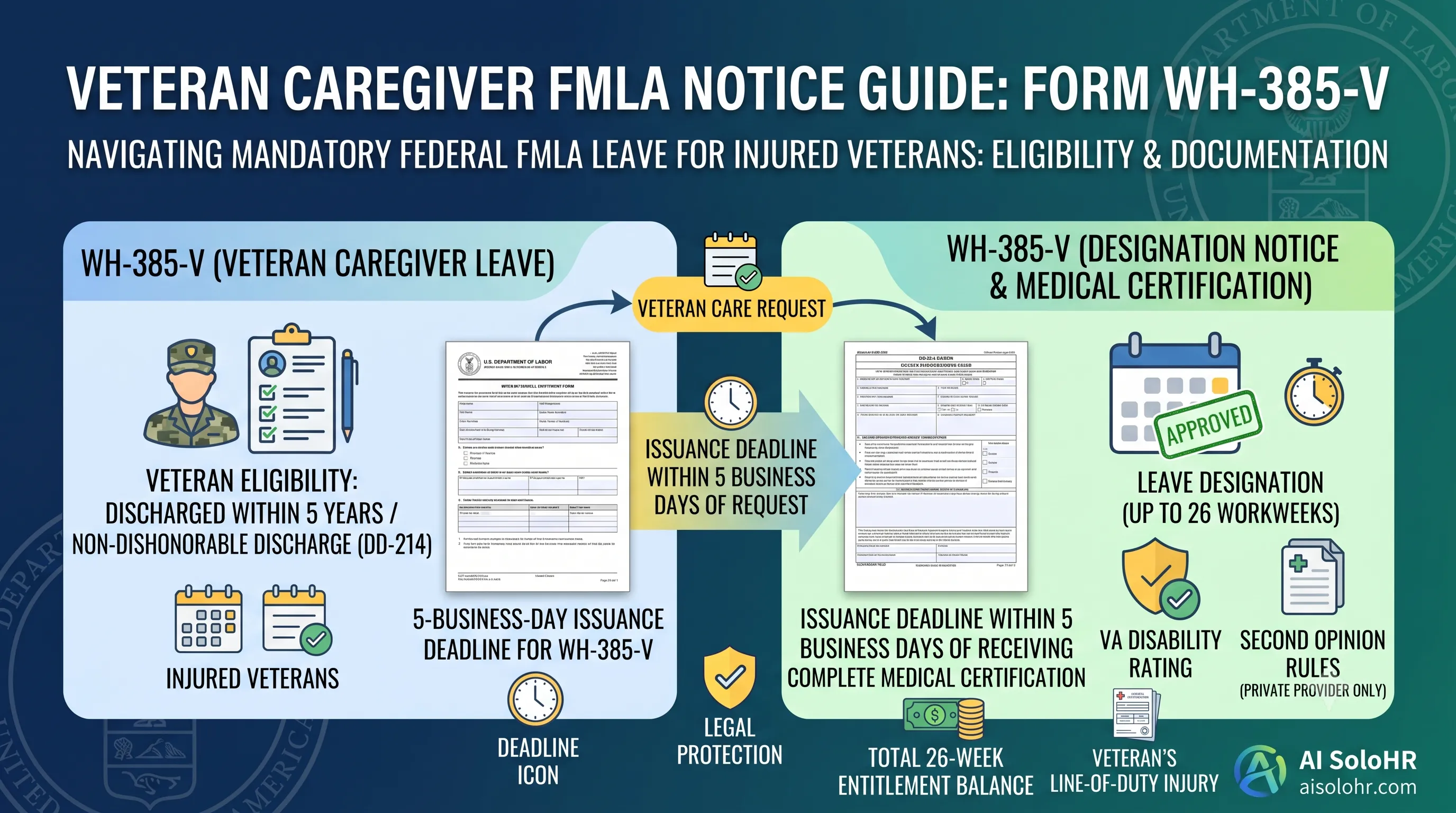
WH-385-V Instructions: Complete FMLA Veteran Caregiver Leave Certification Guide (2026)
A section-by-section guide to completing DOL Form WH-385-V for veteran military caregiver leave. Master the 5-year post-discharge rule, DD-214 verification, bad vs. good certification examples, and 26-week entitlement limits.
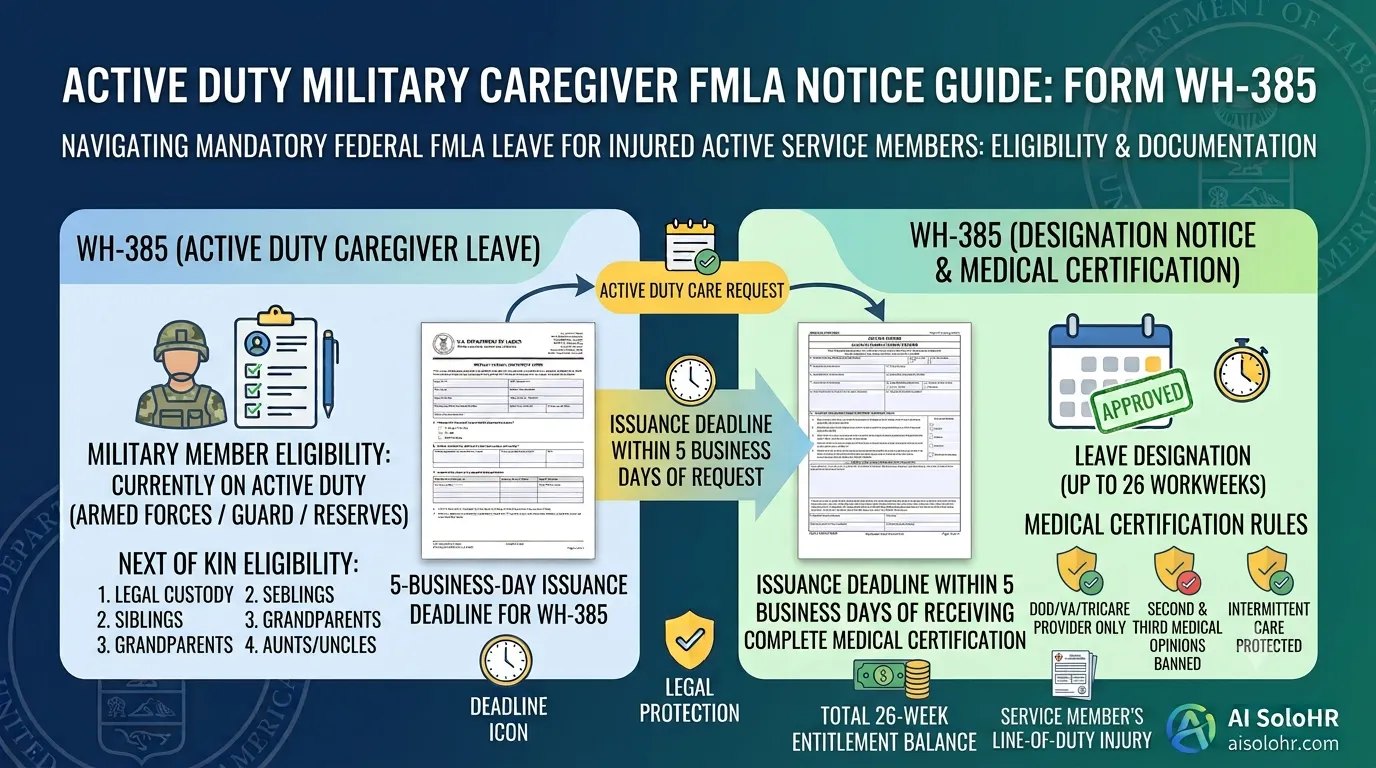
WH-385 Instructions: FMLA Military Caregiver Leave Certification Guide (2026)
A section-by-section HR guide to completing DOL Form WH-385 for active duty military caregiver leave. Master 26 workweeks entitlement, Next of Kin relationship rules, DOD medical certifications, and real-world case examples.
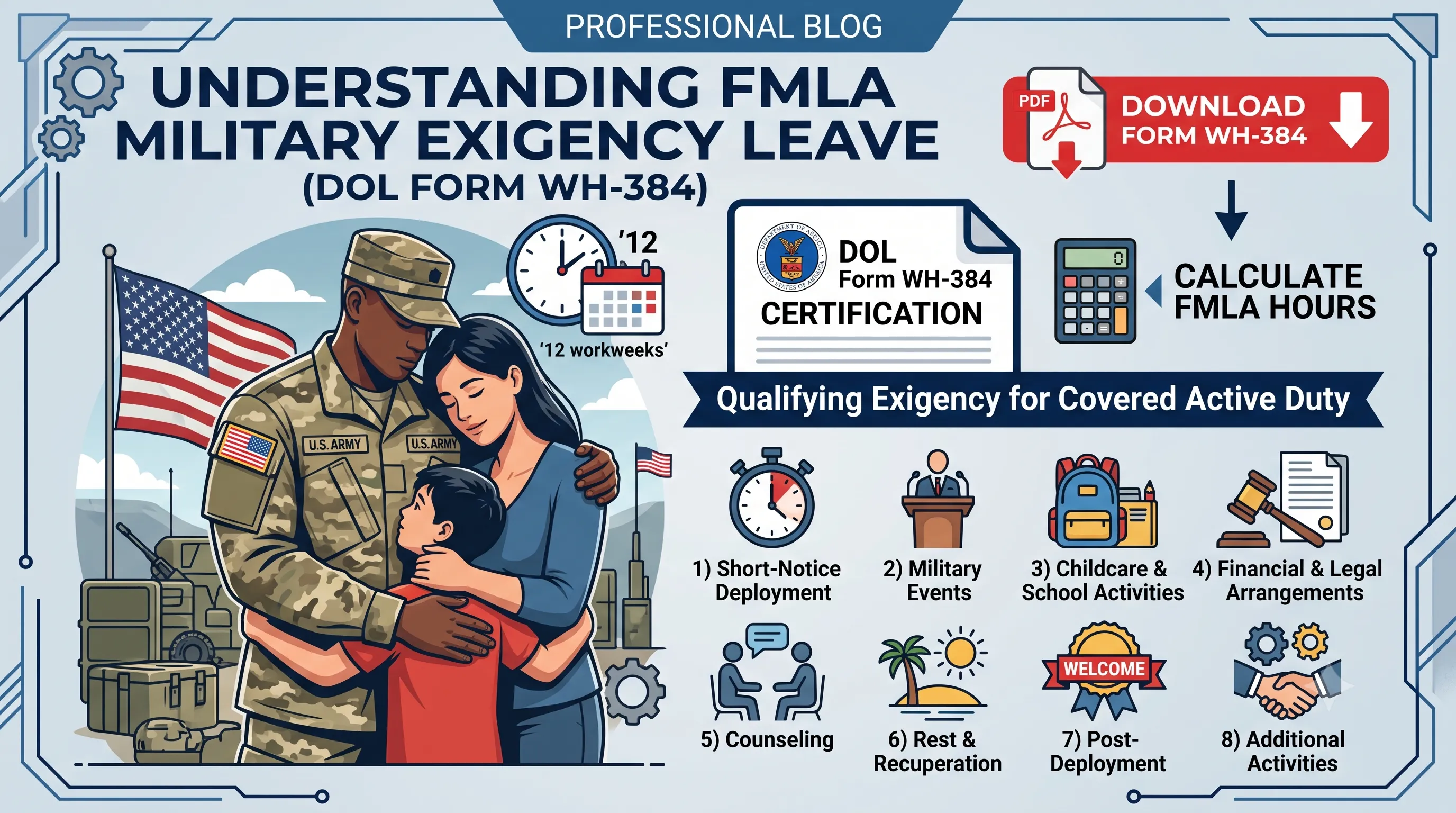
WH-384 Instructions: FMLA Qualifying Exigency Leave Certification Guide (2026)
A section-by-section HR guide to completing DOL Form WH-384 for military exigency leave. Master the 8 statutory exigency categories, active duty order verification, bad vs. good certification examples, and 12-week entitlement rules.
Wrongful Termination & Retaliation Risk
Separating an employee with a recent FMLA/ADA request or protective complaint carries massive retaliation exposure. Inconsistent warning notes, opinion-heavy investigation files, and undocumented comparator benchmarks are the leading causes of lost wrongful termination claims.
Put this guidance into action
AI SoloHR helps U.S. small-business HR teams turn manual compliance steps into tracked tasks, defensible timelines, secure document records, and reviewed AI drafts.
- 14-day full platform access
- Up to 3 active cases
- Up to 30 employee records
- All 7 U.S. case types unlocked
This resource is intended for U.S. HR operations and educational purposes only, and does not constitute legal advice. Consult a qualified professional or employment attorney regarding your specific federal and state compliance obligations.