Employee RelationsJun 5, 2026 06:08by AI SoloHR HR Specialist Team5 min read
Defensible HR Case Management & Employee Relations Tracking (2026)
Build a defensible HR case management process. Track employee relations and mitigate risks in 2026.
For U.S. employers and small-business HR teams.
#hr case management process#employee relations case management#employee relations tracking#hr case management scenarios#hr case management tools#case management for hr#benefits renewal checklist
Fact-Checked & Regulatory AuditVERIFIED E-E-A-T
Verified by AI SoloHR Compliance & Editorial Team (U.S. Employment Law & Regulatory Compliance Research Group)
Last Audit: Oct 15, 2026 14:54
Designing a Defensible HR Case Management Process and Employee Relations Tracking System
Click to expand
Workplace conflicts, performance disputes, and regulatory compliance issues are inevitable as businesses grow. For human resource managers, receiving a complaint is just the beginning of a complex, high-risk workflow. How an organization handles an incident—from the initial intake to final resolution—determines its exposure to severe employment lawsuits.
In 2026, establishing a standardized, defensible case management hr workflow is critical to protecting small businesses. When a dispute arises, HR cannot rely on verbal agreements or scattered sticky notes. Employers must implement robust employee relations tracking systems to maintain an objective paper trail that stands up in a court of law.
Sources and review notes
This article is written for U.S. small-business HR teams in 2026 and should be checked against your own policy, state requirements, and counsel guidance before use in a contested employment decision. AI SoloHR provides workflow structure, reviewed drafting support, and educational resources; it does not provide legal advice or make final employment decisions.
Statutory Sources & Regulatory Citations
This compliance document references official regulatory guidance from federal employment enforcement agencies:
This guide outlines how to design a defensible hr case management process, explores common employee relations scenarios, and reviews the essential tools required to streamline HR investigations.
1. What Is Employee Relations Case Management?
Click to expand
At its core, employee relations case management is the structured practice of receiving, investigating, tracking, and resolving employee concerns, complaints, and disciplinary actions. This includes:
Informal workplace disputes and team friction.
Formal complaints regarding discrimination, harassment, or retaliation.
FMLA abuse investigations and accommodation disputes.
Disciplinary warnings, performance improvement plans (PIPs), and terminations.
For a growing business, case management is not just about keeping folders organized; it is about building a defense against wrongful termination and retaliation claims. If a former employee files a complaint with the Equal Employment Opportunity Commission (EEOC), your primary defense is contemporaneous, factual, and chronological documentation of how the issue was handled.
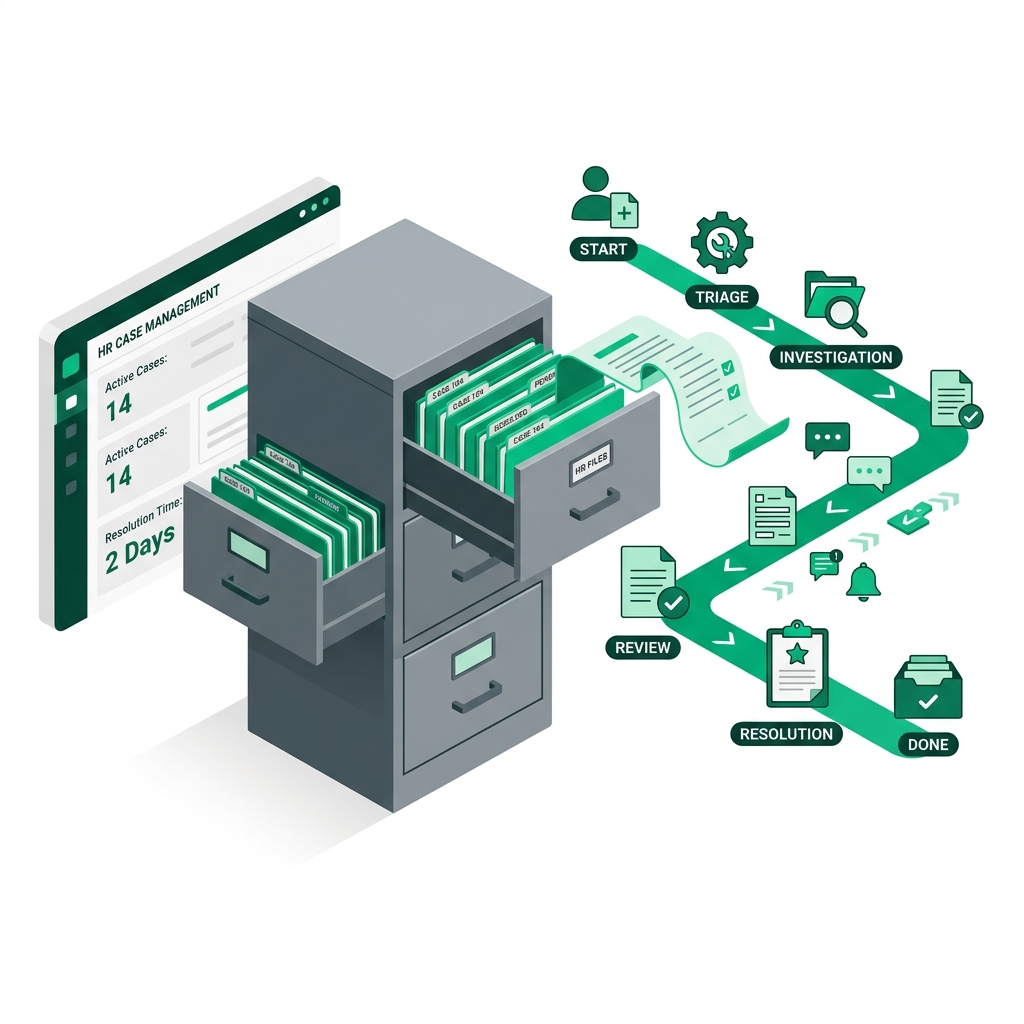
2. Step-by-Step: The Defensible HR Case Management Process
Click to expand
A defensible case workflow consists of four key phases. HR must treat every incident with the same level of discipline.
Phase 1: Intake and Incident Logging
Every HR case starts with intake. When an employee raises a concern (whether verbally or in writing), HR should immediately document it using a standardized intake form. Key details to record include:
The date, time, and location of the incident.
The names of the parties involved and any witnesses.
A factual description of the complaint (avoiding assumptions or personal opinions).
The date the complaint was officially received by HR.
Phase 2: Fact-Finding and Investigation
If the complaint requires an investigation, HR must act quickly. Gather physical evidence, review relevant emails or Slack logs, and conduct interviews.
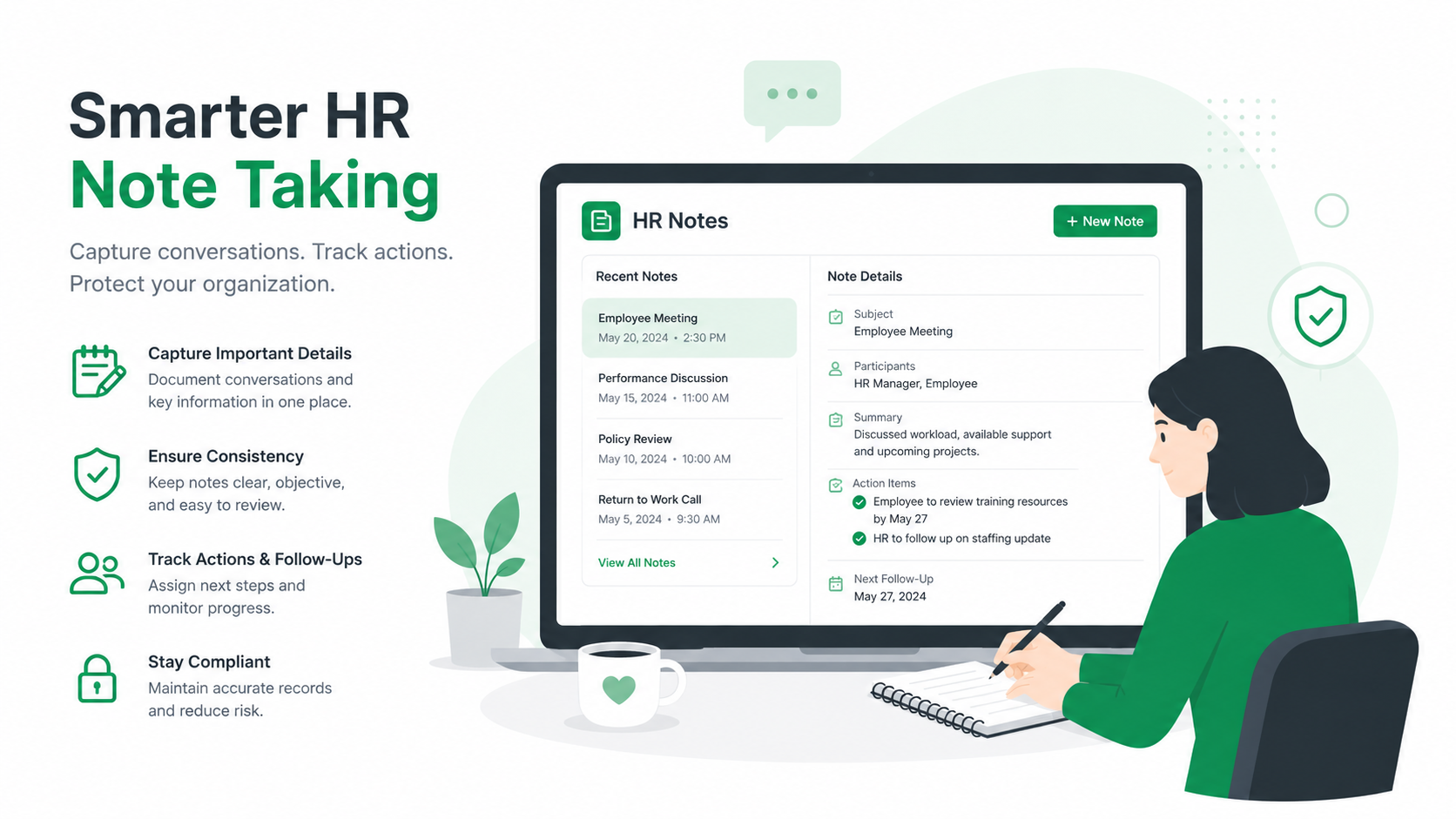
When interviewing witnesses, document the start and end times of each meeting, and summarize the key facts discussed. Ensure all digital evidence is uploaded directly to the specific case file to prevent data loss.
Phase 3: Resolution and Action Plan
Once the facts are established, HR and leadership must determine the appropriate action. This could range from conflict mediation and verbal warnings to formal suspension or termination. Document the final decision, share the action plan with the involved parties in writing, and note the specific policies in the employee handbook that guided the resolution.
Phase 4: Follow-up and Closure
Never assume a conflict is resolved indefinitely. Schedule a follow-up check-in (commonly 30 or 60 days post-resolution) with the complainant to confirm that there has been no retaliation and that the workplace remains professional. Mark the case as officially closed only after documenting this follow-up.
3. Common HR Case Management Scenarios and Best Practices
Click to expand
To understand the value of structured tracking, let us look at three common hr case management scenarios:
Scenario A: The Performance Dismissal Following FMLA Return
An employee returns from a 6-week FMLA medical leave. Two weeks later, their manager requests termination due to poor performance.
Risk: The employee files a retaliation claim, arguing they were fired for taking FMLA leave.
HR Defense: Using case management tools, HR presents a clear timeline showing the employee's performance documentation started six months before the leave, including specific metrics, performance warnings, and a signed PIP. This proves the termination was based on documented performance issues, not the FMLA absence.
Scenario B: Overlapping ADA Accommodation and Benefits Renewal
During the annual benefits enrollment period, an employee requests a modified work schedule as an ADA accommodation for a chronic health issue.
Risk: The manager denies the request, claiming it interferes with team operations, and the employee files a disability discrimination claim.
HR Defense: HR uses an accommodation tracker to document a good-faith interactive process. They show they met with the employee, reviewed their job description, evaluated operational limits, and agreed to a trial modified schedule, which resolved the issue amicably.
(Additionally, keeping a benefits renewal checklist ensures that any health coverage changes do not disrupt the accommodation's wellness timeline).
4. Selecting the Right HR Case Management Tools
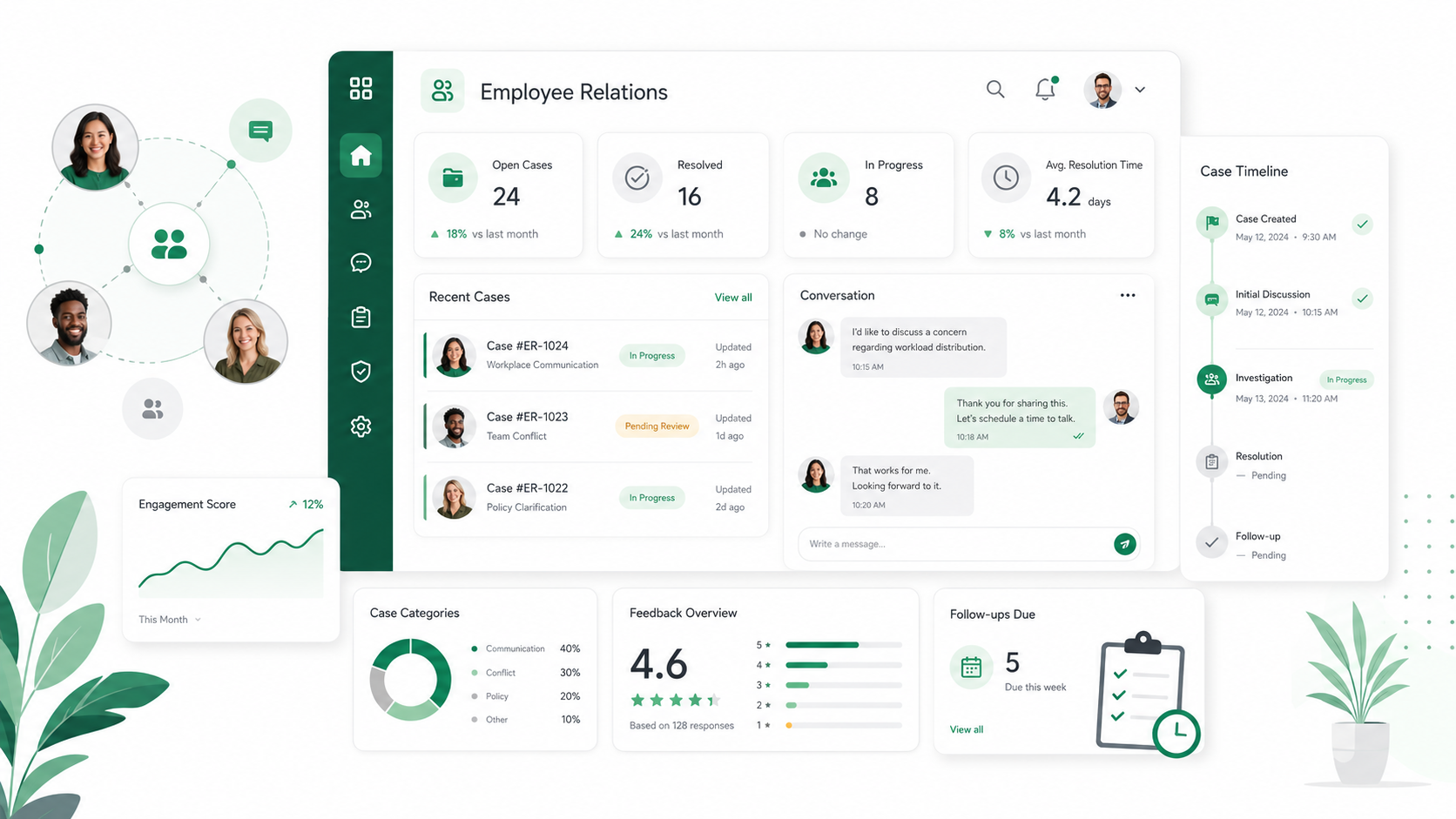
To run an efficient, compliant department, solo HR managers must move away from shared network folders and general email inboxes. Premium case management for hr requires dedicated systems that offer:
Role-Based Access Control: Employee relations files contain highly sensitive, private information. Only authorized HR personnel and legal counsel should have access to these files, keeping them completely secure from direct managers and other staff.
Contemporaneous Audit Trails: Your software must automatically record the exact date and time when notes are added, files are uploaded, or status changes are made. This prevents claims of documentation tampering.
Automated Reminders: Ensure the system automatically sends notifications for key milestones, such as investigation follow-ups, ADA accommodation review dates, and policy renewal dates, keeping your compliance workflows on track.
Transitioning to automated employee relations case management tools helps small businesses standardize their dispute workflows, minimize legal risks, and ensure that every employee complaint is handled fairly, consistently, and professionally.
Legal Disclaimer
The information provided on this website does not, and is not intended to, constitute legal advice; instead, all information, content, and materials available on this site are for general informational purposes only. Information on this website may not constitute the most up-to-date legal or other information.