HR case management for small businesses
A practical guide to organizing HR requests, follow-ups, documents, and decisions when you are the whole HR team or operating with a very lean HR bench.
Built for U.S. employers and small-business HR teams.
Key takeaways
- Define case types
- Track next actions
- Keep a timeline
- Close with resolution
What actually counts as an HR case
An HR case is any issue that needs a tracked outcome: leave, accommodation, employee relations, benefits renewal, hiring follow-up, or compliance-sensitive documentation.
The common thread is not the topic
What makes something a case is not whether it is formal or dramatic. It is whether HR needs to move it from intake to resolution with dates, follow-ups, and a record.
Small teams need one model for many workflows
When one person handles multiple HR functions, a shared case model makes the work easier to manage than separate trackers for every issue type.
The minimum useful case record
Each case should include enough context for HR to know what it is, where it stands, and what happens next.
Core operating fields
These fields make the case actionable.
Supporting context
These fields explain the history behind the status.
How to avoid spreadsheet drift
Use one source of truth. If the next action changes, update the case. If a document arrives, attach it to the case. If a decision is made, add it to the timeline.
Treat the case as the working system
The case should be where the team checks status, records updates, and assigns follow-up work, not just where information is archived after the fact.
Close with a real resolution note
Every case should end with a clear summary of what happened, what was decided, and what matters if the issue comes up again later.
How AI SoloHR supports a lean HR operating model
AI SoloHR gives small HR teams a place to track cases, tasks, timelines, documents, and reviewed AI drafts so operational work stays visible and easier to defend.
What a Strong HR Case Record Includes
Intake Facts
Record factual check-in notes, upload signed witness statements, and document the final corrective action.
Running Timeline and Evidence
Sensitive workplace concerns require objective, factual documentation rather than subjective notes.
Outcome and Follow-Up Records
Record factual check-in notes, upload signed witness statements, and document the final corrective action.
When a Spreadsheet Stops Being Enough
When Deadlines Start Slipping
Maintaining a chronological timeline of check-ins and resolution steps is crucial for employee relations.
When Context Lives in Too Many Places
Maintaining a chronological timeline of check-ins and resolution steps is crucial for employee relations.
When Someone Else Has to Review the Work
Maintaining a chronological timeline of check-ins and resolution steps is crucial for employee relations.
Which HR Problems Deserve a Formal Case
Recurring Administrative Work
Sensitive workplace concerns require objective, factual documentation rather than subjective notes.
Sensitive Documentation Work
Record factual check-in notes, upload signed witness statements, and document the final corrective action.
High-Risk Employee Issues
Sensitive workplace concerns require objective, factual documentation rather than subjective notes.
How this guide fits the real workflow
A guide page is most useful when HR already knows the issue but needs a clearer operating pattern. The goal is not just to define the topic. It is to make the next step, the right record, and the workflow sequence easier to see before something slips.
- Use the guide to standardize what should be documented
- Share the workflow with managers or teammates who need the same context
- Move into a template or a case workflow when the issue becomes active work
Important boundary for this content
This page is written for HR operations and education. It is meant to support documentation, workflow clarity, and communication planning. It does not provide legal advice, medical judgment, eligibility determinations, or automatic employment decisions.
AI SoloHR is designed to support case records, tasks, documents, timelines, and reviewed AI drafts inside one workflow. It is not a substitute for legal, medical, benefits, or policy review where those are needed.
Keep Exploring
Frequently asked questions
What is HR case management?
HR case management is the practice of tracking HR issues from intake to resolution with a clear owner, status, next step, history, and supporting documents.
Why do small businesses need HR case management?
Small businesses often rely on one HR person or a very lean team, so case management helps prevent work from being lost across spreadsheets, inboxes, and memory.
How does AI SoloHR help with HR case management?
AI SoloHR brings cases, tasks, documents, timelines, and reviewed drafts into one workflow so U.S. employers can run leaner HR operations with better visibility.
Related Interactive Calculators & Tools
Related Compliance Articles & Guides
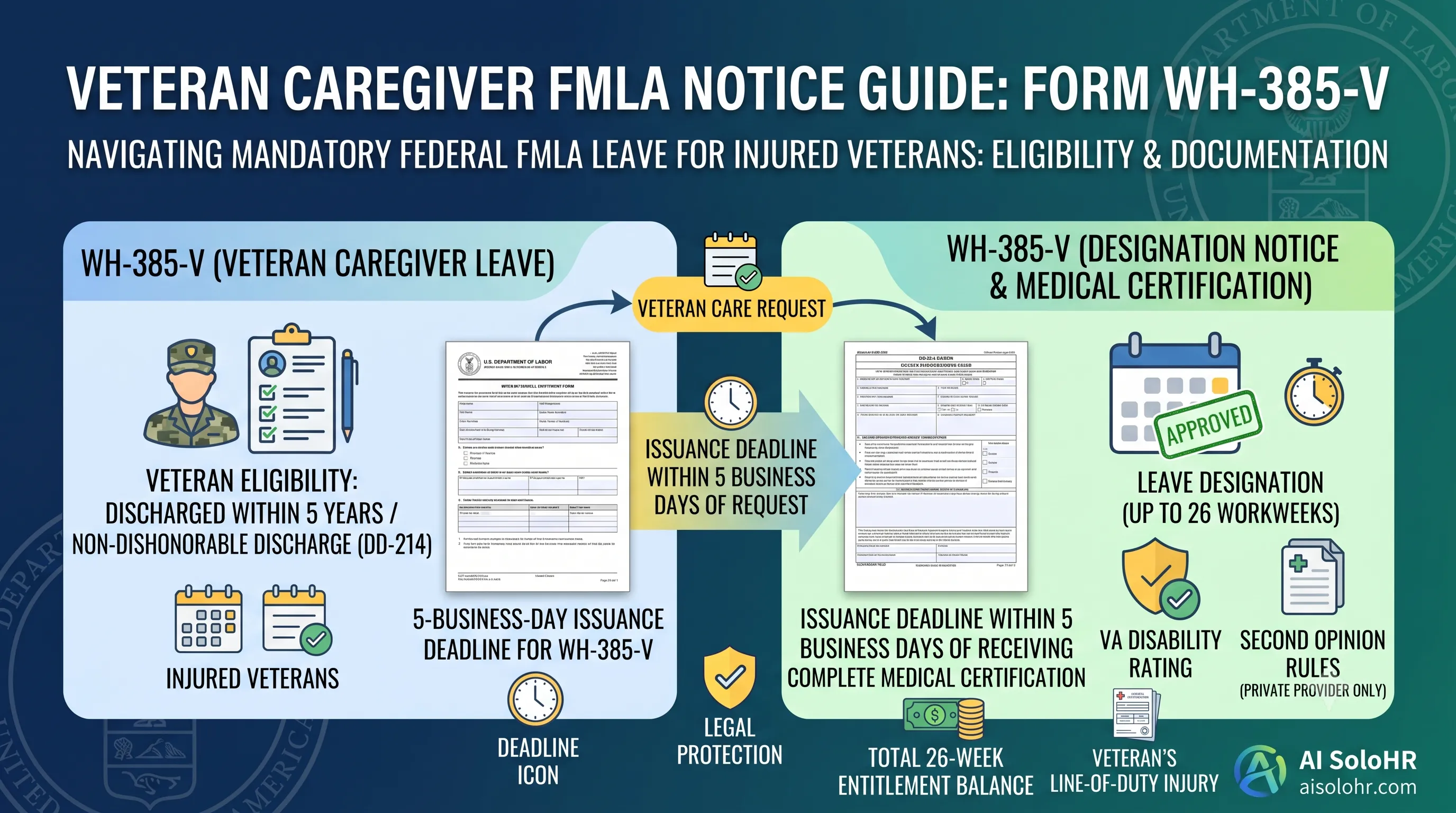
WH-385-V Instructions: Complete FMLA Veteran Caregiver Leave Certification Guide (2026)
A section-by-section guide to completing DOL Form WH-385-V for veteran military caregiver leave. Master the 5-year post-discharge rule, DD-214 verification, bad vs. good certification examples, and 26-week entitlement limits.
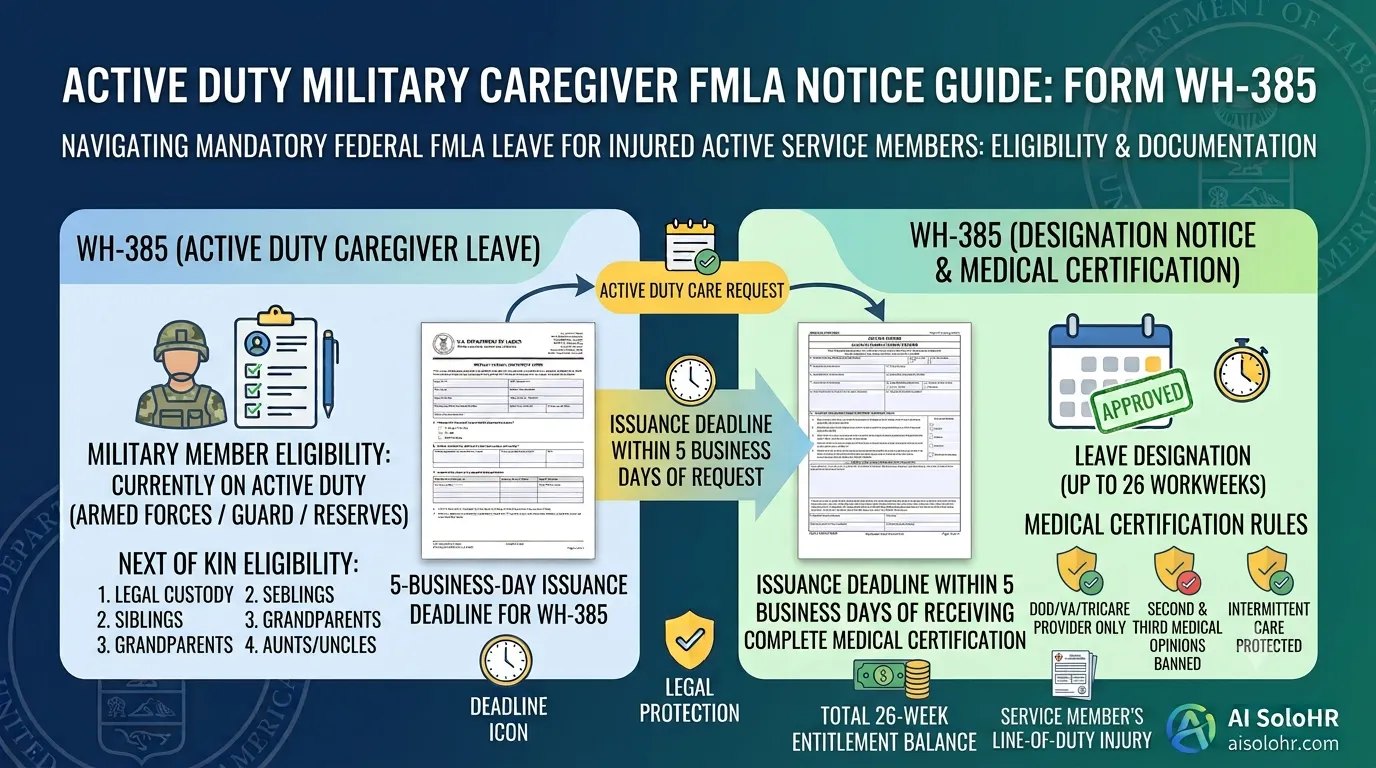
WH-385 Instructions: FMLA Military Caregiver Leave Certification Guide (2026)
A section-by-section HR guide to completing DOL Form WH-385 for active duty military caregiver leave. Master 26 workweeks entitlement, Next of Kin relationship rules, DOD medical certifications, and real-world case examples.
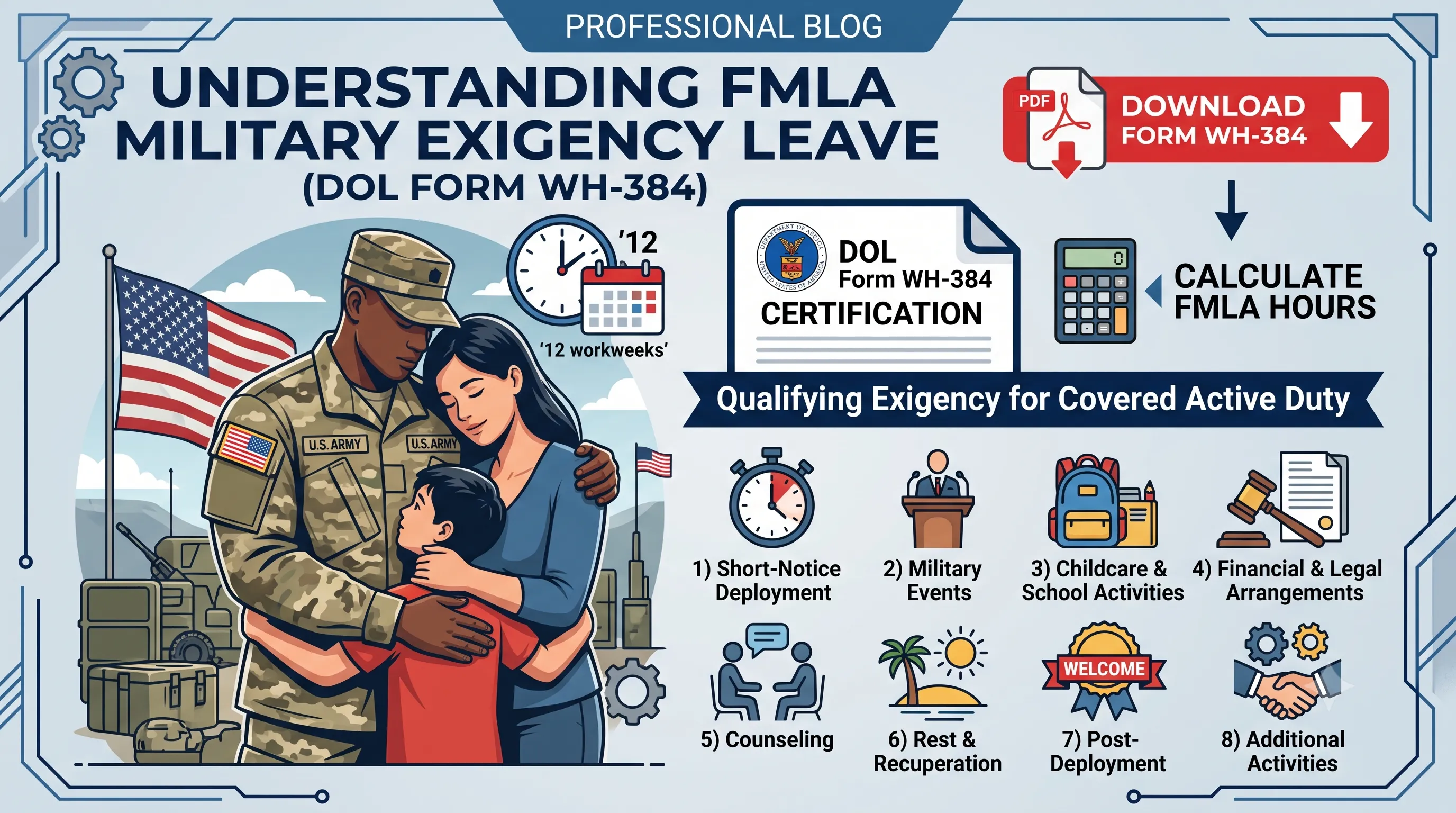
WH-384 Instructions: FMLA Qualifying Exigency Leave Certification Guide (2026)
A section-by-section HR guide to completing DOL Form WH-384 for military exigency leave. Master the 8 statutory exigency categories, active duty order verification, bad vs. good certification examples, and 12-week entitlement rules.
Wrongful Termination & Retaliation Risk
Separating an employee with a recent FMLA/ADA request or protective complaint carries massive retaliation exposure. Inconsistent warning notes, opinion-heavy investigation files, and undocumented comparator benchmarks are the leading causes of lost wrongful termination claims.
Put this guidance into action
AI SoloHR helps U.S. small-business HR teams turn manual compliance steps into tracked tasks, defensible timelines, secure document records, and reviewed AI drafts.
- 14-day full platform access
- Up to 3 active cases
- Up to 30 employee records
- All 7 U.S. case types unlocked
This resource is intended for U.S. HR operations and educational purposes only, and does not constitute legal advice. Consult a qualified professional or employment attorney regarding your specific federal and state compliance obligations.