ADA Interactive Process Flowchart: Step-by-Step Guide for HR (2026)
For U.S. employers and small-business HR teams.
#ada calculator#ada tracking#reasonable accommodation#interactive process steps#accommodation timeline calculator
Fact-Checked & Regulatory AuditVERIFIED E-E-A-T
Verified by AI SoloHR Compliance & Editorial Team (U.S. Employment Law & Regulatory Compliance Research Group)
Last Audit: Oct 20, 2026 22:28
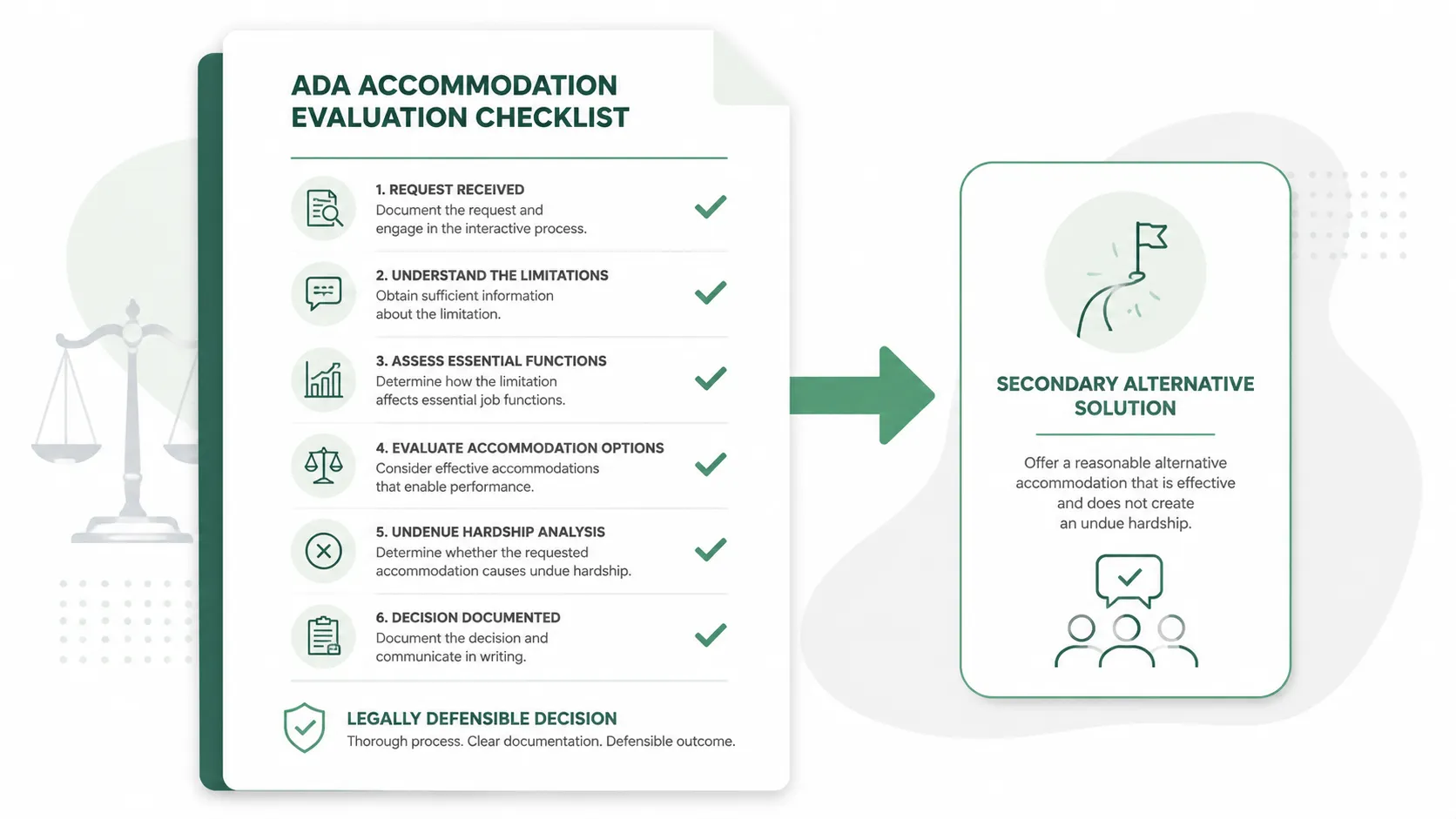
Interactive Process Checklist
Ensure every accommodation discussion is audit-ready and legally defensible
When an employee requests a disability accommodation, the ADA interactive process must be initiated immediately. AI SoloHR helps HR document every meeting, track key timelines, and generate secure records.
Use our visual timeline calculator to determine key milestones in the interactive process.
Document every employee accommodation request with automated meeting summaries and secure file storage.
Protect your organization against EEOC risk with a centralized, tamper-evident case audit trail.
ADA Interactive Process Flowchart: Step-by-Step Guide for HR (2026)
Click to expand
Managing workplace accommodations under the Americans with Disabilities Act (ADA) requires strict procedural compliance. Under federal guidelines, employers must engage in a good-faith interactive dialogue as soon as a disability request is recognized.
Without a structured roadmap, human resource managers risk missing critical deadlines, failing to document essential conversations, or violating EEOC standards.
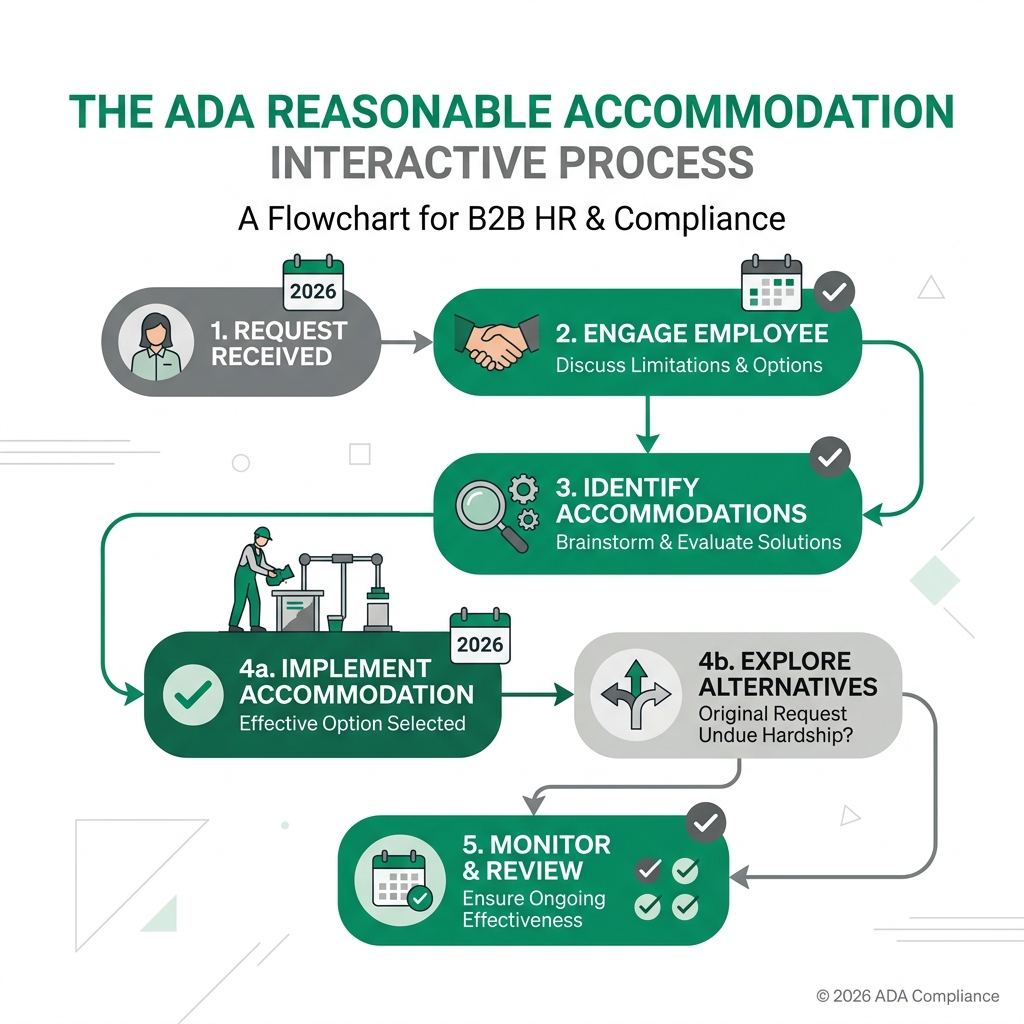
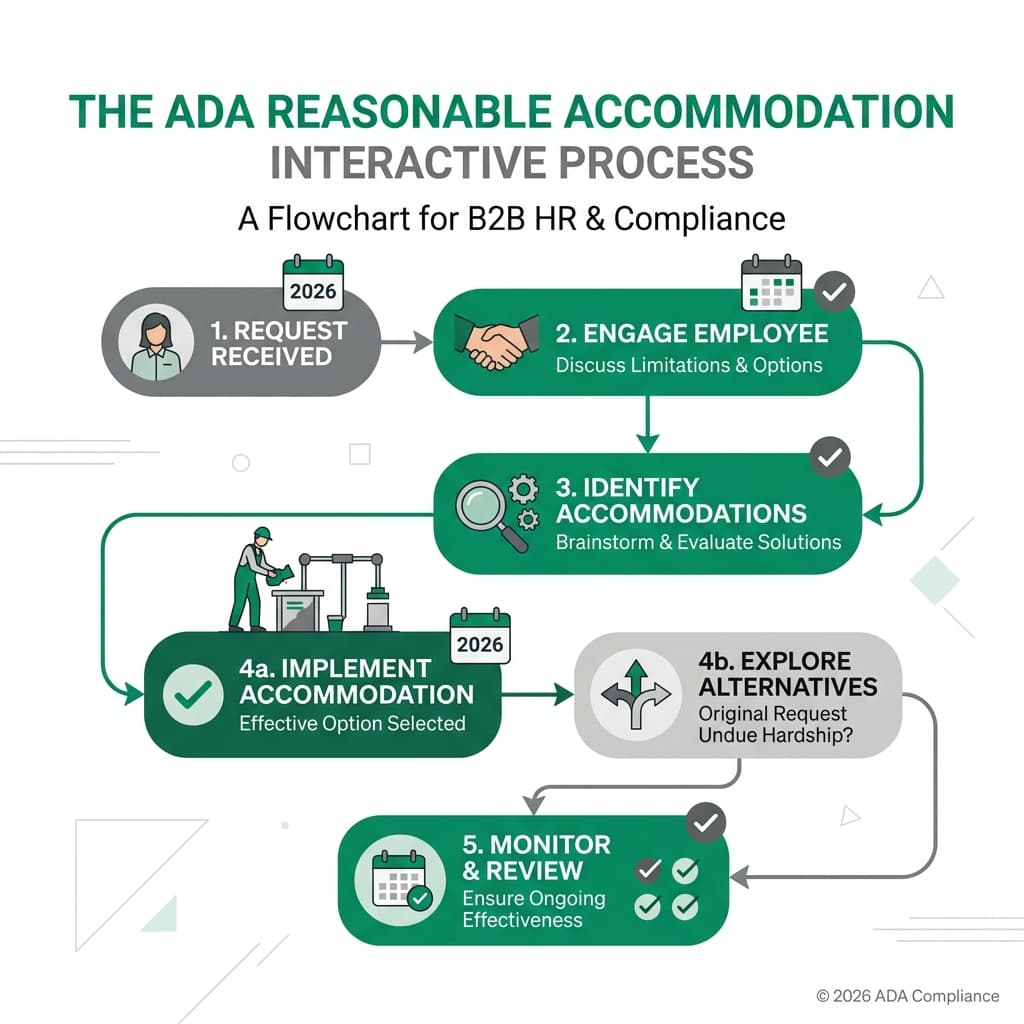
In 2026, leading organizations are replacing informal checklists with a standardized ada interactive process flow chart to manage employee requests, record notes, and track compliance timelines systematically.
1. The ADA Interactive Process Flow Chart and Core Steps
Click to expand
To maintain absolute legal safety and support your staff, every reasonable accommodation request must follow a structured path. We at AI SoloHR recommend dividing the interactive process into clear, documented phases.
Recognizing Accommodation Requests and Initiating Dialogue
The interactive process officially begins when an employee requests an adjustment due to a physical or mental limitation. This request does not need to use formal legal terms or even mention the ADA. A casual statement like, "I am struggling to sit for long periods due to back pain," legally triggers the employer's duty to inquire.
Once this trigger occurs, HR must acknowledge the request in writing within five business days and schedule an initial consultation meeting. During this conversation, the focus should remain on identifying the specific job duties affected rather than demanding confidential medical details.
Gathering Medical Information and Determining Accommodations
If the disability or the need for accommodation is not obvious, the employer has the right to request reasonable medical documentation. This documentation must clarify the employee's functional limitations. We recommend using a structured intake form to keep these medical inquiries narrow and focused.
Once you receive the physician’s restrictions, sit down with the employee and their manager to brainstorm adjustments. These might include ergonomic equipment, modified shift schedules, or job restructuring. The goal is to identify a solution that removes the job barrier without causing an undue hardship to operations.
2. From Spreadsheets to Automated ADA Tracking
Click to expand
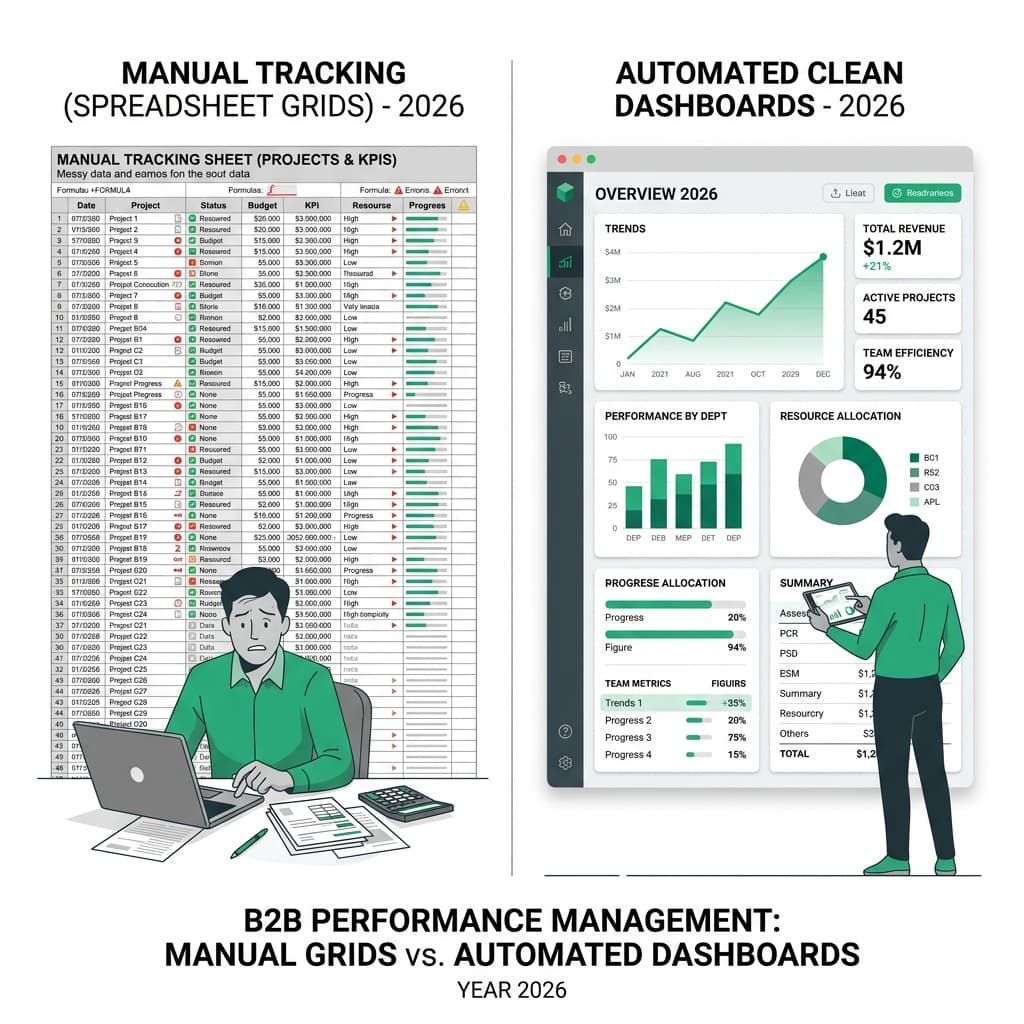
While many small business owners start by tracking these cases in spreadsheets, manual tracking introduces significant legal liabilities.
Why Manual Checklists Cause Compliance Gaps
Spreadsheets lack dynamic calculations and automated notifications. If a team member requests an accommodation, there are no built-in reminders to follow up or request missing doctor notes.
More importantly, manual grids do not provide verifiable audit trails. If an employee claims that you failed to engage in the interactive process, presenting a simple spreadsheet that anyone can edit or backdate rarely provides a strong defense in court. Without timestamped proof of meetings, emails, and options considered, the employer remains vulnerable.
How to Build a Defensible Audit Trail with AI SoloHR
Transitioning to a dedicated ada tracking system eliminates these administrative vulnerabilities. AI SoloHR automatically organizes every accommodation request into a centralized case file.
Within our platform, HR can log meetings, store medical files in a secure vault, and use our accommodation timeline calculator to establish concrete follow-up milestones. If you need to make adjustments to a shift or a workspace, the software logs the decision date and schedules a mandatory 90-day review check-in, ensuring you always have a complete, tamper-proof record of your good-faith efforts.
Frequently Asked Questions
How long does the ADA interactive process take?
The EEOC does not define a strict day limit, but regulations state that the process must proceed without "unnecessary delays." We recommend resolving simple requests (such as ergonomic chair adjustments) within 15 business days, and complex leaves or shifts within 30 business days.
Can an employer deny an ADA accommodation request?
Yes, an employer can deny a request if the accommodation would cause an "undue hardship," meaning significant difficulty or expense relative to the company's size and resources. However, before issuing a denial, you must explore alternative options and document the interactive process thoroughly.
Legal Disclaimer: The information provided on this website does not, and is not intended to, constitute legal advice; instead, all information, content, and materials available on this site are for general informational purposes only. Information on this website may not constitute the most up-to-date legal or other information.
Sources and review notes
This article is written for U.S. small-business HR teams in 2026 and should be checked against your own policy, state requirements, and counsel guidance before use in a contested employment decision. AI SoloHR provides workflow structure, reviewed drafting support, and educational resources; it does not provide legal advice or make final employment decisions.
Statutory Sources & Regulatory Citations
This compliance document references official regulatory guidance from federal employment enforcement agencies: