Audit Steps
0 of 5 answeredIs the employee currently on active FMLA/ADA leave, or have they requested leave within the last 90 days?
Terminating a worker during or immediately following a protected request triggers immediate legal scrutiny of retaliation.
Is there a clear, written paper trail of performance issues (e.g., signed PIP, written warnings) established BEFORE the leave request?
Without prior written logs, any sudden post-leave termination is legally presumed to be a cover-up (pretext).
Has the termination decision been initiated within 30 days of the employee returning from leave?
Temporal proximity (short timing) is the strongest evidence plaintiff attorneys use to prove retaliatory intent.
For disability (ADA) cases, did HR hold and document a good-faith 'interactive process' dialogue to explore accommodations?
Failing to hold an interactive dialogue is a standalone, automatic violation under EEOC guidelines.
Has the complete case file, including timeframes and employee communications, been audited by independent legal counsel?
An objective audit verifies that policies were applied consistently across all departments to prevent disparate treatment.
Secure your case files with timestamped chronologies
Create a free employee relations case file to record performance warning logs, interactive notes, and counsel review confirmations safely.
Defend against retaliation claims
Audit-proof your employee termination files
Filing a grievance is simple for employees; proving you had non-retaliatory reasons requires pre-existing, chronologically indexed records. AI SoloHR links performance logs to your FMLA case workflow.
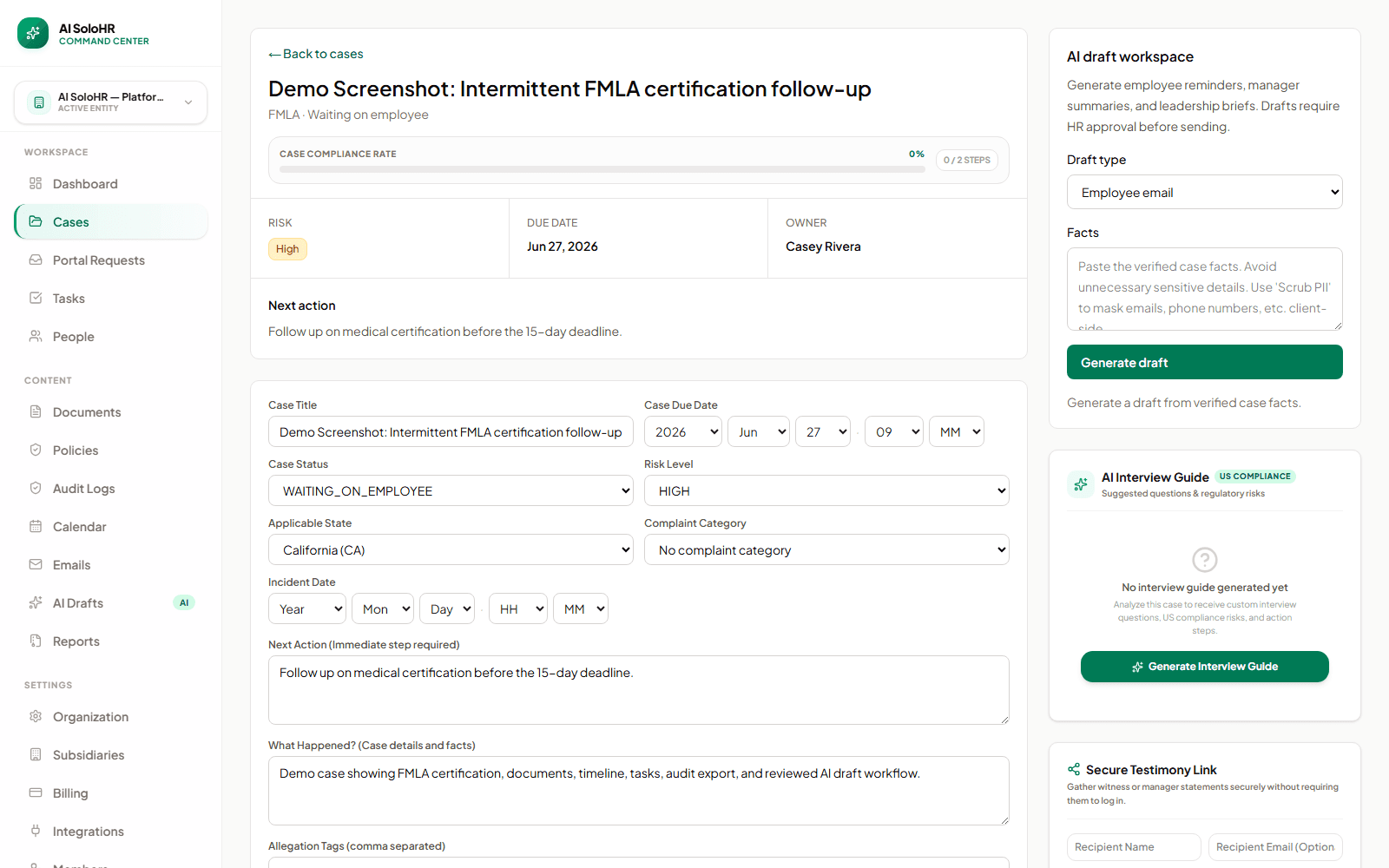
Build the defensible timeline
Store warnings and interactive dialogues before termination triggers occur to create an audit-proof timeline.
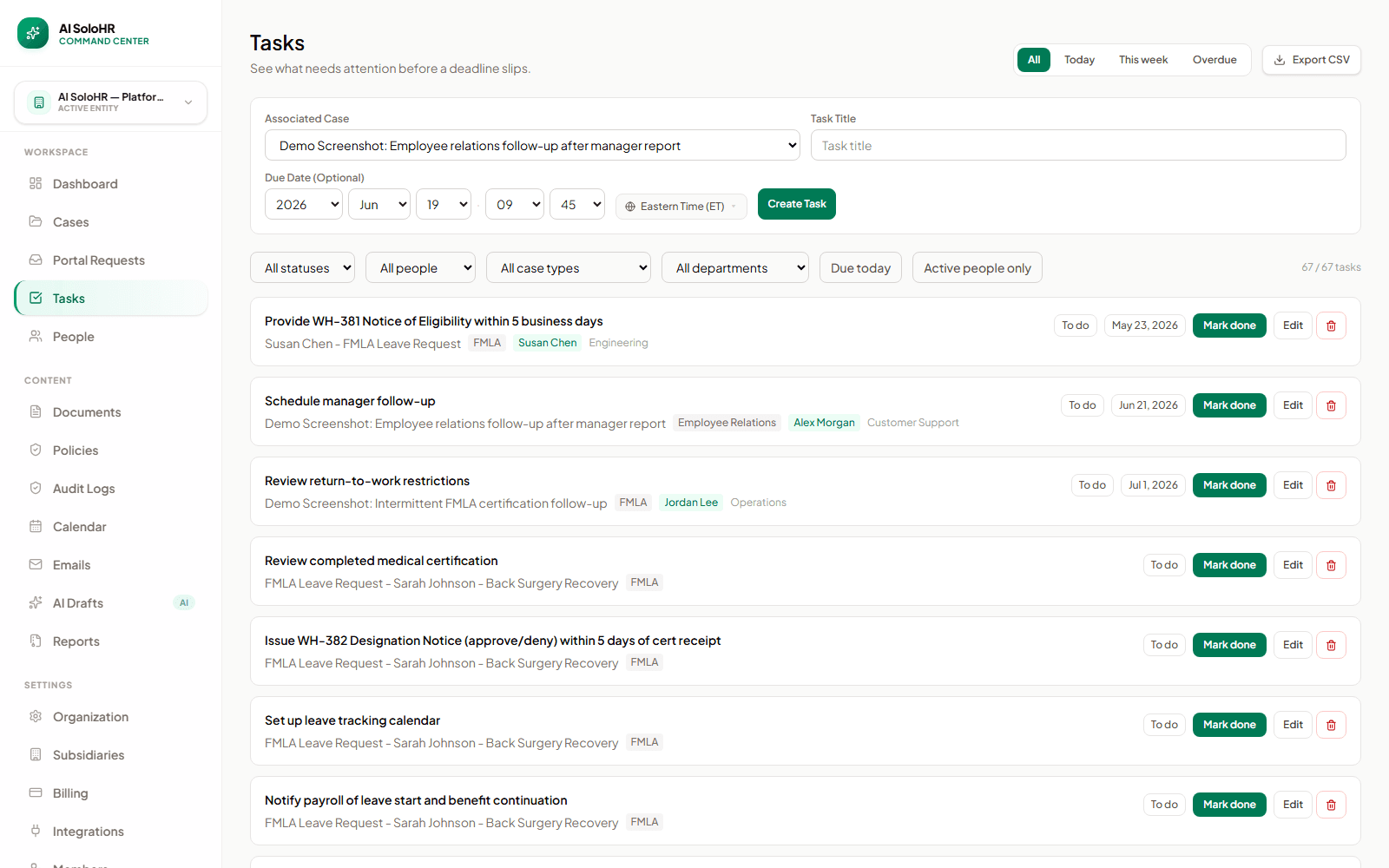
Track compliance checkmarks
Assign review duties to legal teams and document completion checks before taking critical firing actions.
Understanding FMLA & ADA Wrongful Termination Exposure
The Family and Medical Leave Act (FMLA) and Title I of the Americans with Disabilities Act (ADA) grant employees deep protections when they experience qualifying health events. Terminating protected workers carries immediate legal liabilities for businesses.
1. The Trap of Temporal Proximity
Temporal proximity refers to the short timespan between an employee requesting medical leave and their termination. Even if the termination is purely performance-related, courts in 2026 presume that a firing occurring within 30 days of leave is retaliatory.
2. The High Burden of Non-Retaliatory Proof
Once an employee files a complaint, the burden shifts to the employer to show that the termination would have occurred regardless of the FMLA leave. Without pre-existing written warnings, this standard is almost impossible to satisfy.
HR Action Protocol: Building the Defensible Paper Trail
To protect against EEOC claims and costly labor lawsuits, HR departments must implement standard defensibility checkmarks before proceeding with layoffs or firing.
1. Establishing Prior Written Warnings
Ensure that all performance deficiencies are logged with explicit, signed warnings *prior* to any leave request. Performance warnings initiated *after* a leave request are generally viewed by courts as pretextual retaliation.
2. Documenting the Good-Faith Interactive Dialogue
For health limitations qualifying under the ADA, HR must hold and document a good-faith interactive dialogue. Meeting summaries must detail all accommodations explored and show that termination was only pursued after all accommodations failed or caused undue hardship.