Good Faith Dialogue
Employers must engage in an informal, interactive dialogue with the employee to discuss limits and identify accommodation options.
EEOC-Compliant Dialogue Agendas & Accommodation Decisions Drafts
AI SoloHR dashboard members can upload PDF doctor notes directly to the secure Document Vault. The compliance engine extracts restrictions, assesses EEOC audit validity, and syncs case calendars automatically.
Generate Good Faith Interactive Dialogue meeting agendas and Accommodation Decision briefs in seconds.
Answers about ADA reasonable accommodations, interactive dialogs, and employer responsibilities in 2026.
Automated HR Compliance & Leave Audit System
* Consistent with the 2026 U.S. Department of Labor (DOL) and EEOC regulatory frameworks.
| Parameter | Value |
|---|---|
| Employee Name | Jane Doe |
| Job Title | Customer Support Representative |
| Request Submission Date | 2026-06-10 |
| Employee Request Statement | Cannot stand for more than 30 minutes continuous due to leg surgery recovery. Requesting a stool and a modified sit-stand workstation. |
| Medical Limitations Info | Physician certifies that the patient cannot perform continuous weight-bearing or standing exceeding 30 minutes at a time. Expected duration is 6 months. |
| Metric | Result |
|---|---|
| Good Faith Dialogue Status | PENDING |
| Case Documents Package Saved | NO |
Employers must engage in an informal, interactive dialogue with the employee to discuss limits and identify accommodation options.
EEOC litigation often rests on whether the employer documented their efforts to accommodate. Unrecorded conversations carry high risk.
A structured meeting agenda and formal decision letter (approve, offer alternative, or request undue hardship audit) protect your business.
The Americans with Disabilities Act protects employees from discrimination based on disability and requires employers to provide reasonable accommodations. To satisfy the law, HR must establish a repeatable, defensible process.
The interactive process is triggered as soon as an employee makes a request for accommodation or indicates they need help performing their job duties due to a medical condition. The employee does not need to cite the ADA or use terms like "reasonable accommodation." HR must acknowledge the request immediately and schedule a dialog.
During the good faith conversation, the employer should focus on:
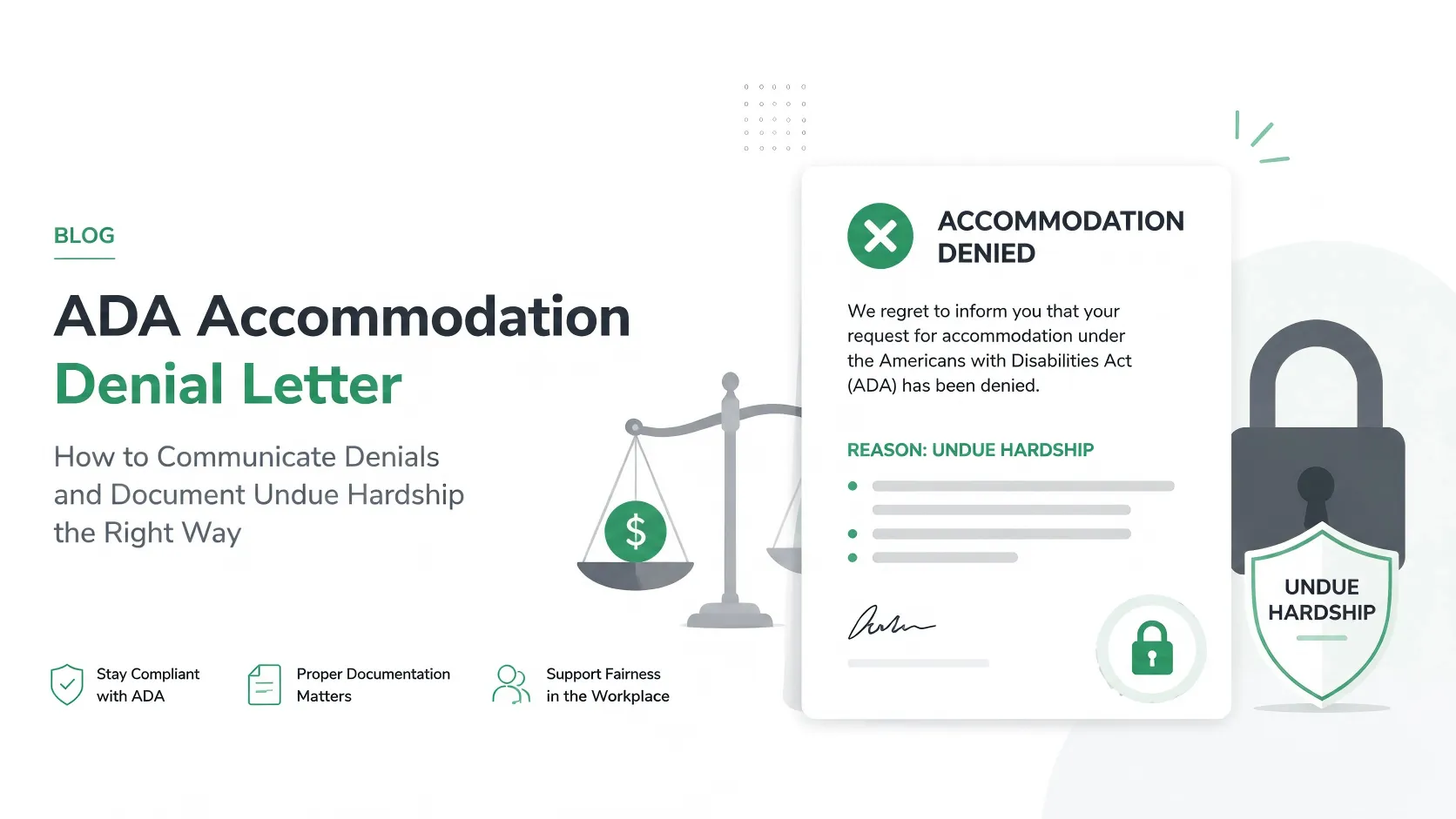
Once a decision is reached, it must be documented in writing. If the request is approved, issue an Accommodation Agreement detailing the start date, expectations, and a schedule to re-assess the arrangement (e.g. 90 days). If the request is denied due to Undue Hardship, ensure you have documented all financial and operational constraints.
Structure your interactive dialogue and track modifications.
HR guide to documenting accommodation requests and decisions.
Factual interactive process outline and intake checklists.
Losing track of emails and physical doctor letters exposes your company to severe litigation risk. Formulate agendas, track decision timelines, and secure documents safely with AI SoloHR.