The Defensible Paper Trail: HR Note-Taking Template for Employee Meetings
For U.S. employers and small-business HR teams.
#employee relations case management template#employee relations tracking#hr pdf search ai
Fact-Checked & Regulatory AuditVERIFIED E-E-A-T
Verified by AI SoloHR Compliance & Editorial Team (U.S. Employment Law & Regulatory Compliance Research Group)
Last Audit: Oct 6, 2026 14:28
The Defensible Paper Trail: HR Note-Taking Template for Employee Meetings
In human resources, if an event is not documented, it legally did not happen. When managing employee complaints, performance meetings, or policy violations, the quality of your notes is often the deciding factor in a labor dispute.
If an investigator from the EEOC or a plaintiff's attorney requests your records, a disorganized, subjective set of notes can do more harm than good.
Many small business owners and solo HR professionals take notes on scrap paper, type them into the body of an email, or keep them on local desktop text files.
This lack of structure is a major legal risk. In early 2026, a software firm in California terminated a sales representative for performance issues. The representative claimed they were wrongfully terminated in retaliation for reporting wage unpaid hours. During the investigation, the HR manager provided notes from the performance meetings.
Sources and review notes
This article is written for U.S. small-business HR teams in 2026 and should be checked against your own policy, state requirements, and counsel guidance before use in a contested employment decision. AI SoloHR provides workflow structure, reviewed drafting support, and educational resources; it does not provide legal advice or make final employment decisions.
Statutory Sources & Regulatory Citations
This compliance document references official regulatory guidance from federal employment enforcement agencies:
However, the notes were written in a subjective, conversational tone, lacked dates of when they were finalized, and contained remarks like "employee seems defensive." The investigator ruled that the notes lacked credibility due to the subjective language and lack of structure. The company resolved the dispute with a settlement of $80,000.
To ensure your records protect your organization, you need a standardized, factual HR note-taking template for every employee meeting.
The Legal Power of "Contemporaneous Notes"
In a legal context, notes taken during or immediately after a meeting are referred to as contemporaneous notes. Courts and federal investigators give significant weight to contemporaneous records because they are written when the details are fresh, making them far more reliable than memories recalled months or years later during a deposition.
However, notes must remain objective to maintain legal credibility:
Subjective Language (Dangerous)
"The employee seemed angry and combative during the performance review."
"She was defensive and refused to take responsibility for the inventory shortage."
"The manager handled the dispute poorly and seemed biased."
Objective Language (Defensible)
"The employee raised his voice, stood up twice, and stated: 'I do not agree with this performance warning.'"
"The employee stated she did not access the inventory database on June 2, 2026, and requested to review the security logs."
"The manager stated: 'We need to stick to the policy guidelines' and provided the employee with the written handbook section."
How to Handle Employee Disputes Over Meeting Notes
After completing an employee meeting, it is best practice to send a copy of the finalized notes to the employee to confirm receipt and accuracy. This ensures transparency and helps prevent claims of retaliatory documentation later.
But what if the employee disagrees with the notes?
The Correction Addendum Process
If the employee disputes a factual detail in your notes:
Do Not Delete the Original: Never edit or overwrite the original meeting record.
Post an Addendum: Allow the employee to submit a written statement detailing their disagreement. Append this statement directly to the original file.
Note Refusals: If you request the employee to sign the meeting notes and they refuse, simply record: "Notes provided to the employee on [Date] for review. Employee declined to sign the record." Sign and date this annotation.
Filled-Out HR Note-Taking Template Example
Below is a fully completed version of the standard HR note-taking layout, illustrating how to record a sensitive performance discussion factually:
HR Meeting Memorandum (Completed Example)
Date of Meeting: June 4, 2026
Time of Meeting: 10:00 AM to 10:35 AM
Location: HR Conference Room B
Attendees:
HR Representative: Sarah Jenkins, HR Generalist
Employee: John Miller, Warehouse Associate
Witness/Other: Robert Davis, Warehouse Supervisor
1. Purpose of Meeting
To deliver and discuss the Written Warning for Unexcused Absences issued to John Miller on June 4, 2026.
2. Factual Timeline & Background
John Miller was absent on May 12, May 19, and May 27, 2026. Under Section 4.2 of the Employee Handbook, three unexcused absences within a 30-day period trigger a Written Warning.
3. Discussion Summary (Objective Notes)
Sarah Jenkins (HR) presented the Written Warning document. Sarah Jenkins stated: "John, we are here today to discuss your three absences in May, which are unexcused under our attendance policy. Here is the warning document for your review."
John Miller (Employee) reviewed the document. John Miller stated: "I had family emergencies on those days. My car broke down twice and my son was sick."
Sarah Jenkins asked: "John, did you notify your supervisor before your shift on those days?"
Robert Davis (Supervisor) stated: "On May 19, John called 10 minutes after his shift started. On May 12 and May 27, I did not receive any call or text message."
John Miller stated: "My phone battery was dead on the 12th. On the 27th, I sent a text, but it must have failed. I can show you my phone logs."
Sarah Jenkins stated: "John, please provide a copy of your phone logs showing the sent message by 4:00 PM today, and we will review and update the record if needed. Regardless, please remember that notification must occur at least 1 hour prior to your shift."
John Miller stated: "I understand, but I still think this warning is too harsh."
4. Agreed Action Items & Next Steps
John Miller: Provide phone log screenshot to HR by 4:00 PM today.
Sarah Jenkins: Review phone log, coordinate with supervisor, and schedule follow-up check-in on July 4, 2026.
5. Closing Signatures
By signing below, the parties acknowledge that this document is a factual record of the meeting:
HR Signature: Sarah Jenkins | Date: June 4, 2026
Employee Signature: (Declined to sign; copy provided via email on June 4, 2026)
Leveraging AI Search for HR Document Retrieval
As your business grows, tracking hundreds of these meeting records in static text files becomes impossible. When an auditor asks for past case histories, digging through local files creates administrative bottlenecks.
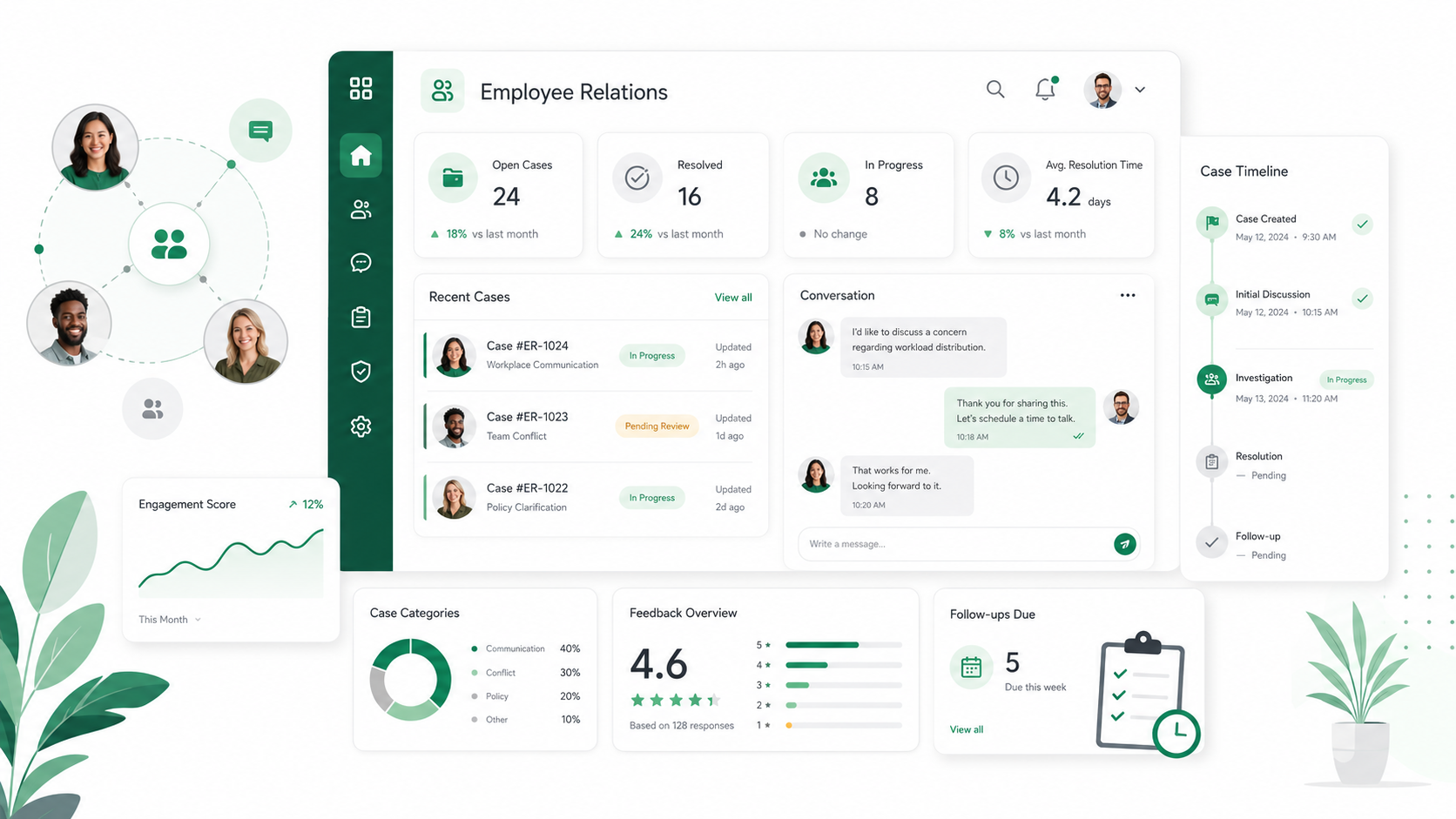
Modern HR departments are starting to use AI-driven tools to search policy handbooks and PDF document archives instantly. Implementing case management software helps you organize compliance workflows and employee cases in one secure, searchable system, ensuring that you can retrieve your defensible paper trails whenever they are needed.
Frequently Asked Questions
Should the employee sign the HR meeting notes?
Yes. It is best practice to have the employee sign the notes to confirm they are an accurate record of the discussion. If the employee refuses to sign, note their refusal on the form, along with the date and time you provided them the document for review.
What should HR do if an employee requests a copy of the meeting notes?
You should generally provide the employee with a copy of any meeting notes they participated in, particularly if the meeting resulted in disciplinary actions. Providing the record demonstrates transparency and good faith.
Is it legal to record an HR meeting?
The legality of recording a meeting depends on state wiretapping laws (single-party vs. all-party consent). Even in single-party consent states, it is recommended to get the explicit permission of all attendees before recording, and to document that consent at the start of the recording.
Can an employee relations case management template be used for simple check-ins?
Yes. Using a standardized template for all meetings, regardless of how minor they seem, ensures that you establish a consistent, routine documentation process, which prevents claims that only certain employees are being singled out for close monitoring.
Disclaimer: The information provided in this article does not, and is not intended to, constitute legal advice; instead, all information, content, and materials available on this site are for general informational purposes only. Readers should contact their attorney to obtain advice with respect to any particular legal matter.