ADA Accommodations for Fibromyalgia: Pacing and Temperature Adjustments (2026)
For U.S. employers and small-business HR teams.
#fibromyalgia in the workplace#reasonable accommodation ergonomics#eeoc fibromyalgia guidelines#workplace adjustments for pain management#interactive process for fibromyalgia
Fact-Checked & Regulatory AuditVERIFIED E-E-A-T
Verified by AI SoloHR Compliance & Editorial Team (U.S. Employment Law & Regulatory Compliance Research Group)
Last Audit: Oct 23, 2026 23:31
Managing compliance requirements for complex physical health conditions is an essential responsibility for HR leaders and business owners. Fibromyalgia, a chronic disorder characterized by widespread musculoskeletal pain, fatigue, sleep disturbances, and cognitive issues—often referred to as "fibro fog"—affects a notable portion of the workforce.
When left unmanaged, the symptoms of fibromyalgia can make sitting at a desk, standing for long periods, or concentrating on detailed tasks extremely difficult, impacting overall job performance.
In 2026, creating supportive, ergonomic workspaces and maintaining strict compliance with disability laws are essential practices for successful businesses. As organizations adopt hybrid work environments and focus on health management, addressing accommodation requests for physical conditions has become a routine HR responsibility.
Dismissing fibromyalgia as a minor issue or failing to participate in the interactive process can expose your business to significant legal risk. We at AI SoloHR believe that a structured, objective, and documented approach to accommodations is the best way to support your team while keeping your business secure.
Sources and review notes
This article is written for U.S. small-business HR teams in 2026 and should be checked against your own policy, state requirements, and counsel guidance before use in a contested employment decision. AI SoloHR provides workflow structure, reviewed drafting support, and educational resources; it does not provide legal advice or make final employment decisions.
Statutory Sources & Regulatory Citations
This compliance document references official regulatory guidance from federal employment enforcement agencies:
This guide covers federal regulations, reasonable modifications, and a step-by-step SOP for HR managers.
1. Legal Status: Does Fibromyalgia Qualify as a Disability under the ADA?
Click to expand
Before adjusting shift hours or physical workplace equipment, employers must understand how fibromyalgia is classified under federal disability laws.
Federal Regulations on Chronic Neurological Conditions and ADA Inclusion
Under Title I of the Americans with Disabilities Act (ADA), a disability is defined as a physical or mental impairment that substantially limits one or more major life activities. Major life activities include, but are not limited to, walking, standing, sitting, reaching, lifting, concentrating, sleeping, performing manual tasks, and working.
The Equal Employment Opportunity Commission (EEOC) guidelines clarify that fibromyalgia can qualify as a protected disability under the ADA. Because it affects the central nervous system and causes widespread pain and cognitive difficulties, it meets the statutory definition of an impairment.
When an employee requests ada accommodations for fibromyalgia, the employer has a legal duty to participate in the interactive process.
Assessing Substantial Limitation of Physical Mobility and Cognitive Focus
Under the ADA Amendments Act (ADAAA), the term "substantially limits" is interpreted broadly. The employee's condition does not need to prevent physical movement or concentration entirely to qualify for protection.
Instead, the employer must assess if the pain or fatigue limits the employee's mobility or cognitive focus compared to most people. For example, if an employee cannot sit for more than an hour without experiencing severe pain, or if "fibro fog" restricts their ability to organize complex tasks, they are considered substantially limited.
This assessment must be conducted without considering the positive effects of pain medications, physical therapy, or other mitigating treatments.
2. Reasonable Workplace Adjustments: Pacing, Rest, and Temperature Control
Click to expand
Once a disability is identified, employers must evaluate which adjustments are reasonable and how they impact job performance.
Implementing Ergonomic Workspaces and Temperature Control Modifications
For individuals with fibromyalgia, managing physical comfort and environmental triggers is critical for pain management:
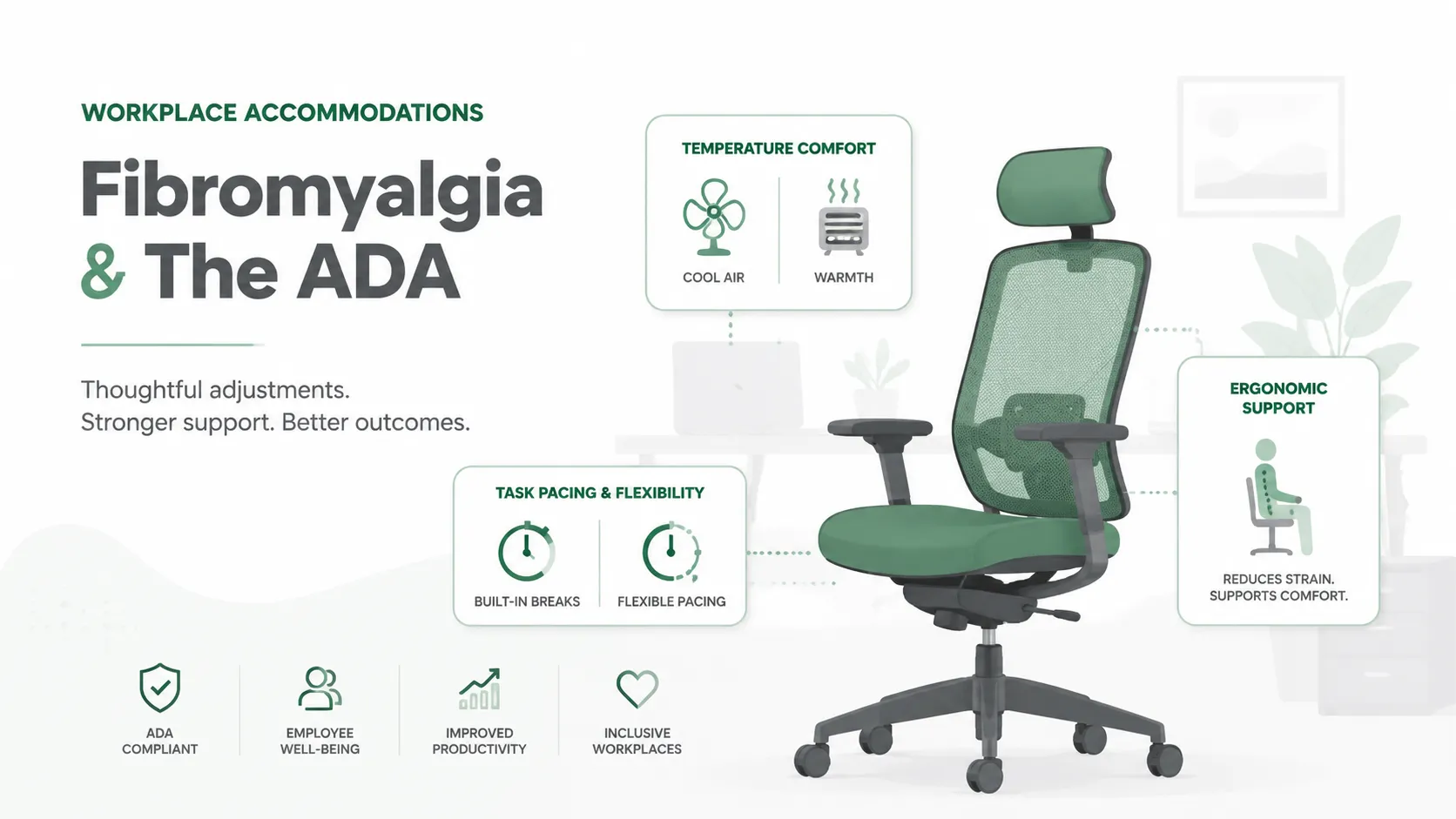
Ergonomic equipment: Providing adjustable sit-stand desks, ergonomic chairs with lumbar support, or vertical mice and keyboards to reduce physical strain.
Temperature control: Allowing the employee to use space heaters, fans, or relocating their desk away from drafty windows or air conditioning vents, as extreme cold or drafty environments can trigger severe muscle stiffness and pain.
Ergonomic accessories: Supplying footrests, document holders, or anti-fatigue mats if standing is required.
These workstation adjustments are typically low-cost and do not require changing the essential functions of the job.
Managing Rest Breaks and Flexible Schedule Pacing
For many employees with fibromyalgia, managing symptoms requires flexibility in pacing and shift structures:
Flexible pacing: Allowing the employee to take short, regular breaks to stretch, stand, or walk, which helps prevent joint stiffness and muscle fatigue.
Schedule flexibility: Providing flexible start and end times to accommodate physical therapy appointments or morning stiffness.
Task pacing: Allowing the employee to prioritize tasks and work at a steady, manageable pace rather than facing constant, high-pressure deadlines when experiencing a flare-up.
Coordinating these schedule adjustments allows the employee to maintain their productivity while managing their symptoms.
3. Step-by-Step SOP: Implementing a Defensible Process
Click to expand
Organizations must follow a structured, documented workflow for every accommodation request to minimize the risk of discrimination claims.
Engaging in the Good-Faith Interactive Process
The interactive process is a collaborative effort between the employer and the employee to find effective adjustments:
Acknowledge and Record: Acknowledge the request immediately and document the date the employee requested modifications.
Request Specific Medical Info: Provide a medical inquiry form for the employee's doctor. The form should focus on the employee's specific physical and cognitive limitations (e.g., limits on sitting, sensitivity to cold) rather than asking for general medical histories.
Collaborate on Solutions: Meet with the employee to review the doctor's feedback and discuss adjustments, such as installing a sit-stand desk or adjusting shift schedules.
Implement and Review: Put the agreed-upon accommodation in writing, noting the start date, expectations, and a scheduled 30-day follow-up.
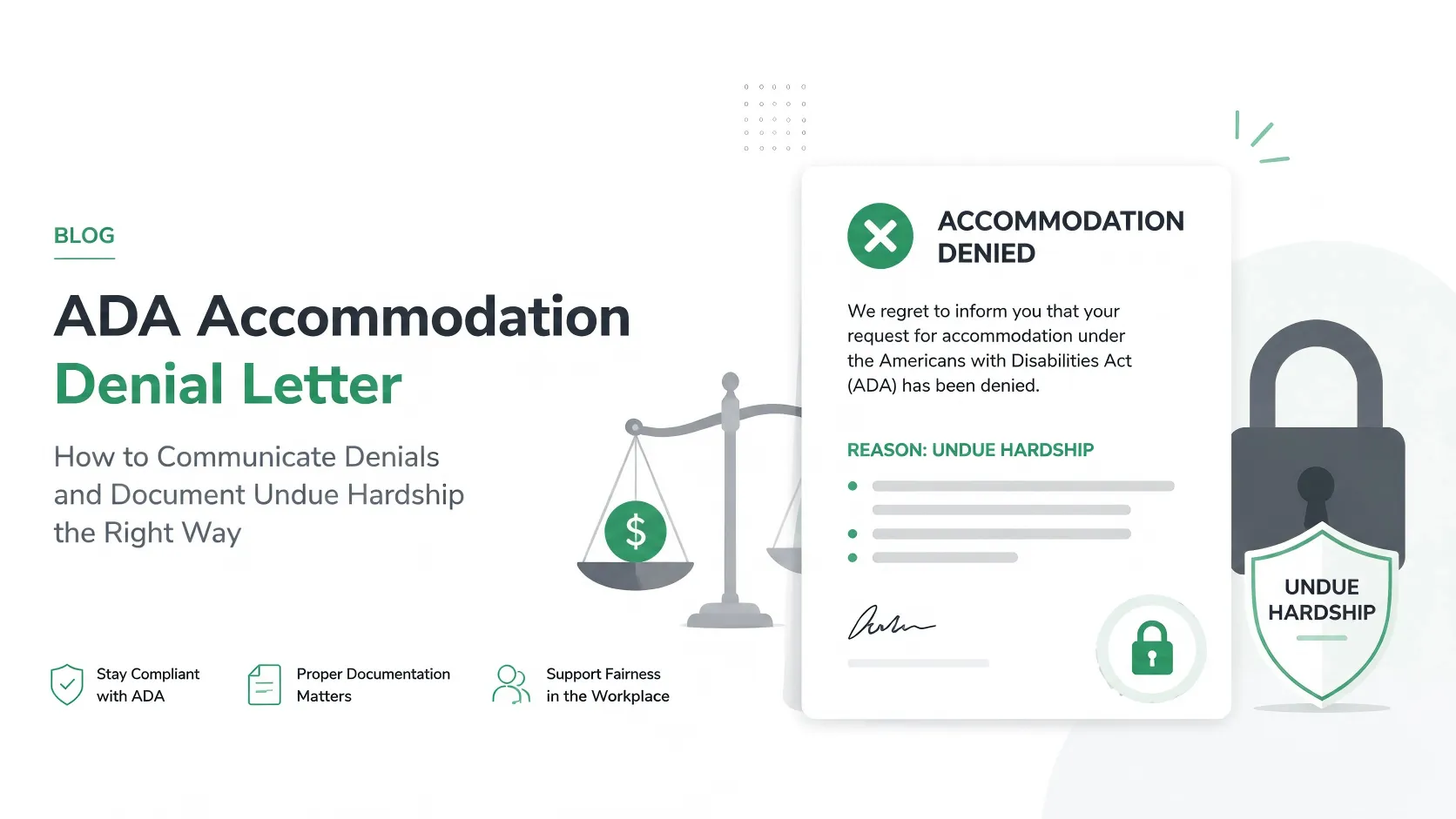
If your company must eventually deny an accommodation request due to undue hardship, having a documented history of this good-faith effort is your primary legal defense.
Ensuring Compliance and Audit Trails with AI SoloHR
Attempting to track accommodation requests, follow-up dates, and medical certifications on manual spreadsheets is a major compliance risk. Storing confidential medical records in general employee personnel files violates ADA privacy regulations.
AI SoloHR addresses these challenges by offering a secure, centralized system for all leave and accommodation tracking. Our platform tracks interactive process timelines, stores sensitive medical documentation in an encrypted vault, and prompts HR managers for scheduled check-ins.
By moving from manual files to automated workflows, you maintain an audit-proof paper trail. Whether you are managing FMLA compliance under the Department of Labor (DOL) rules or tracking fmla leave tracking and ADA cases, AI SoloHR keeps your organization organized and fully compliant.
Frequently Asked Questions
Can an employer refuse to accommodate an employee with fibromyalgia because of invisible symptoms?
No, an employer cannot reject a request simply because the symptoms of fibromyalgia are invisible or subjective. Under the ADA, many disabilities do not have visible physical signs. Employers must rely on the medical documentation provided by the employee's treating physician, which outlines their specific physical limitations, rather than attempting to judge the employee's symptoms themselves.
Are temperature control units (like space heaters or fans) considered reasonable accommodations?
Yes, providing space heaters, desk fans, or relocating the employee's workspace to a more temperature-regulated area are standard reasonable accommodations for employees with temperature sensitivity related to fibromyalgia. Unless the employer can prove that allowing these devices creates a safety hazard or undue hardship (significant difficulty or expense) for the business, these requests should be supported.
How do employers manage intermittent absences caused by fibromyalgia flare-ups?
If an employee's fibromyalgia symptoms are unpredictable, the employer should evaluate whether allowing intermittent absences or a flexible schedule is a reasonable accommodation. HR can work with the employee to establish a call-out procedure and coordinate with their doctor to define the expected frequency and duration of these absences, ensuring compliance and business continuity.
Legal Disclaimer: The information provided on this website does not, and is not intended to, constitute legal advice; instead, all information, content, and materials available on this site are for general informational purposes only. Information on this website may not constitute the most up-to-date legal or other information.