Verified by AI SoloHR Compliance & Editorial Team (U.S. Employment Law & Regulatory Compliance Research Group)
Last Audit: Oct 6, 2026 08:32
Click to expand
Case at a Glance
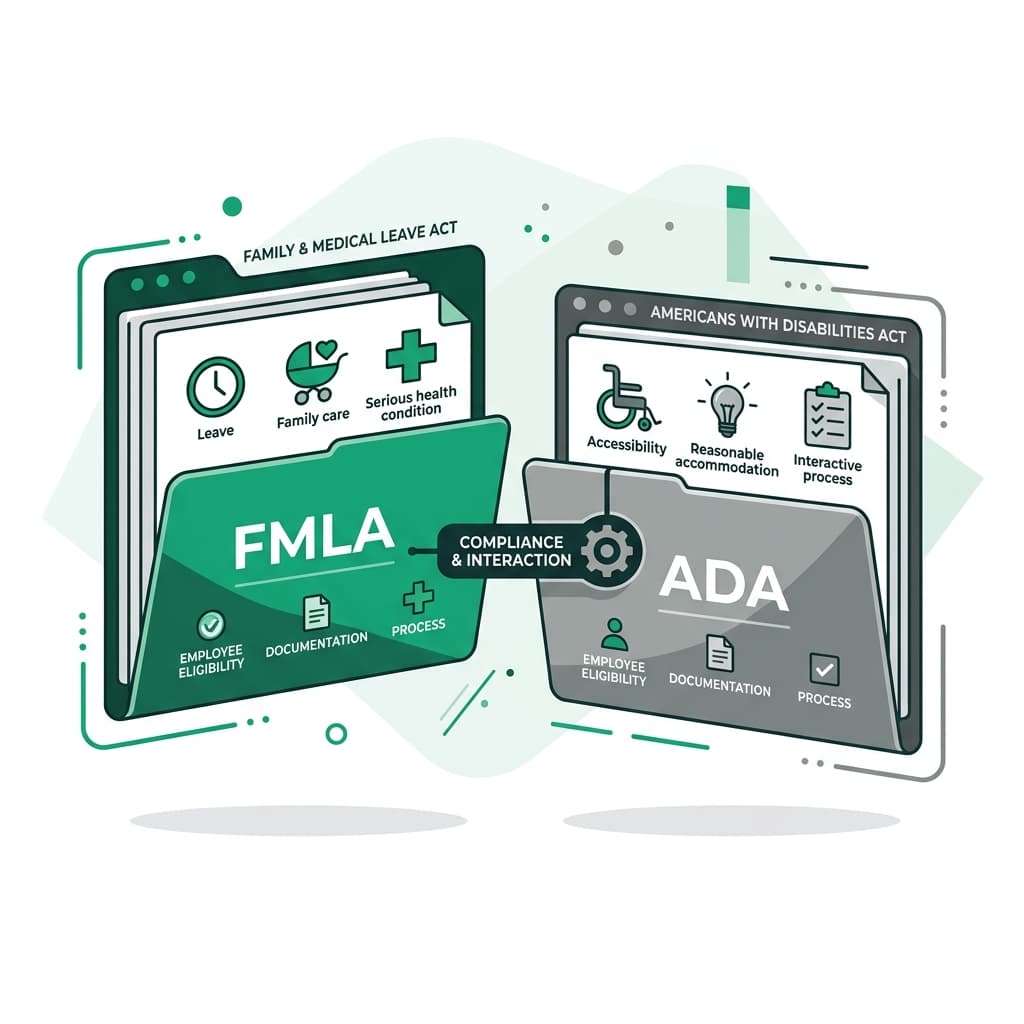
In Murphy v. District of Columbia (2026), the U.S. District Court for the District of Columbia addressed a persistent and high-risk compliance question: Does an employee's application for Family and Medical Leave Act (FMLA) leave automatically serve as a request for a reasonable accommodation under the Americans with Disabilities Act (ADA)? While the Court held that FMLA requests do not inherently constitute ADA accommodation requests, it denied summary judgment for the employer.
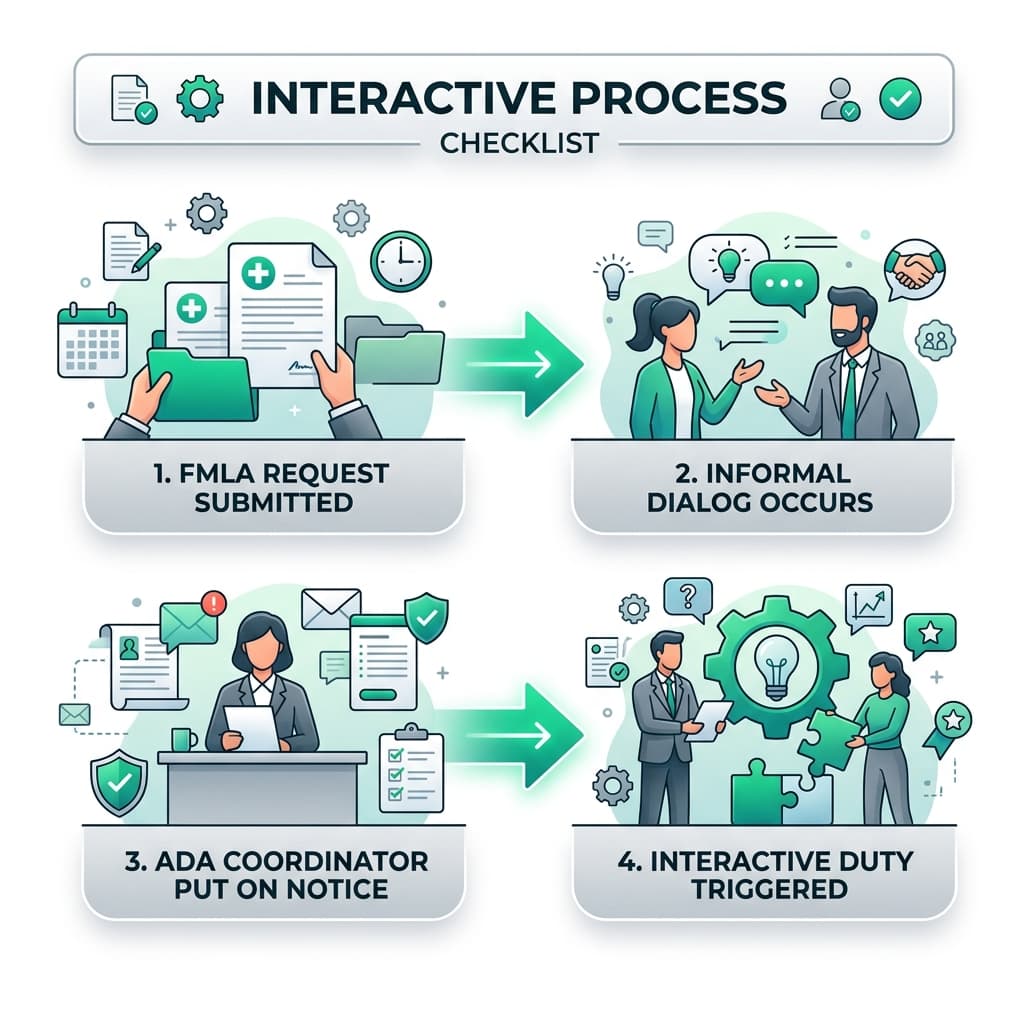
The Court ruled that informal, verbal conversations between the employee and the employer's ADA Coordinator were sufficient to put the employer on notice, thereby triggering the duty to engage in the interactive process.
Sources and review notes
This article is written for U.S. small-business HR teams in 2026 and should be checked against your own policy, state requirements, and counsel guidance before use in a contested employment decision. AI SoloHR provides workflow structure, reviewed drafting support, and educational resources; it does not provide legal advice or make final employment decisions.
Statutory Sources & Regulatory Citations
This compliance document references official regulatory guidance from federal employment enforcement agencies:
The Plaintiff, Robert Murphy, was employed by the District of Columbia Department of Corrections. During his tenure, Murphy developed several severe, life-threatening chronic conditions, including stage five kidney failure, severe hypertension, and diabetes. These conditions required intensive medical management and frequent absences from work.
To manage his medical absences, Murphy formally requested and was approved for leaves of absence under the FMLA. Despite the approval of his leaves, the Department of Corrections' operational managers expressed dissatisfaction with his frequent, unpredictable absences, which contributed to staffing shortages within the facility.
Informal Accommodations Dialogues
While Murphy submitted standard FMLA medical certifications detailing his kidney failure, he also had several informal, verbal conversations with the Department of Corrections' designated ADA Coordinator. During these discussions, Murphy described his ongoing struggle with kidney failure and discussed the challenges of maintaining his full-time shift schedule while undergoing dialysis treatments.
However, Murphy did not submit a separate, formal "ADA Reasonable Accommodation Request Form" or explicitly use the phrase "I am requesting an ADA accommodation." Following his exhaustion of FMLA leave, Murphy was terminated. He filed a lawsuit alleging disability discrimination and a failure to accommodate under the ADA.
2. The Legal Distinction: FMLA vs. ADA Accommodations
Click to expand
Why FMLA Leaves Do Not Automatically Double as ADA Accommodations
The primary defense raised by the District of Columbia was that Murphy had only requested FMLA leave and had never formally submitted a request for an ADA accommodation. The District argued that because an FMLA request is simply a request for a period of unpaid absence from work, it does not put an employer on notice that the employee requires an adjustment to their working conditions or shift structures under the ADA.
The Court agreed with the District on the structural differences between the two statutes. The Court reiterated that:
The FMLA grants employees the right to take a temporary leave of absence due to a serious health condition.
The ADA, by contrast, requires employers to provide reasonable adjustments to enable an employee to perform the essential functions of their job.
Consequently, simply filing FMLA paperwork is not, by itself, a request for a reasonable accommodation under the ADA.
EEOC Compliance Alert
FMLA leave forms and ADA accommodation requests are governed by different legal standards. HR cannot assume that approving FMLA leave satisfies their ADA obligations, nor can they assume that an employee who exhausts FMLA leave has no further rights to job adjustments.
3. Legal Analysis & The Court's Ruling
Click to expand
Triggering the Interactive Process through Informal Notice
Despite ruling that FMLA leave forms do not automatically constitute ADA requests, the District Court denied the District of Columbia's motion for summary judgment on the failure-to-accommodate claim.
The Court held that an employee does not need to use "magic words" or submit a specific form to request an ADA accommodation. Under the law, the employer's duty to engage in the "interactive process" is triggered as soon as the employer is put on notice that the employee requires assistance or adjustments due to a physical or mental impairment.
The Court pointed to the factual record showing that Murphy had direct, verbal conversations with the department's ADA Coordinator regarding his stage five kidney failure and his struggles with his schedule. A reasonable jury could conclude that these informal communications provided the employer with sufficient notice of a need for accommodation, independent of the FMLA forms.
Because the District failed to initiate a structured interactive process following these discussions, it faced trial on the failure-to-accommodate claim.
4. HR Practical Takeaways for Leave & Accommodation Management
To avoid the costly litigation demonstrated in the Murphy ruling, HR managers must implement the following unified compliance practices:
Action 1: Standardize Cross-System FMLA & ADA Trigger Alerts
Establish a Multi-Trigger Protocol: Never allow FMLA files and ADA files to sit in isolated silos. When an employee submits FMLA paperwork showing a permanent or long-term chronic condition (e.g., stage five kidney failure, cancer, or joint issues), HR must automatically flag the case for potential ADA interactive review.
Train ADA Coordinators to Document Verbal Notices: Instruct HR coordinators that any verbal discussion where an employee mentions struggling to work due to a medical condition must be documented immediately in a centralized case log.
Action 2: Replace "Magic Form" Requirements with Good-Faith Outreach
Abolish Rigid Form Barriers: Do not deny an accommodation simply because an employee failed to fill out your specific internal ADA form. If an employee verbally requests help, HR must take the initiative to send the forms and document the outreach.
Initiate the Interactive Process Proactively: When an employee exhausts FMLA leave or mentions a struggle, send a formal letter inviting them to participate in a cooperative interactive dialogue to explore accommodations.
Action 3: Maintain Centralized Case Timelines and Interaction Logs
Log Every Conversation: Keep a chronologically ordered, timestamped record of every email, phone call, and meeting related to the employee's health and schedule.
Defend Pre-Termination Reviews: Before executing a termination due to FMLA exhaustion, conduct an audit to verify that no manager or ADA coordinator received an informal request for accommodation that went unaddressed.
5. Next Steps for HR: Proactively Securing Your Compliance
To secure your organization against cross-statute leave and accommodation risks:
Audit Leave and Accommodation Timeline Triggers: Document all communication attempts and accommodation options using the ADA Process Timeline Calculator.
Track FMLA Eligibility and Chronology: Replace manual Excel sheets with the FMLA Eligibility & FTE Calculator to maintain precise compliance records.
Identify Supervisor Training Gaps: Review how your managers handle informal medical complaints with the FMLA Interference Risk Evaluator.
If you want to secure your workplace with a unified dashboard that links FMLA leaves, ADA interactive logs, and secure document storage, Start Your Free Trial of AI SoloHR Today.
Disclaimer: This case study is for educational and informational purposes only and does not constitute legal advice. AI SoloHR does not provide legal opinions or represent businesses in judicial disputes. For complex compliance questions, please consult qualified labor counsel.