FMLA Abuse & Forced Disclosures: Remmick v. Magellan Health
Analyze FMLA privacy and mental health leave constraints in Remmick v. Magellan Health. Learn why forced medical disclosure to coworkers is an HR violation.
For U.S. employers and small-business HR teams.
#case-study#FMLA Leave#ADA Accommodation#Mental Health Accommodation#HR Documentation
Fact-Checked & Regulatory AuditVERIFIED E-E-A-T
Verified by AI SoloHR Compliance & Editorial Team (U.S. Employment Law & Regulatory Compliance Research Group)
Last Audit: Oct 7, 2026 21:56
Click to expand
Case at a Glance
In Remmick v. Magellan Health, Inc. (2026), the Court of Appeals of Iowa evaluated a critical boundary in human resource management: the intersection of coworker relations, FMLA leave exhaustion, and medical privacy. While the employer successfully defended against disability discrimination claims because the employee was certified as completely unable to work, the case exposes a severe liability: a supervisor forcing an employee to disclose details of her mental illness to her coworkers before going on leave.
This case study explores how the employer's swift internal HR investigation and subsequent supervisor discipline saved it from a costly lawsuit, and outlines essential rules for managing FMLA leave without violating employee privacy.
Sources and review notes
This article is written for U.S. small-business HR teams in 2026 and should be checked against your own policy, state requirements, and counsel guidance before use in a contested employment decision. AI SoloHR provides workflow structure, reviewed drafting support, and educational resources; it does not provide legal advice or make final employment decisions.
Statutory Sources & Regulatory Citations
This compliance document references official regulatory guidance from federal employment enforcement agencies:
The Employee's Medical History and Career Progress
The Plaintiff, Lisa Remmick, worked for Magellan Health, Inc. starting in 2001, eventually earning a promotion in 2008 to Intensive Case Manager (ICM). In her ICM role, Remmick was highly rated, frequently exceeding performance goals and earning performance bonuses.
Her job involved coordinating medical care for severely mentally ill, homeless, and high-risk patients. Since the age of 16, Remmick had struggled with severe major depressive disorder and anxiety, which she managed through medication.
In late 2012, Remmick experienced a severe depressive flare-up and took approved FMLA leave, returning to work in December 2012. Upon her return, Remmick felt isolated, believing her coworkers were cold and distant because of her absence. She complained to her supervisor, Julie Carlson, that the team had ignored her while sending cards and care packages to another colleague who took leave for cancer treatments.
Carlson responded that it was "easy to support someone when you know exactly what’s going on," referencing the colleague’s open sharing of her diagnosis.
2. The Supervisor's Misstep: Forcing Disclosure
Click to expand
The Forced Disclosure Meetings
In August 2026, Remmick’s depression worsened, leading to a brief voluntary hospitalization for suicidal ideation. Upon returning to the office, she had an emotional discussion with Carlson about her inability to handle the stress of the job, noting the team was already short-staffed.
To address Remmick’s concern about coworker resentment, Carlson made a critical mistake: she told Remmick that "sharing her illness" with the team was a condition of her leaving the office that day. Carlson brought coworkers into a private office and remained in the room while a tearful Remmick was forced to explain the details of her severe depression and suicidal ideation to her colleagues.
During the second of these meetings, a coworker became angry and yelled at Remmick, accusing her leaves of causing everyone else severe operational stress. Humiliated, Remmick went on medical leave immediately after.
HR's Swift Response and Disciplinary Action
While on leave, Remmick’s attorney contacted Magellan’s HR department alleging disability discrimination and a hostile work environment due to the forced disclosure. Magellan’s HR immediately launched a thorough investigation. Following the investigation, HR took decisive corrective actions:
HR formally disciplined supervisor Carlson, issuing a final written warning and putting her on a formal Performance Improvement Plan (PIP) for showing "poor judgment regarding an employee’s medical situation."
HR mandated sensitivity and diversity training for the entire ICM team.
HR assigned Remmick back to her preferred territory upon her request and assured her that the team issues had been addressed.
3. Legal Analysis & The Court's Ruling
Click to expand
The "Qualified Employee" Standard
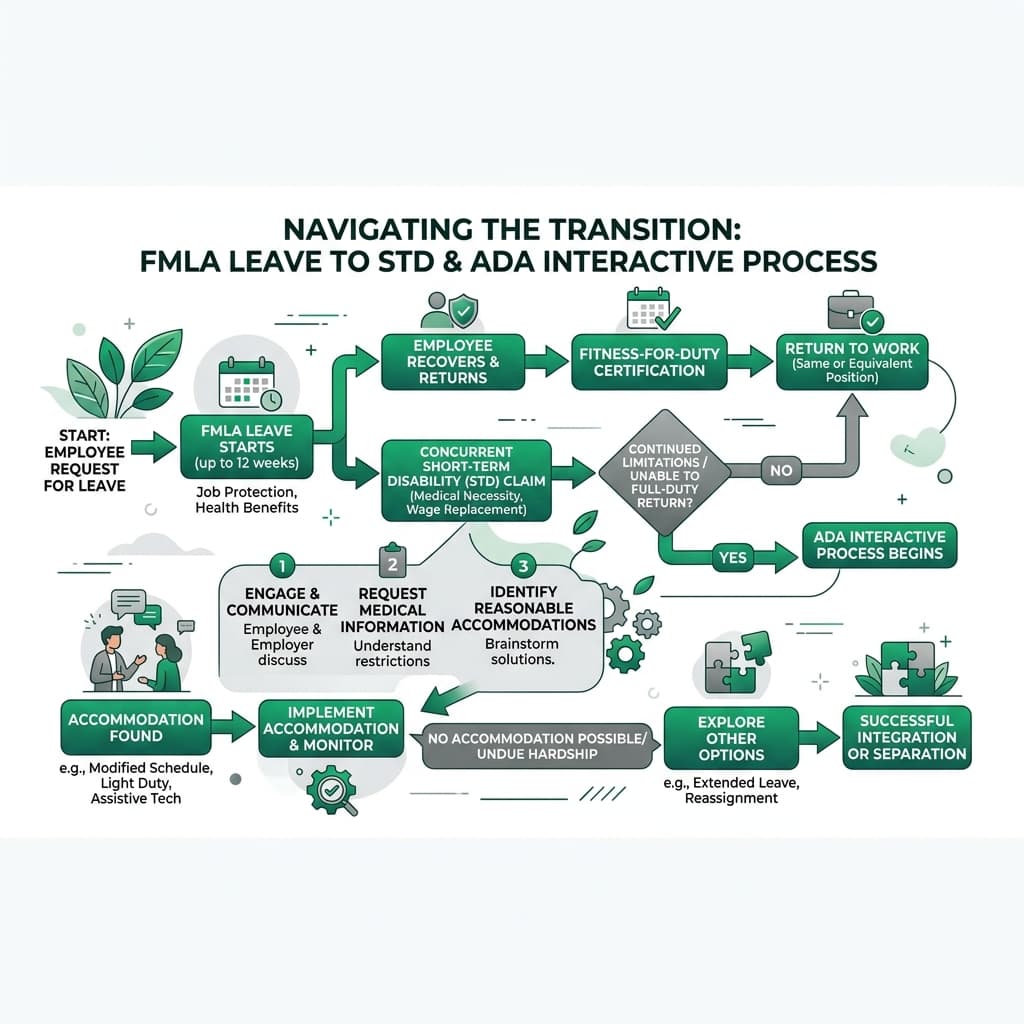
Despite HR’s corrective actions, Remmick did not return to work. She exhausted her 12 weeks of FMLA leave in September 2026, after which Magellan approved her for paid Short-Term Disability (STD). In November 2026, HR contacted Remmick to evaluate potential accommodations.
However, Remmick’s psychiatrist filled out the accommodation form stating that her symptoms "preclude her ability to tolerate the demands of sustained competitive employment" and marked her restrictions as "not currently able to work."
Magellan held her job open for five months. In January 2026, when Remmick and her doctor confirmed she still had no estimated return date and could not perform any duties, Magellan terminated her.
Under the Iowa Civil Rights Act (ICRA) and the ADA, a plaintiff must prove they are a "qualified employee"—meaning they can perform the essential functions of the job with or without a reasonable accommodation. The Court of Appeals of Iowa affirmed summary judgment for Magellan, ruling that since Remmick and her doctor certified she was completely unable to work in any capacity, she was not a qualified employee, defeating her discrimination claim.
The "Cause of Disability" Loophole Rejected
Remmick argued that she was only unable to work because Magellan’s supervisor had discriminated against her and caused her severe emotional distress during the forced disclosure.
The Court rejected this argument, adopting established federal precedents. The Court held that an employee's status as a qualified employee depends strictly on the extent of their disability and their actual capability of working at the time of the employment action.
The legal analysis does not change based on the cause of the disability, even if the employer's hostile conduct allegedly triggered the condition.
EEOC Compliance Alert
Even if an employer's behavior allegedly caused or worsened an employee's medical condition, the employee must still be capable of performing the essential functions of the job (with or without accommodation) to maintain a disability discrimination claim under the ADA and ICRA.
4. HR Practical Takeaways for FMLA and Privacy Management
To protect your organization from severe privacy violations and discrimination lawsuits, HR departments must implement the following controls:
Action 1: Enforce Absolute Confidentiality on Medical Leaves
Prohibit Manager-Led Medical Disclosures: Never allow supervisors to discuss or encourage employees to share their medical conditions with coworkers. Under HIPAA, ADA, and FMLA, an employee's medical condition is strictly confidential.
Establish Clear Communication Boundaries: Managers must restrict discussions with coworkers regarding an absent employee to simple operational coverage updates (e.g., "Lisa is on approved leave; her files will be handled by Dave").
Action 2: Train Supervisors on operational "Short-Staffing" Resentment
Prevent Coworker Backlash: Short-staffing is a business problem for management to solve, not a burden for a disabled employee to justify. Forbid managers from allowing team members to vent frustration, yell at, or glare at employees returning from or going on protected leave.
Audit Team Dynamics Post-Return: Have HR check in with employees returning from FMLA leave to ensure they are not experiencing isolation, cold treatment, or peer retaliation.
Action 3: Conduct Immediate and Documented HR Investigations
Execute Swift Corrective Actions: In Remmick, the employer avoided liability because HR immediately investigated, issued a final written warning to the offending manager, and retrained the team. Documenting these swift, corrective measures creates a powerful legal defense.
Utilize Standardized Performance Warnings: Keep manager PIPs and warnings objective and directly linked to policy violations.
Enforce Structured Leave Reviews: When FMLA leave expires, proactively offer accommodation forms. If the physician certifies that the employee is completely unable to work without an estimated return date, document the interactive process efforts before proceeding with a nondiscriminatory termination.
5. Next Steps for HR: Proactively Securing Your Compliance
To safeguard your organization against medical privacy violations and manage leave transition compliance:
Log Interactive Dialogue Step-by-Step: Use the ADA Process Timeline Calculator to record every outreach, accommodation form sent, and physician response.
Audit Manager Leave Behaviors: Run a compliance audit on your supervisors using the FMLA Interference Risk Evaluator to identify unsafe medical leave talk.
Calculate Protected Leaves Accurately: Avoid "burning up" protected time manually with our secure FMLA Eligibility & FTE Calculator.
Disclaimer: This case study is for educational and informational purposes only and does not constitute legal advice. AI SoloHR does not provide legal opinions or represent businesses in judicial disputes. For complex compliance questions, please consult qualified labor counsel.