ComplianceJun 6, 2026 03:08by AI SoloHR Team7 min read
Federal Contractor Exemption & Administrative Hurdles: Diaz v. United States
Analyze the FLSA misclassification claim in Diaz v. United States. Learn about the federal appointment doctrine, CDA jurisdictional bars, and HR compliance rules.
Verified by AI SoloHR Compliance & Editorial Team (U.S. Employment Law & Regulatory Compliance Research Group)
Last Audit: Sep 21, 2026 14:01
Click to expand
Case at a Glance
In Diaz v. United States (2026), a Contract Delivery Service mail carrier sued the United States Postal Service, claiming he was misclassified as an independent contractor rather than an employee and was owed overtime pay under the Fair Labor Standards Act.
The U.S. Court of Federal Claims dismissed the action, holding that federal employees must be hired through a statutory appointment process, making private-sector employment tests irrelevant. Additionally, because the plaintiff was an independent contractor, his claims were governed by the Contract Disputes Act, which he failed to exhaust by not submitting a certified claim to a contracting officer, thereby stripping the court of jurisdiction.
1. Factual Background
Sources and review notes
This article is written for U.S. small-business HR teams in 2026 and should be checked against your own policy, state requirements, and counsel guidance before use in a contested employment decision. AI SoloHR provides workflow structure, reviewed drafting support, and educational resources; it does not provide legal advice or make final employment decisions.
Statutory Sources & Regulatory Citations
This compliance document references official regulatory guidance from federal employment enforcement agencies:
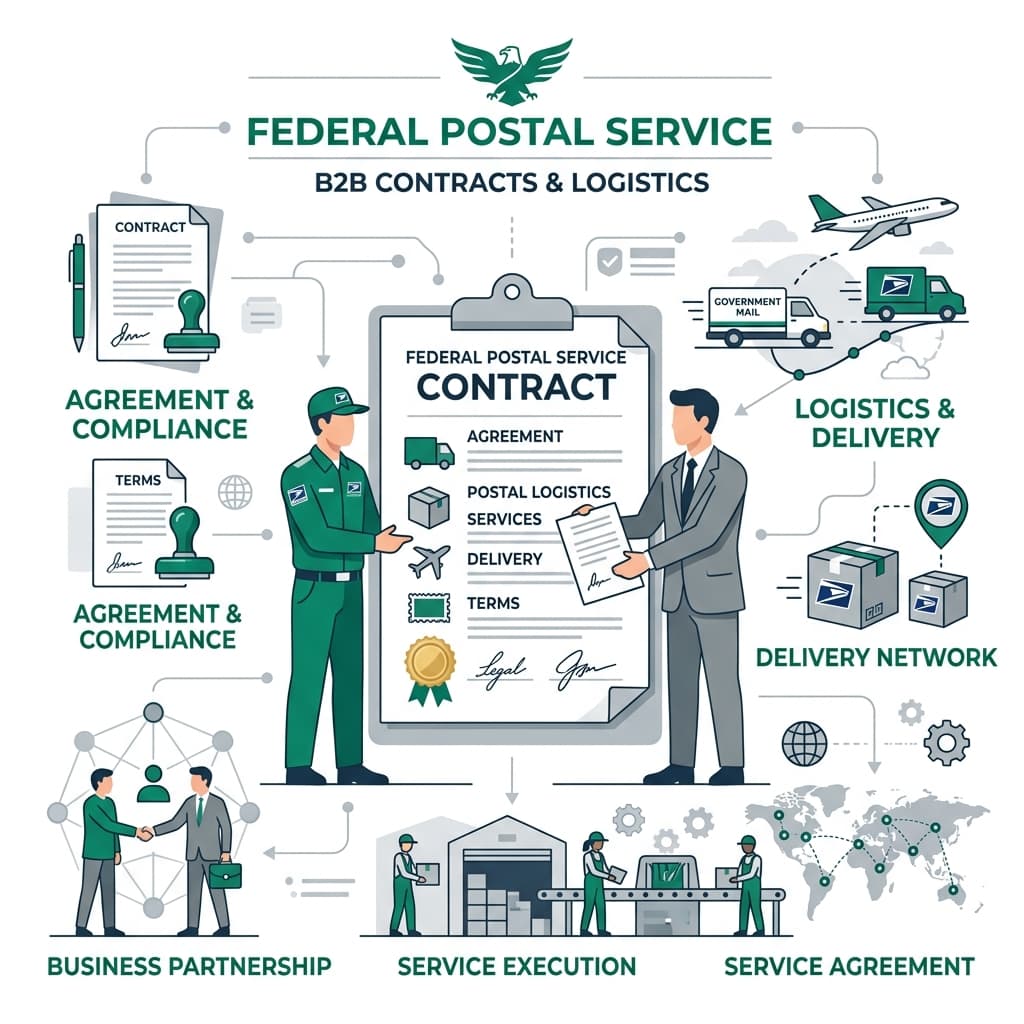
The Plaintiff, David Diaz, entered into a Contract Delivery Service agreement with the United States Postal Service to deliver mail in rural Florida, beginning in the years preceding the 2026 dispute. Under the terms of the agreement, Diaz was designated as a "supplier" and independent contractor rather than an employee, with compensation tied to the specific routes and mailboxes serviced rather than hours worked.
The contract explicitly stated that active employees of the USPS were ineligible to become suppliers, formalizing the mutual understanding that his relationship with the federal agency was strictly commercial.
Mailbox Expansion and Compensation Disputes in Osceola County
Over his tenure, Osceola County experienced rapid population growth, which caused the number of mailboxes Diaz had to service to increase significantly, rising from an initial 342 mailboxes to eventually 745 mailboxes. Although the contracting officer amended the contract over several cycles leading up to 2026 to increase his annual pay from $29,351.59 to $66,049.87, Diaz argued that the compensation adjustments were not proportional to the massive increase in workload.
In late 2026, his counsel sent a letter to the USPS Deputy Managing Counsel, asserting that he was misclassified as an independent contractor, treated as an employee, and was owed overtime and minimum wage protections under the FLSA.
The Transition of Litigation to the Court of Federal Claims
Following the agency's refusal to reclassify his contract, Diaz filed a lawsuit against the USPS in the U.S. District Court for the Middle District of Florida, asserting claims for breach of contract, quantum meruit, unpaid overtime under the FLSA, and state-law wage violations.
In response, the USPS moved to dismiss the contract-related claims for lack of subject matter jurisdiction, arguing that Diaz failed to exhaust the administrative remedies required by the Contract Disputes Act. The District Court agreed in part and transferred the entire action to the United States Court of Federal Claims to resolve the jurisdictional and misclassification issues.
2. The Appointment Doctrine & The CDA Jurisdictional Bar
Click to expand
Statutory Framework of Federal Appointment
The Court of Federal Claims began its analysis by examining the distinct legal nature of federal employment, which is governed by the federal appointment doctrine rather than private-sector contract principles. Under Section 1001(a) of Title 39 of the United States Code, the USPS is statutorily mandated to appoint all officers and employees of the Postal Service.
The Federal Circuit enforces the strict principle that federal employees derive the benefits and terms of their positions solely from a formal appointment, meaning that private-sector definitions of employment do not apply to federal entities.
Administrative Requirements Under the Contract Disputes Act
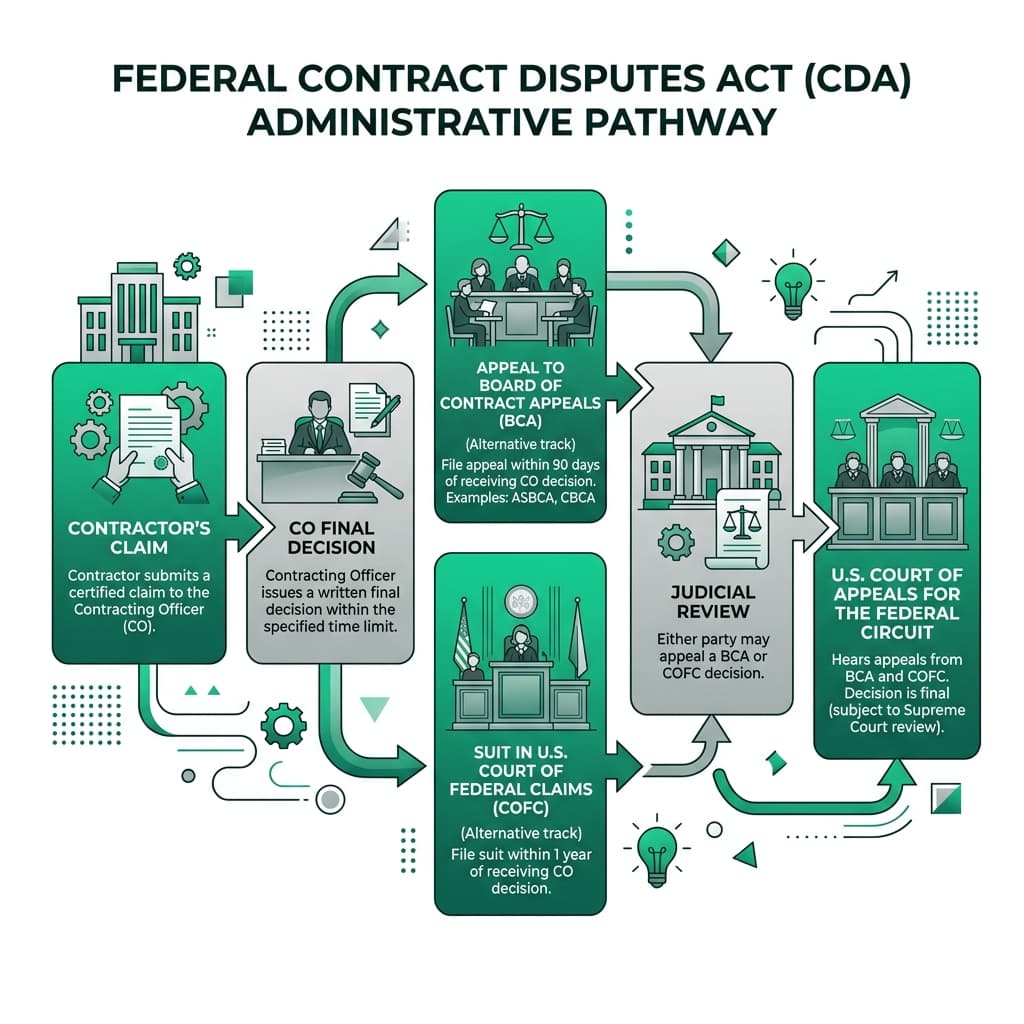
For independent contractors working with the federal government, the Contract Disputes Act serves as the exclusive administrative mechanism for resolving contract-related disputes. The CDA mandates that a contractor must first submit a written, certified claim to the contracting officer and obtain a final decision before filing a lawsuit in court.
Under federal regulations, any contract dispute seeking more than $100,000 must be formally certified by the contractor, and failure to fulfill this administrative presentment requirement deprives the courts of subject matter jurisdiction.
3. Legal Analysis & The Court's Ruling
Click to expand
Rejecting the Private-Sector Economic Realities Test
Diaz urged the court to apply the "economic realities" test—commonly used in private-sector disputes under the federal Fair Labor Standards Act—to show that the USPS controlled his schedule and duties like an employee. The Court of Federal Claims rejected this argument, holding that because federal employment requires a statutory appointment under 39 U.S.C. § 1001(a), the economic realities test is legally irrelevant.
Since Diaz was never formally appointed as a federal employee, his legal status remained that of an independent contractor, and his claims could not be governed by the FLSA.
Dismissing the Breach of Contract Claim under Rule 12(b)(1)
Having established that Diaz was an independent contractor, the court analyzed his breach of contract claim under the strict requirements of the CDA. Although Diaz argued that the letter sent by his counsel to the USPS Deputy Managing Counsel served as administrative notice, the court ruled that the letter did not constitute a valid claim under the CDA because it was not submitted to the contracting officer or an authorized representative.
Furthermore, because Diaz sought approximately $110,000, his failure to include the mandatory certification required for claims exceeding $100,000 stripped the court of subject matter jurisdiction under Rule 12(b)(1).
Rejecting the Quantum Meruit Claim under Rule 12(b)(6)
Diaz also brought an implied-in-fact contract claim under the doctrine of quantum meruit to recover the value of his uncompensated delivery services. The court dismissed this claim under Rule 12(b)(6) for failure to state a claim, noting that quantum meruit recovery against the government is only available when an express contract is later found to be invalid.
Because Diaz had a valid, binding, and express written agreement with the USPS that was never rescinded, he could not bypass the terms of his contract or the administrative hurdles of the CDA by asserting an implied-in-fact contract.
4. In-Depth HR Practical Takeaways
To prevent misclassification risks and ensure administrative compliance when contracting with public or private entities, HR leaders must implement the following three structured practices:
Action 1: Distinguishing Government Appointees from Private Employees
Organizations operating in or contracting with the public sector must recognize that federal agencies operate under unique statutory frameworks like the appointment doctrine. Unlike private-sector businesses governed by the federal Fair Labor Standards Act, federal employment is strictly defined by formal civil service appointments.
When structuring joint ventures or public-private partnerships, HR leaders must ensure that contractors are managed strictly under procurement rules and never integrated into the statutory agency workforce.
Action 2: Establishing Clear Administrative Claim Protocols for Contractors
For businesses acting as federal contractors, HR and legal departments must establish rigorous internal protocols to ensure compliance with administrative statutes like the CDA. If a contract dispute arises regarding workloads or pay adjustments, companies must submit formal, written, and certified claims directly to the designated contracting officer rather than relying on casual legal correspondence or administrative appeals.
Failing to follow the precise statutory steps for administrative exhaustion will result in immediate dismissal of contract claims in federal court.
Action 3: Implementing Workload Audits and Proactive Contract Amendments
To prevent misclassification risks and operational disputes, organizations must proactively monitor contractor workloads relative to contract terms, particularly during periods of rapid geographic expansion. When service demands (such as the number of mailboxes or delivery routes) grow significantly, management should execute formal, mutual contract amendments that align pay with the updated scope of work.
Maintaining clear, written agreements that reflect actual service requirements prevents contractors from asserting that their treatment has crossed the line into an employer-employee relationship.
EEOC Compliance Alert
Whether dealing with federal agencies or private commercial partners, administrative exhaustion and strict adherence to contract-defined dispute resolution processes are absolute jurisdictional hurdles. HR and contract managers must never attempt to bypass formal dispute procedures in favor of litigation, as courts will routinely dismiss claims for failing to follow the administrative paths laid out in the initial agreement.
5. Next Steps for HR: Proactively Securing Your Compliance
To proactively secure your workplace against contract disputes and misclassification allegations, utilize our interactive compliance tools:
Evaluate Employer Coverage: If you are unsure whether your business is subject to federal FLSA rules or specific contractor thresholds, use our FLSA Eligibility & FTE Calculator to check your status.
Audit Contract Timelines: When managing renewal dates and workload reviews, establish an unalterable milestone trail using the ADA Process Timeline Calculator to document every cooperative review attempt.
Assess Classification Risk: Run a quick diagnostic of your independent contractor agreements with the FMLA Interference Risk Evaluator to identify potential compliance gaps.
If you are ready to retire manual spreadsheets and secure your organization with an unalterable audit log, Start Your Free Trial of AI SoloHR Today. Take charge of contracts, tasks, and communications in one secure, compliant dashboard.
Disclaimer: This case study is for educational and informational purposes only and does not constitute legal advice. AI SoloHR does not provide legal opinions or represent businesses in judicial disputes. For complex compliance questions, please consult qualified labor counsel.