Unreasonable Accommodations in Healthcare: Ferguson v. University Hospitals
Analyze the ADA reasonable accommodation and shift requirement standard in Ferguson v. UH. Learn when staffing demands outweigh individual shift preferences.
Verified by AI SoloHR Compliance & Editorial Team (U.S. Employment Law & Regulatory Compliance Research Group)
Last Audit: Oct 2, 2026 06:47
Click to expand
Case at a Glance
In Ferguson v. University Hospitals Health System, Inc. (2026), the Ohio Court of Appeals addressed a critical question for healthcare and 24-hour shift-based operations: Is an employer required under the Americans with Disabilities Act (ADA) to alter its standard 12-hour shift staffing model to accommodate an employee's restriction to work only 8-hour shifts? The Court affirmed summary judgment in favor of the hospital, ruling that working 12-hour shifts was an essential function of the registered nurse position and that forcing other employees to cover remaining hours or compromising patient care transitions constitutes an unreasonable accommodation.
1. Factual Background
Sources and review notes
This article is written for U.S. small-business HR teams in 2026 and should be checked against your own policy, state requirements, and counsel guidance before use in a contested employment decision. AI SoloHR provides workflow structure, reviewed drafting support, and educational resources; it does not provide legal advice or make final employment decisions.
Statutory Sources & Regulatory Citations
This compliance document references official regulatory guidance from federal employment enforcement agencies:
The Plaintiff, Richard Ferguson, worked as a registered nurse (RN) at Robinson Memorial Hospital (later acquired by University Hospitals Portage Medical Center) for over twenty years. He was highly competent, well-liked, and received positive performance reviews.
In late 2025 and early 2026, Robinson Memorial Hospital merged with University Hospitals (UH). As part of this transition, UH converted the facility's nurse staffing model in the Medical-Surgical department from an 8-hour shift structure to a standardized 12-hour shift system to improve patient care continuity and reduce handoff errors.
The Accommodation Request and Medical Restrictions
Following the announcement of the new schedule, Ferguson requested to remain on an all-8-hour shift schedule. Ferguson suffers from a clubbed foot, and standing or walking for longer than 8 hours caused him severe leg discomfort, fatigue, and difficulty ambulating.
To support his request, Ferguson submitted an ADA reasonable accommodation form, and his treating physician, Dr. Edward Jastrzemski, completed a provider certification. The physician certified that Ferguson had permanent, lifetime restrictions: he could not work more than 8 hours per day, must spend at least half his shift sitting, and could not lift more than 20 pounds.
The physician opined that the only viable accommodation was to limit Ferguson’s workday to 8 hours.
2. The Interactive Accommodation Process
Click to expand
The Hospital's Operational Concerns
Upon receiving the request, UH Human Resources and nursing leadership evaluated whether they could accommodate an all-8-hour schedule for a floor nurse. The department concluded that doing so would severely disrupt staffing patterns and jeopardize patient safety. Under a 12-hour staffing model, if a nurse leaves after 8 hours:
Another nurse must cover the remaining 4 hours of the shift.
If no nurse is available, the nurse-to-patient ratio increases, putting pressure on remaining staff.
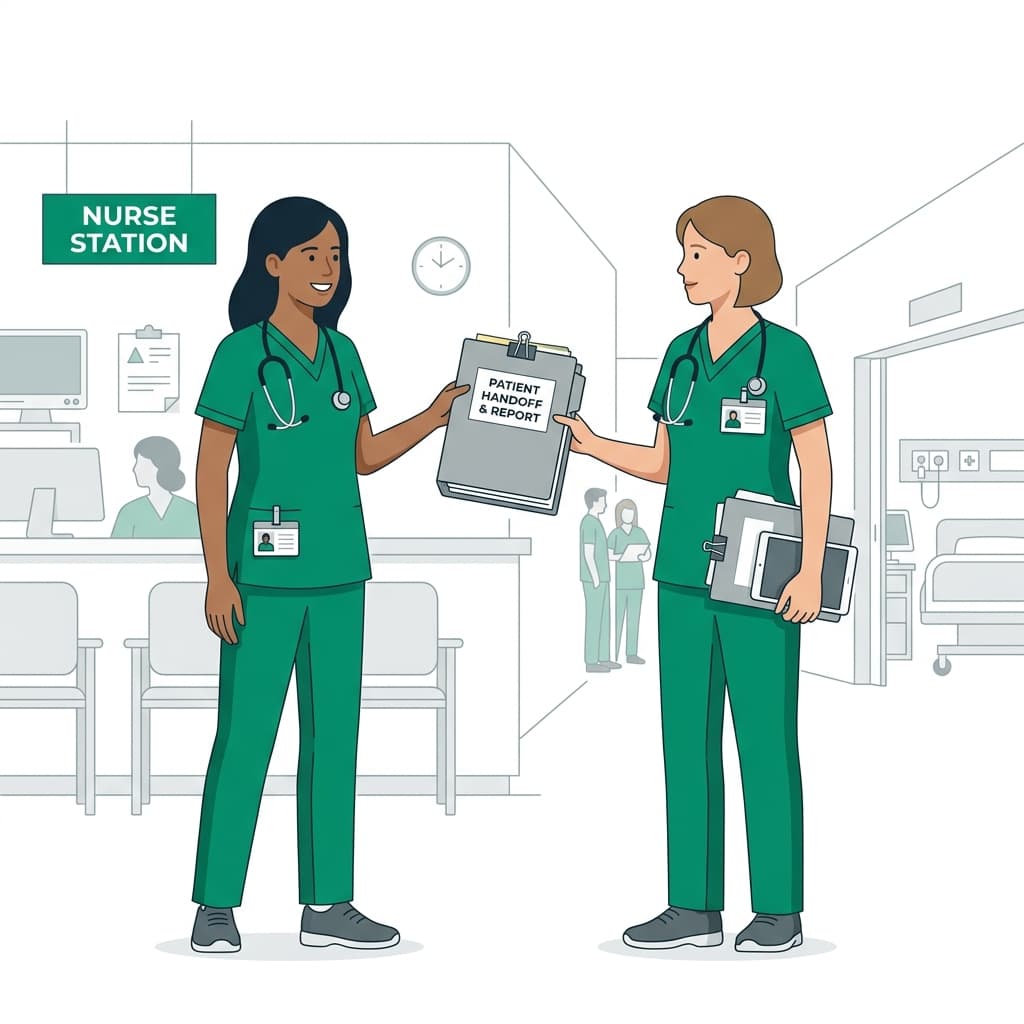
Crucially, patient care transitions (handoffs) would occur mid-shift. HR and nursing leadership testified that structured, organized handoff reporting at shift changes is critical for patient safety, and having nurses "coming and going" mid-shift introduces severe communication risks.
Ferguson himself admitted that other nurses would have to add his patients to their own full workloads for 4 hours at the end of his shift.
Interactive Dialogue Offerings
Despite the operational challenges, UH engaged in an interactive process:
The Combo Shift Offer: UH offered Ferguson a temporary "combo shift" consisting of 8-hour weekday shifts and 12-hour weekend shifts, which was designed to help ease the transition. Ferguson initially accepted but later declined the offer.
Alternative Position Bidding: UH encouraged Ferguson to apply and bid for other nursing vacancies within the broader UH network that might fit his physical restrictions. Ferguson declined, preferring to remain at Portage Medical Center.
Alternative Accommodation Inquiry: UH sent a letter to Ferguson's physician asking if other accommodations (such as longer rest breaks or mobility aids) would allow him to work 12-hour shifts. The doctor responded that rest breaks would not help because Ferguson became fatigued after 8 hours of weight-bearing.
Since the physician maintained that Ferguson could not work over 8 hours and could not perform the lifting duties of a floor nurse, UH placed Ferguson on paid administrative leave pending a fitness-for-duty evaluation. Eventually, Ferguson was placed on FMLA leave, which expired on July 30, 2026.
Because he did not return to work or obtain clearance to work 12-hour shifts, UH terminated his employment.
3. Legal Analysis & The Court's Ruling
Click to expand
12-Hour Shifts as an "Essential Function"
To succeed on an ADA discrimination or failure-to-accommodate claim, the employee must show that they can perform the "essential functions" of the position with or without a reasonable accommodation. The Ohio Court of Appeals ruled that working 12-hour shifts was an essential function of a Medical-Surgical staff nurse at UH.
The Court held that while the written job description did not explicitly state "12-hour shifts," it required adherence to organizational scheduling policies. Additionally, every single nurse in the department was required to work 12-hour shifts, and the hospital demonstrated that its scheduling judgment was based on patient safety and care continuity.
Accommodation is Unreasonable if it Disrupts Staffing and Care
The Court concluded that Ferguson's requested accommodation—working exclusively 8-hour shifts—was unreasonable as a matter of law. Under established ADA jurisprudence:
An employer is not required to create a new position or shift to accommodate an employee.
An accommodation that shifts essential duties (like patient coverage) to other coworkers, increasing their workloads and changing their schedules, is not reasonable.
In a 24-hour hospital setting, courts must afford deference to rational staffing judgments made by healthcare employers regarding patient handoffs and care continuity.
EEOC Compliance Alert
Employers are not legally obligated to grant shift-length accommodations if doing so requires creating a unique schedule, forces other employees to absorb the remaining hours, or increases operational and safety risks (such as patient handoff errors).
No Pretext for Discrimination or Retaliation
The Court also rejected Ferguson's claims of discrimination and retaliation, finding that UH had a legitimate, non-discriminatory reason for placing him on leave and terminating him: he could not perform the essential 12-hour shift function of his role, and his physician certified that his restrictions were permanent.
UH's attempts to offer the combo shift and alternative jobs demonstrated a good-faith interactive process, defeating any inference of pretext.
4. HR Practical Takeaways for Shift-Based Operations
For organizations operating on a 24-hour, shift-based staffing model (such as healthcare facilities, manufacturing plants, or logistics hubs), the Ferguson ruling provides clear guidelines for managing accommodation requests:
Action 1: Define Shift Requirements in Handbooks and Hand-off Policies
Integrate Schedules in Policies: Clearly state in handbooks and job descriptions that working standardized shifts (e.g., 12 hours) and adhering to department scheduling models is an essential requirement of the role.
Document Care Continuity Rules: Document the operational and safety rationale behind your shift structures (such as reducing handoff communication errors or meeting mandatory staffing ratios).
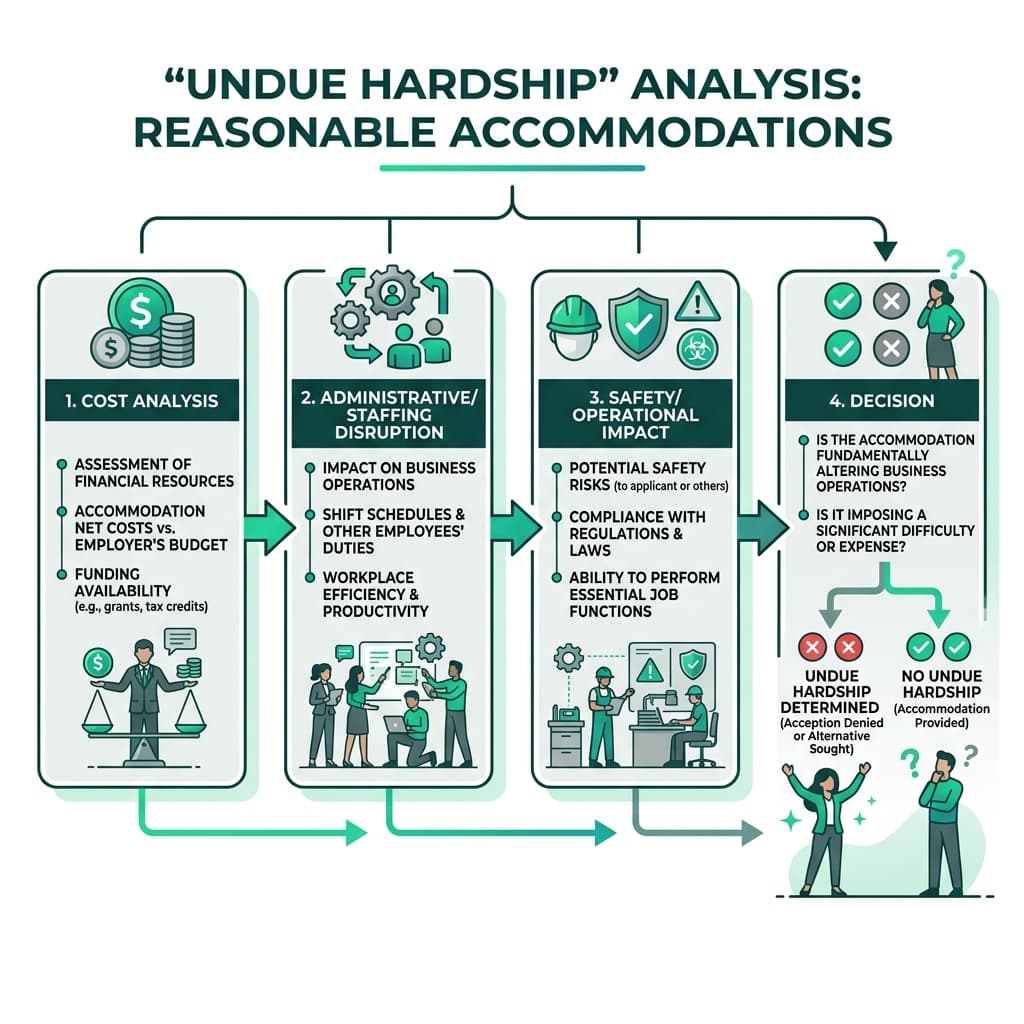
Assess Coworker Impact: If an employee requests shorter shifts, document how the remaining hours would be covered. If coverage requires forcing other employees to work overtime, increases staff-to-patient ratios, or leaves shifts open, this constitutes an undue hardship.
Evaluate Patient/Customer Risk: Document any safety or service quality risks introduced by mid-shift transitions or handoffs.
Action 3: Conduct a Good-Faith, Documented Interactive Process
Offer Temporary Bridge Accommodations: If a permanent accommodation is not feasible, offer temporary transitional options (such as the "combo shifts" offered by UH) or assistance in bidding on vacant roles with compatible hours.
Keep Exhaustive Dialogue Records: Document every meeting, offer of alternative roles, and letter sent to the employee's physician. A detailed log of constructive communication is the primary defense against retaliation and failure-to-accommodate claims.
5. Next Steps for HR: Proactively Securing Your Compliance
To audit your company's exposure to shift-length accommodation claims and interactive dialogue safety:
Evaluate ADA Interactive Timelines: Establish a structured, unalterable timeline of accommodation requests and offers using the ADA Process Timeline Calculator.
Check Leave & Eligibility Records: Use our FMLA Eligibility & FTE Calculator to track leaves accurately when transitional leave is required.
Diagnose Implicit Compliance Gaps: Perform a diagnostic audit on your supervisor's accommodation dialogue habits with the FMLA Interference Risk Evaluator.
If you want to secure your organization with a compliant, centralized interactive process and leave management dashboard, Start Your Free Trial of AI SoloHR Today.
Disclaimer: This case study is for educational and informational purposes only and does not constitute legal advice. AI SoloHR does not provide legal opinions or represent businesses in judicial disputes. For complex compliance questions, please consult qualified labor counsel.