FMLA Certification Deadline Checklist for Employers
A practical employer checklist for FMLA certification requests, follow-up dates, cure periods, designation notices, and case documentation.
Built for U.S. employers and small-business HR teams.
Key takeaways
- 5 business day notices
- 15 calendar day certification window
- 7 calendar day cure period
- Designation notice follow-up
Use this checklist before deadlines scatter
FMLA certification work is easy to lose when the request, forms, reminders, and final designation notice live in different places. This checklist gives HR a simple order of operations for documenting the case without turning the page into legal advice.
Step 1: Eligibility and rights notice
When an employee requests leave or the employer learns leave may be for an FMLA-qualifying reason, track the eligibility notice and rights and responsibilities notice together.
Deadline to track
The employer generally provides the eligibility notice within 5 business days after the initial request or after learning the leave may be FMLA-qualifying.
What to document
Record whether the employee is eligible, the notice date, the delivery method, the leave year used for entitlement tracking, and whether certification is required.
Step 2: Medical certification request
If certification is required, document exactly when HR requested it and what the employee was asked to provide.
Deadline to track
Employees must receive at least 15 calendar days after the employer's request to provide medical certification. Track this due date as a case task, not only as a note.
What to document
Save the request date, the form or certification type requested, the due date, the delivery method, and any extension reason based on diligent good-faith efforts.
Step 3: Incomplete or insufficient certification
If the certification is incomplete or insufficient, avoid vague reminders. Tell the employee in writing what information is needed to make the certification complete and sufficient.
Deadline to track
Employers generally must allow at least 7 calendar days to cure the deficiency, unless that timing is not practicable under the circumstances despite diligent good-faith efforts.
What to document
Record the written cure notice, the specific missing or unclear information, the cure deadline, each follow-up attempt, and any employee explanation for delay.
Step 4: Designation notice
After HR has enough information to determine whether the leave qualifies, the case should move to a clear designation decision rather than staying open indefinitely.
Deadline to track
The designation notice is generally due within 5 business days after the employer has enough information to determine whether leave is FMLA-qualifying.
What to document
Record whether the leave is designated as FMLA leave, the amount of leave counted if known, any fitness-for-duty requirement, and the final delivery date.
Operational checklist for each case
A repeatable case file should make the next action obvious to HR and make the history readable later.
How AI SoloHR supports the workflow
AI SoloHR helps small HR teams keep FMLA deadlines, tasks, notes, documents, and reviewed communications in one case workspace. The software supports tracking and drafting, but HR still reviews decisions and should involve qualified counsel for legal questions.
Source and review boundary
This checklist is based on public U.S. Department of Labor FMLA materials reviewed for 2026 operations. It is educational content for HR workflow planning and is not legal advice.
How this guide fits the real workflow
A guide page is most useful when HR already knows the issue but needs a clearer operating pattern. The goal is not just to define the topic. It is to make the next step, the right record, and the workflow sequence easier to see before something slips.
- Use the guide to standardize what should be documented
- Share the workflow with managers or teammates who need the same context
- Move into a template or a case workflow when the issue becomes active work
Important boundary for this content
This page is written for HR operations and education. It is meant to support documentation, workflow clarity, and communication planning. It does not provide legal advice, medical judgment, eligibility determinations, or automatic employment decisions.
AI SoloHR is designed to support case records, tasks, documents, timelines, and reviewed AI drafts inside one workflow. It is not a substitute for legal, medical, benefits, or policy review where those are needed.
Keep Exploring
FMLA leave calculator
Convert eligible workweeks into hours after the case is approved.
Open resourceFMLA tracking software
See how deadline tracking fits into the broader FMLA case workspace.
Open resourceFMLA tracking checklist
Use a broader checklist for intake, documents, communications, and closure.
Open resourceFrequently asked questions
How many days does an employee have to return FMLA medical certification?
The employer must generally allow at least 15 calendar days after requesting the certification. Employers may need to allow more time when the employee makes diligent, good-faith efforts but cannot meet the deadline.
What is the FMLA cure period for incomplete certification?
If certification is incomplete or insufficient, the employer should explain in writing what is needed and generally allow at least 7 calendar days to cure the deficiency.
When is the FMLA designation notice due?
Once the employer has enough information to determine whether the leave qualifies, the written designation notice is generally due within 5 business days, absent extenuating circumstances.
Related Interactive Calculators & Tools
FMLA Leave Calculator
Convert FMLA workweeks to precise hours and calculate leave limits.
FMLA Eligibility & FTE
Verify if your business meets the 50-employee FMLA threshold.
FMLA Interference Risk
Evaluate your company's risk of FMLA interference or retaliation.
FMLA Hours & Leave Calculator
Convert FMLA weeks to precise hours based on your work schedule.
Intermittent FMLA Leave Tracker
Log absence dates and hours with a rolling 365-day balance tracker.
Related Compliance Articles & Guides
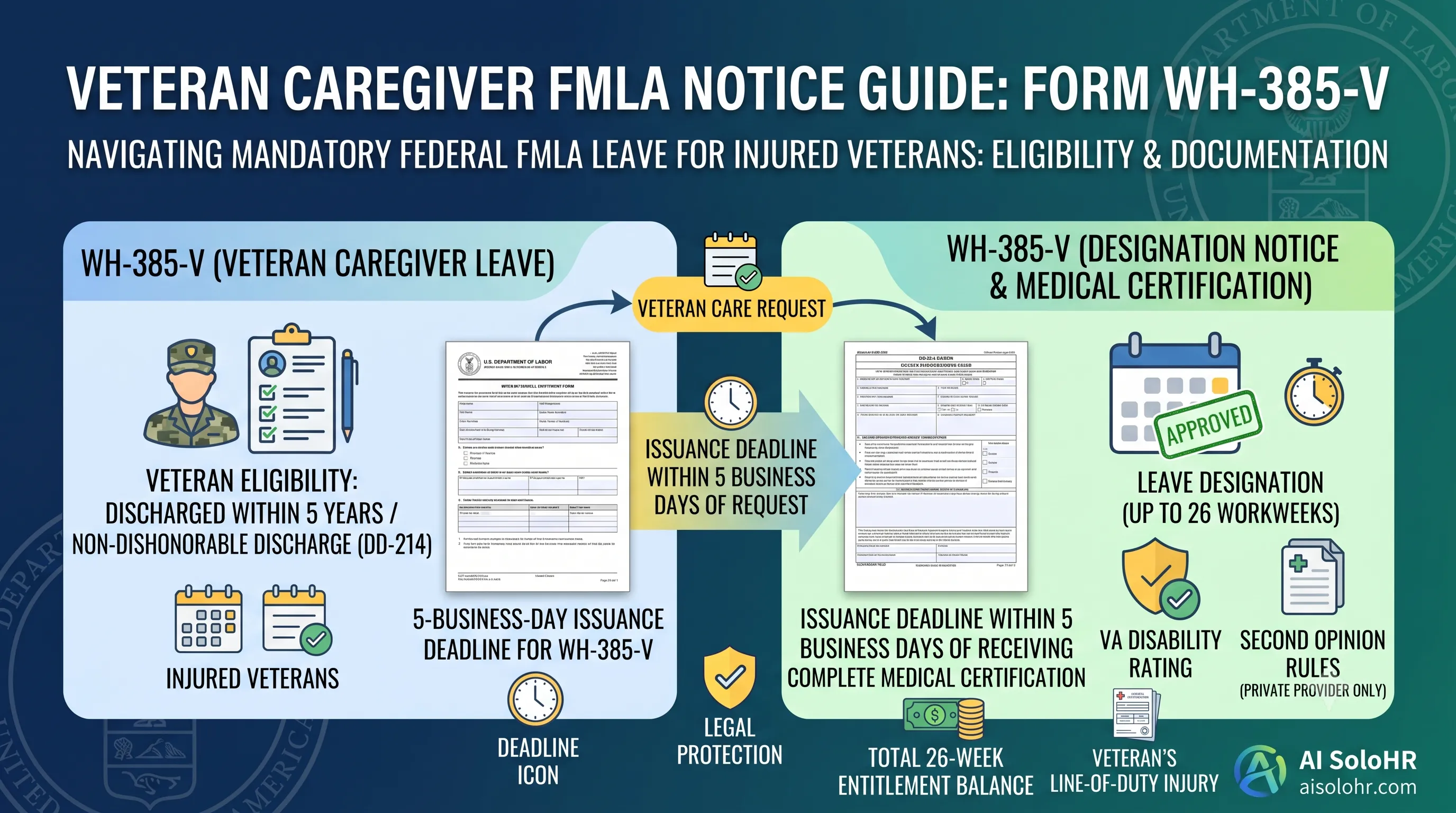
WH-385-V Instructions: Complete FMLA Veteran Caregiver Leave Certification Guide (2026)
A section-by-section guide to completing DOL Form WH-385-V for veteran military caregiver leave. Master the 5-year post-discharge rule, DD-214 verification, bad vs. good certification examples, and 26-week entitlement limits.
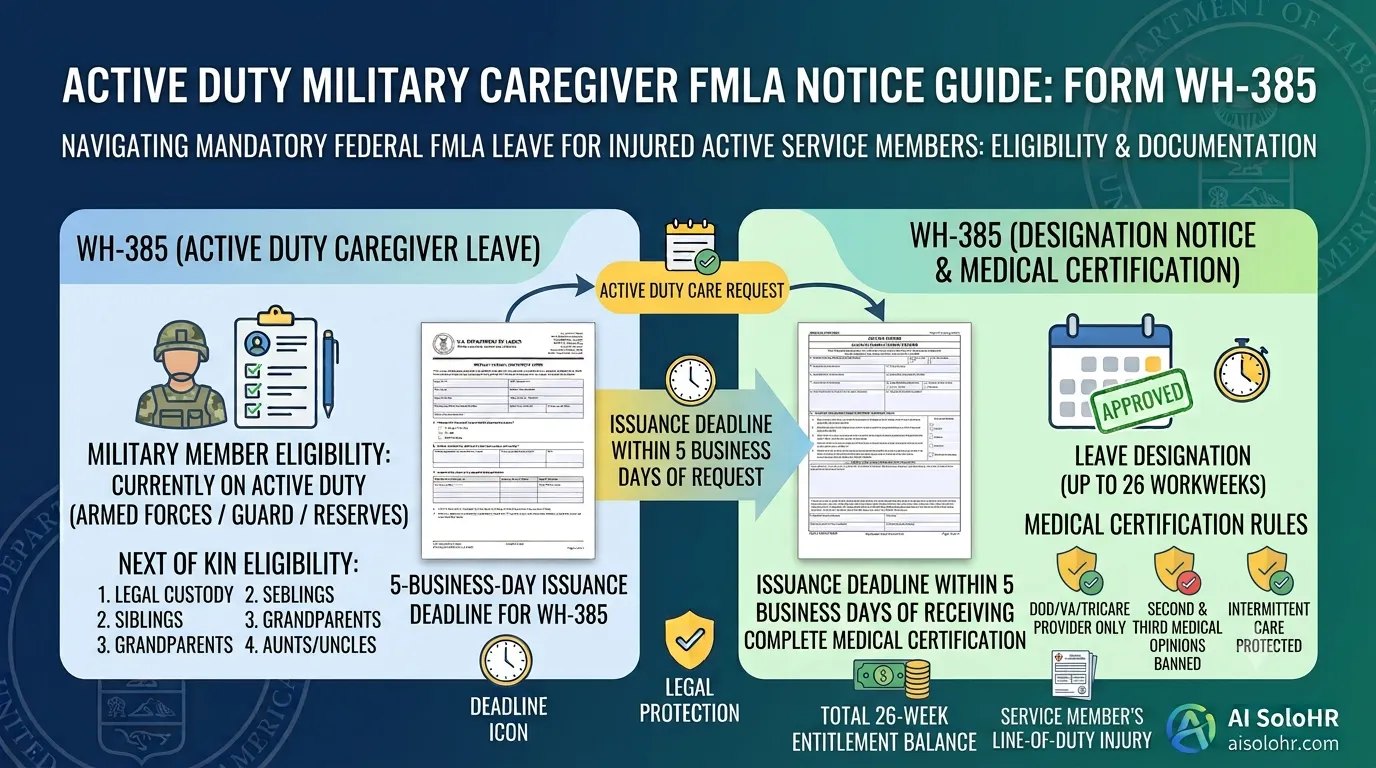
WH-385 Instructions: FMLA Military Caregiver Leave Certification Guide (2026)
A section-by-section HR guide to completing DOL Form WH-385 for active duty military caregiver leave. Master 26 workweeks entitlement, Next of Kin relationship rules, DOD medical certifications, and real-world case examples.
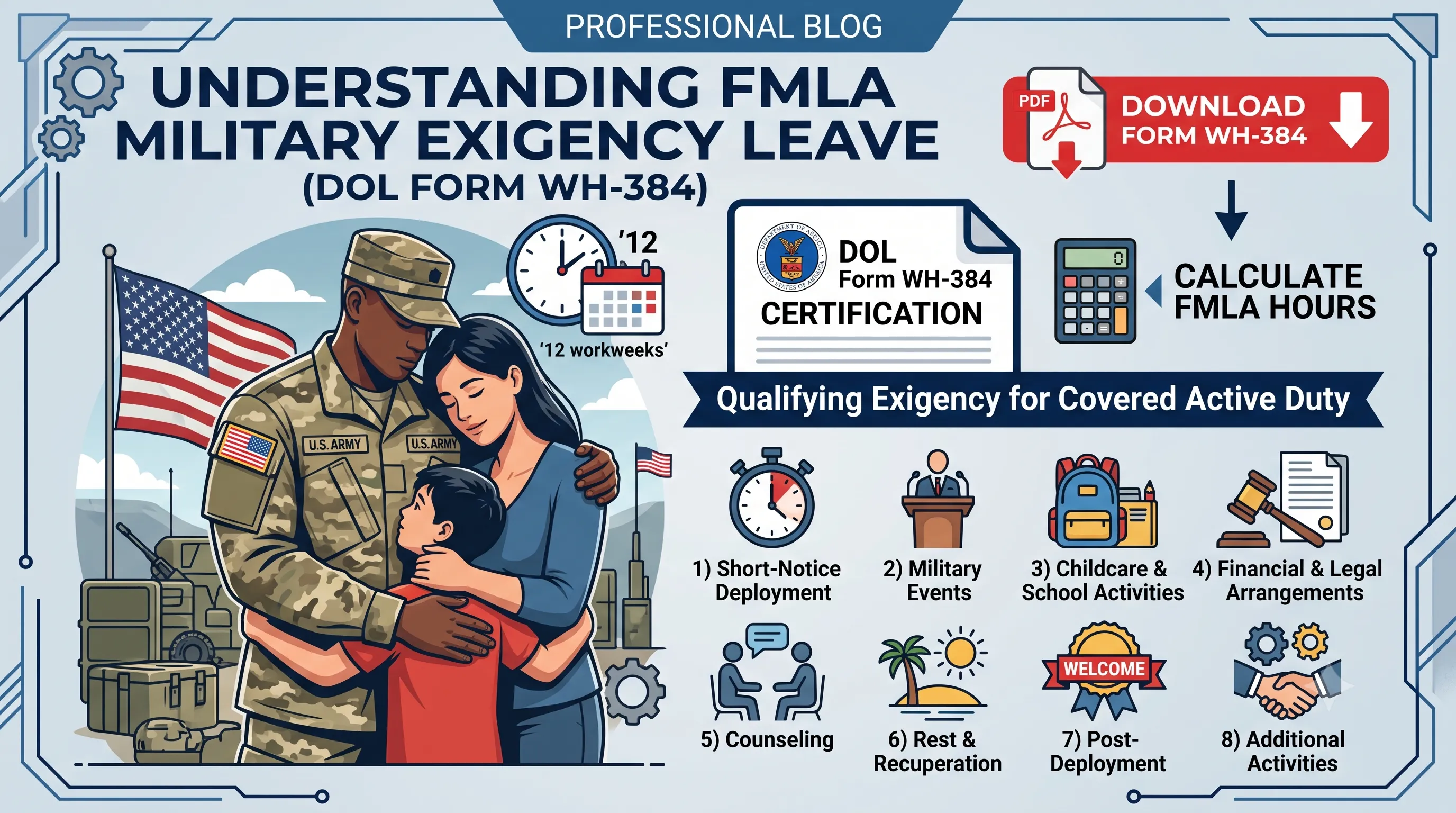
WH-384 Instructions: FMLA Qualifying Exigency Leave Certification Guide (2026)
A section-by-section HR guide to completing DOL Form WH-384 for military exigency leave. Master the 8 statutory exigency categories, active duty order verification, bad vs. good certification examples, and 12-week entitlement rules.
FMLA Spreadsheet Disruption Warning
Manual tracking of medical certifications (15-day cure window), rolling balances, and intermittent schedules across multiple managers invites high risk of FMLA interference claims. When leaves pile up, static files fail to protect the company.
Put this guidance into action
AI SoloHR helps U.S. small-business HR teams turn manual compliance steps into tracked tasks, defensible timelines, secure document records, and reviewed AI drafts.
- 14-day full platform access
- Up to 3 active cases
- Up to 30 employee records
- All 7 U.S. case types unlocked
This resource is intended for U.S. HR operations and educational purposes only, and does not constitute legal advice. Consult a qualified professional or employment attorney regarding your specific federal and state compliance obligations.