Paperless Accommodation Tracking: Building a Defensible Interactive Process
For U.S. employers and small-business HR teams.
#accommodation workflow#ada accommodation request workflow#leave of absence tracking
Fact-Checked & Regulatory AuditVERIFIED E-E-A-T
Verified by AI SoloHR Compliance & Editorial Team (U.S. Employment Law & Regulatory Compliance Research Group)
Last Audit: Oct 17, 2026 08:16
Paperless Accommodation Tracking: Building a Defensible Interactive Process
Under the Americans with Disabilities Act (ADA), employers with 15 or more employees are legally required to provide reasonable accommodations to qualified individuals with disabilities, unless doing so would cause "undue hardship." The key to ADA compliance is the interactive process—a collaborative dialogue between the employer and the employee to find a workable accommodation.
But for many lean HR teams, this process is managed through paper checklists, random emails, and local spreadsheets.
When documentation is scattered, the interactive process breaks down. This creates massive legal exposure. In early 2026, a manufacturing facility in Illinois faced a costly lawsuit because their accommodation records were incomplete. An employee with a back injury had requested a modified workspace.
The HR manager discussed options with the employee and agreed to order a specific ergonomic chair.
However, the ordering process was delayed. The employee followed up via email, but the HR manager missed the messages in a crowded inbox. Believing his request was ignored, the employee resigned and filed a constructive discharge lawsuit.
Sources and review notes
This article is written for U.S. small-business HR teams in 2026 and should be checked against your own policy, state requirements, and counsel guidance before use in a contested employment decision. AI SoloHR provides workflow structure, reviewed drafting support, and educational resources; it does not provide legal advice or make final employment decisions.
Statutory Sources & Regulatory Citations
This compliance document references official regulatory guidance from federal employment enforcement agencies:
Because the company relied on paper folders and disorganized emails, they could not prove they had acted in good faith or that an interactive process was underway. The business settled the claim for $120,000.
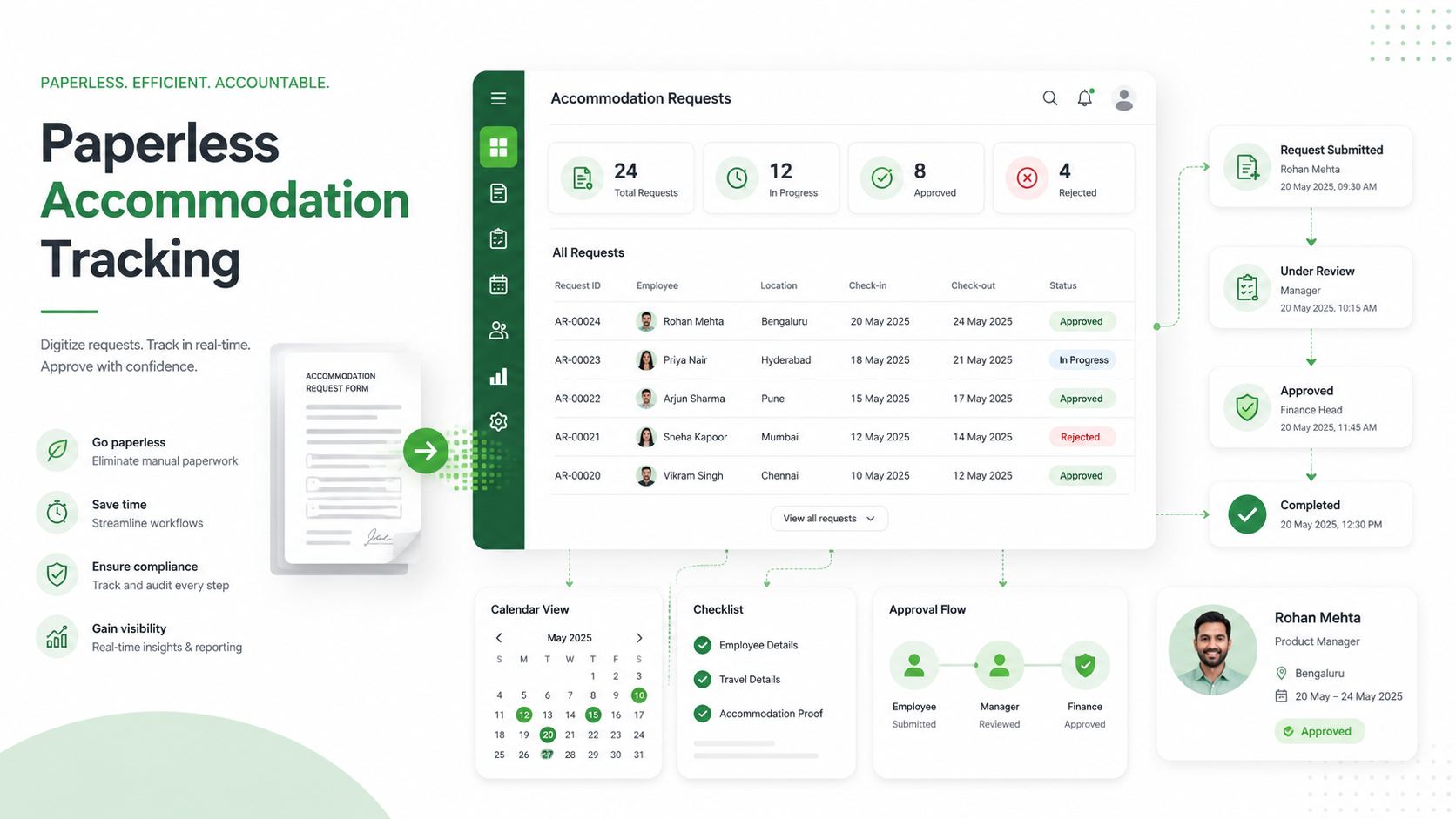
Adopting a paperless accommodation tracking workflow ensures that every step of the interactive process is documented, timestamped, and defensible.
The Concept of the \"Silent Request\"
One of the most common ways employers violate the ADA is by failing to recognize when an employee has requested an accommodation. Under the law, an employee does not need to mention the ADA or use the word "accommodation."
A request is triggered whenever an employee communicates that they are struggling to perform their job duties due to a medical condition.
Example of a Silent Request: An employee tells their manager, "I'm having trouble standing for long periods because of my hip condition."
HR Duty: This statement immediately triggers the employer's legal duty to initiate the interactive process. If the manager ignores this statement or fails to pass it to HR, the business faces liability for failing to accommodate.
Training managers to recognize and immediately report these statements to HR is a critical step in compliance. Once a request is made, HR must document the intake and start the formal process.
Step-by-Step Interactive Process Workflow
The Equal Employment Opportunity Commission (EEOC ADA regulations) outlines a clear path for the interactive process. A paperless tracking system ensures you follow every step:
Step 1: Request Documentation & Medical Certification
Log the request in your digital case management system.
If the disability or need for accommodation is not obvious, request limited, job-relevant medical documentation from the employee's healthcare provider.
Regulatory Warning: Under EEOC guidelines, you must keep all medical records in a separate, secure file, completely isolated from the employee’s regular personnel file.
Step 2: Identify Essential Functions
Review the employee's official job description to distinguish between essential functions and marginal job duties.
Determine how the employee's medical limitations affect their ability to perform these essential functions.
Step 3: Brainstorm Accommodations
Hold a formal interactive meeting with the employee.
Discuss potential accommodations, such as modified duties, schedule changes, specialized tools, or temporary reassignment.
Document all proposed solutions, including those suggested by the employee and those suggested by HR.
Step 4: Implement and Monitor
Select and implement a reasonable accommodation (it does not have to be the employee's preferred choice, but it must be effective).
Document the details of the agreement, including the start date and any review dates.
Set automatic reminders to follow up with the employee at the 30-day and 90-day marks to verify the accommodation remains effective.
How to Evaluate \"Undue Hardship\" Objectively
An employer can only deny an accommodation if it causes "undue hardship," meaning it would require significant difficulty or expense. However, many small businesses make the mistake of claiming undue hardship without supporting evidence.
To legally prove undue hardship, you must document:
The net cost of the accommodation.
The overall financial resources of the facility and the parent company.
The impact on the operations of the facility (e.g., if a schedule modification leaves a manufacturing line short-staffed and halts production).
Why alternative, less expensive accommodations were not workable.
By keeping a paperless record of these calculations and operational assessments, you build a defensible case file that can withstand legal scrutiny.
Moving Beyond Local Spreadsheets
A spreadsheet is a poor tool for managing accommodation cases. It cannot store doctor's certifications securely, encrypt medical history, or show version history if a record is disputed.
Transitioning to a dedicated system to secure ADA and leave of absence case files provides a clear, compliant path. Paperless tracking helps protect employee privacy while ensuring that the business is protected during audits or legal investigations.
Frequently Asked Questions
Can an employer deny an accommodation due to cost?
Under the ADA, an employer can only deny an accommodation if it causes "undue hardship," which means significant difficulty or expense. Cost is rarely accepted as an undue hardship for mid-sized or large businesses; the employer must prove that the accommodation would disrupt operations or threaten business viability.
How should medical documentation be stored?
Under federal law, all medical records must be stored in a file separate from the general employee personnel file. Access must be strictly restricted to HR administrators who manage the accommodation process.
What is the difference between ADA and leave of absence tracking?
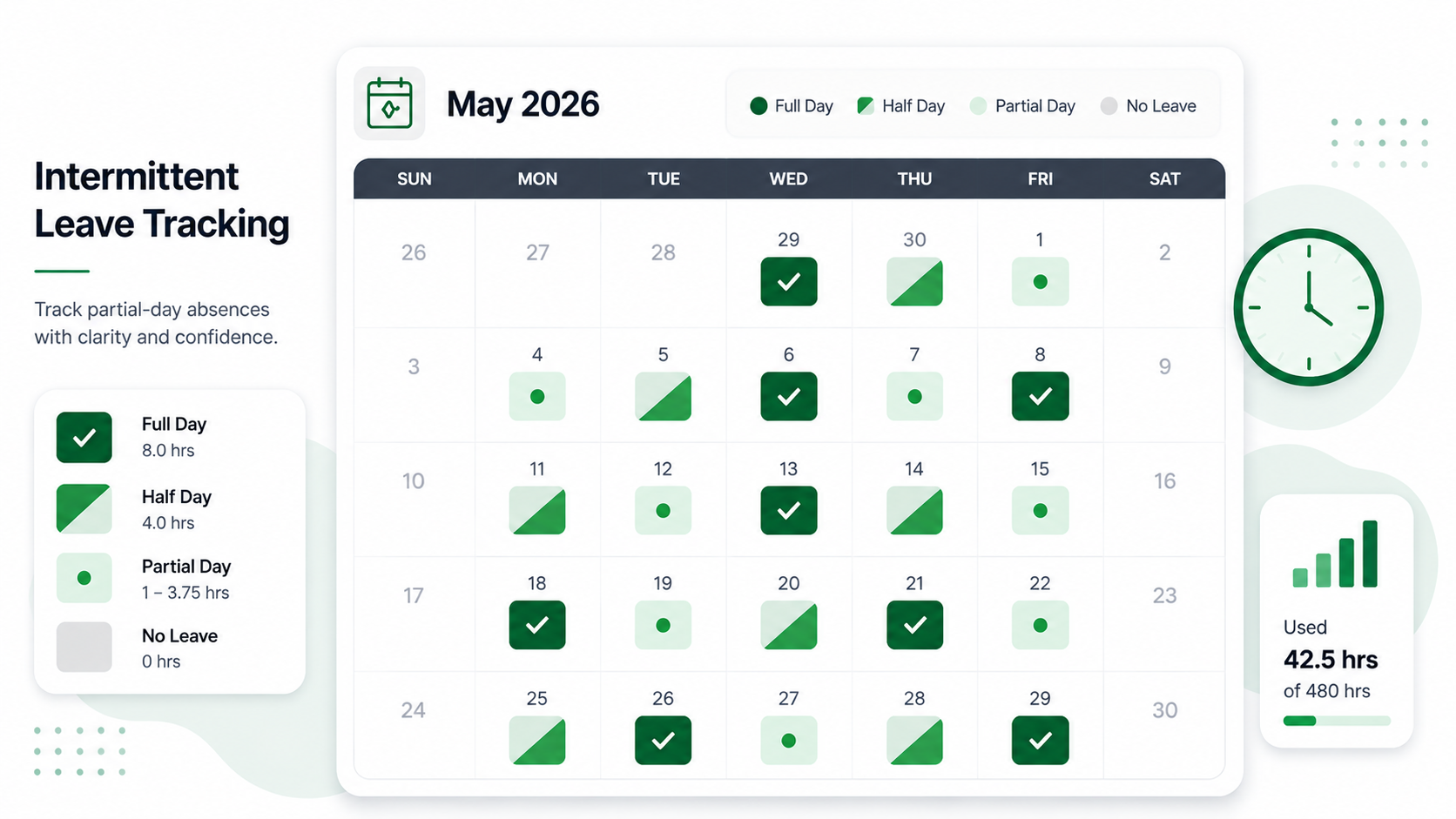
ADA tracking manages reasonable accommodations that help employees perform their job duties (like modified schedules or tools). Leave of absence tracking manages continuous or intermittent time off from work, which can be protected under FMLA or offered as an ADA accommodation.
Does an accommodation agreement have a permanent duration?
No. An accommodation can be temporary. An employer has the right to periodically review the accommodation, request updated medical status, and modify or end the agreement if the employee's condition improves or if the accommodation begins to cause an undue hardship.
Disclaimer: The information provided in this article does not, and is not intended to, constitute legal advice; instead, all information, content, and materials available on this site are for general informational purposes only. Readers should contact their attorney to obtain advice with respect to any particular legal matter.