Verified by AI SoloHR Compliance & Editorial Team (U.S. Employment Law & Regulatory Compliance Research Group)
Last Audit: Oct 9, 2026 21:13
Does FMLA Apply to Fully Remote Companies? (The 75-Mile Rule for WFH)
The rise of the work-from-home (WFH) model has fundamentally changed the corporate landscape. For fully remote companies in 2026, managing employee benefits requires navigating a complex web of multi-state regulations.
One of the most common legal questions HR managers face is: Does the FMLA apply to remote workers? What if our employees are scattered across different states and we don’t have 50 employees working in any single physical location?
Relying on traditional interpretations of the FMLA's "50 employees within a 75-mile radius" rule can lead to significant compliance risks. The Department of Labor has issued clear guidance establishing that remote workers are indeed covered under FMLA, and failing to understand these rules can lead to expensive lawsuits.
🛠️ HR Compliance Alert: Remote worksite rules are highly counter-intuitive. Download our free FMLA & LOA Tracking Checklist
Sources and review notes
This article is written for U.S. small-business HR teams in 2026 and should be checked against your own policy, state requirements, and counsel guidance before use in a contested employment decision. AI SoloHR provides workflow structure, reviewed drafting support, and educational resources; it does not provide legal advice or make final employment decisions.
Statutory Sources & Regulatory Citations
This compliance document references official regulatory guidance from federal employment enforcement agencies:
to learn how to assign worksites for remote teams and secure audit protection.
The Remote Worksite Dilemma: Who is Covered?
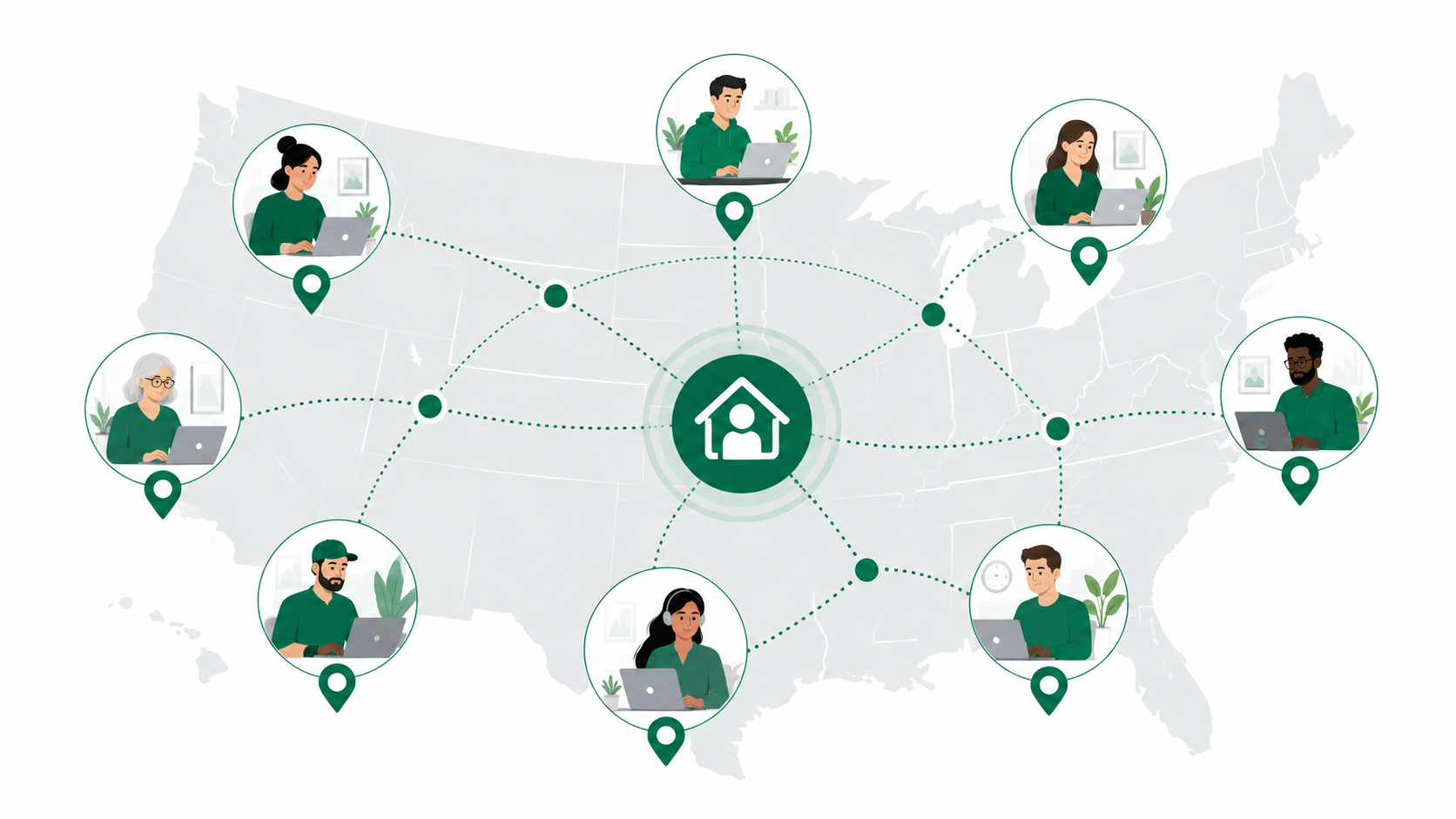
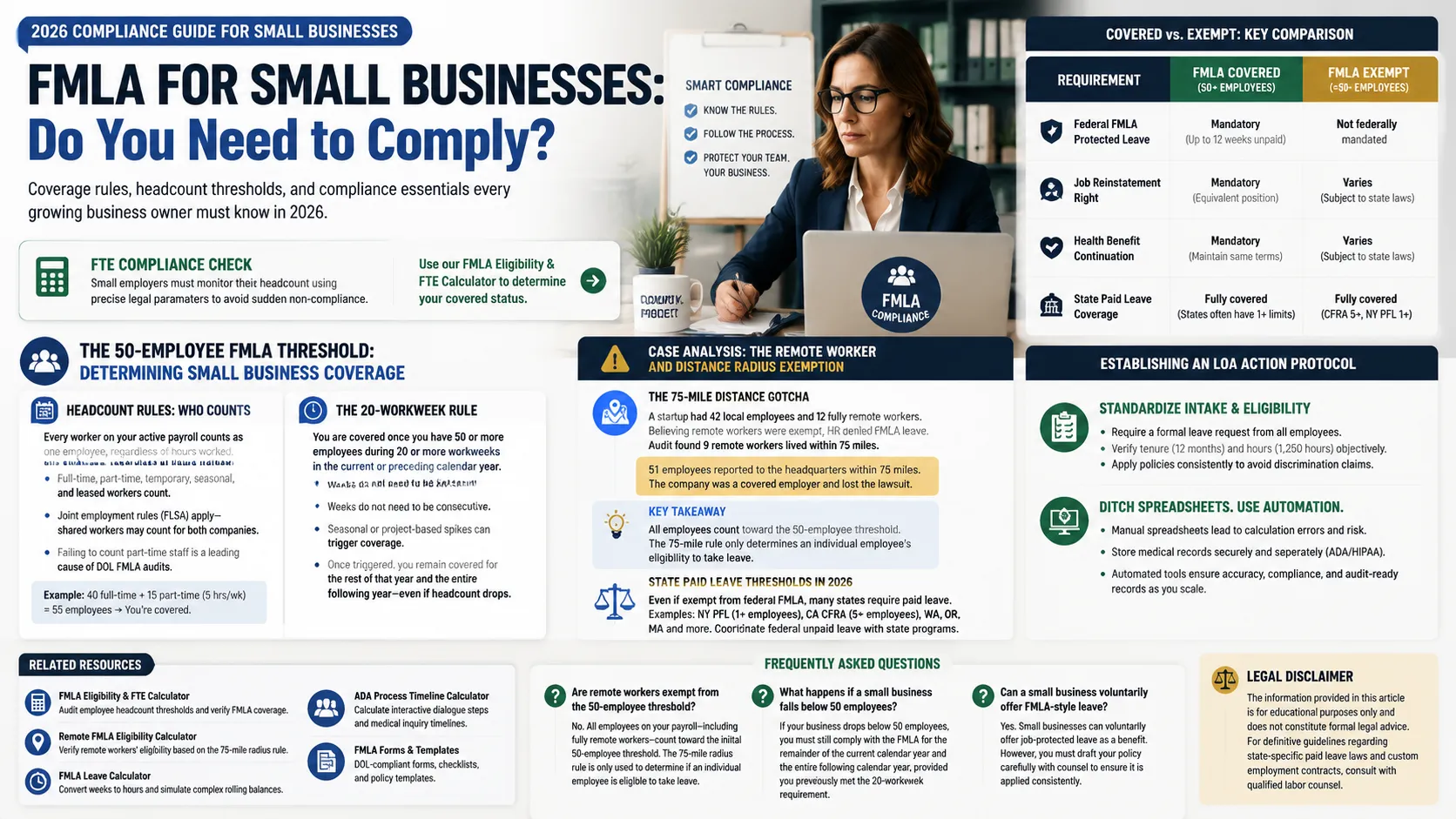
The FMLA states that an employee is only eligible for leave if they work at a site where the employer has 50 or more employees within a 75-mile radius. In a traditional office setting, this rule is straightforward. In a fully remote organization, it seems to suggest that remote workers are exempt.
The 55-Employee Remote SaaS Gotcha
Consider a real gotcha case that occurred in early 2026 involving an all-remote SaaS startup. The company employed 55 software developers and sales reps across 18 states. The largest concentration of staff was 4 employees living in Colorado.
An analyst based in Denver requested FMLA maternity leave. The HR director, looking at the 75-mile rule, denied the request, stating that the employee was not eligible because there were only 3 other employees within 75 miles of her home residence.
The analyst filed a complaint with the Department of Labor. The DOL ruled in the employee's favor, citing DOL telework guidance FMLA 2023-1.
The agency clarified that a remote employee's home is not their worksite; their worksite is the office they report to or from which work is assigned (in this case, the Delaware HQ). Since 55 employees were administered from the Delaware HQ, the worksite threshold was met. The company was ordered to pay $80,000 in settlements.
Why Personal Residences Do Not Count as Independent Worksites
Under federal regulations, an employee’s personal home office is never considered an independent worksite for FMLA purposes. If the home was treated as a worksite, every remote worker living alone would be excluded from FMLA. Instead, the law binds remote workers to a physical company location for headcount purposes.
The DOL FAB 2023-1 Clarification: The HQ Connection
In Field Assistance Bulletin (FAB) No. 2023-1, the DOL established a clear test for remote workers.
Identify reporting lines: Determine which office the remote employee reports to or receives assignments from.
Designate physical hub: Link the remote employee to the designated corporate headquarters or reporting center.
Calculate hub headcount: Count the total number of employees reporting to that physical hub; if it is 50 or more, the remote worker is covered.
The 'Reporting Office' Worksite Designation Rule
A teleworker's worksite for FMLA purposes is the office to which they report or from which their work is assigned.
If a remote worker receives daily tasks and performance reviews from managers based in your corporate headquarters, the headquarters is their worksite.
To determine the 75-mile radius headcount, you must count all employees who report to that headquarters, including both local physical office workers and all remote workers assigned to it.
How Small Decentralized Teams Still Trigger FMLA Eligibility
If your organization has 60 total employees, all working remotely from home and reporting to a central virtual office administered by executives at your headquarters, all 60 are counted as reporting to the headquarters. This means every single remote employee is FMLA-eligible once they meet the 12-month and 1,250-hour work requirements.
Multi-State Compliance: Managing Local Family Leave Mandates
Even if a remote employee does not meet the federal FMLA requirements, they may still be protected under state-level family leave laws.
When State-Level Paid Family Leaves Overwrite FMLA
Many states have enacted paid family leave programs that override federal limits. For example, in California (under the CFRA) and New York, the employer threshold is much lower (often 1 or more employees).
If you have a remote worker in California, you must comply with the CFRA, even if your company only has 10 total employees nationwide and is exempt from federal FMLA.
Tracking CFRA and NY PFL for Remote Staff
HR must track state-specific eligibility rules, benefit amounts, and job restoration requirements for every state where remote staff reside. Managing these differences manually on spreadsheets is incredibly difficult and invites compliance errors.
Automating Remote FMLA Radius Tracking in 2026
To prevent expensive worksite miscalculations, remote companies must move away from manual tracking.
Implementing our remote worksite automation tool secures your remote compliance stack. AI SoloHR automatically maps remote workers to their reporting headquarters, runs FMLA eligibility audits, cross-references multi-state leave laws, and manages required notice timelines inside a single dashboard. This ensures your remote team stays fully protected in 2026.
Frequently Asked Questions
If a remote employee lives alone in a state, are they exempt from FMLA?
No. Under DOL FAB 2023-1, their FMLA eligibility is determined by the headcount of the office they report to, not the number of employees living in their state. If the office they report to assigns work to 50 or more employees total, the remote employee is covered.
How do you calculate the 75-mile radius for hybrid workers?
For hybrid workers who spend some days in the office and some at home, their worksite is the physical office they report to. The 75-mile radius is measured from that physical office location.
Legal Disclaimer
This article is for educational and informational purposes only and does not constitute formal legal advice. HR professionals and business owners should consult with a qualified employment attorney to evaluate specific FMLA compliance scenarios in 2026.