Verified by AI SoloHR Compliance & Editorial Team (U.S. Employment Law & Regulatory Compliance Research Group)
Last Audit: Oct 2, 2026 22:36
Click to expand
Case at a Glance
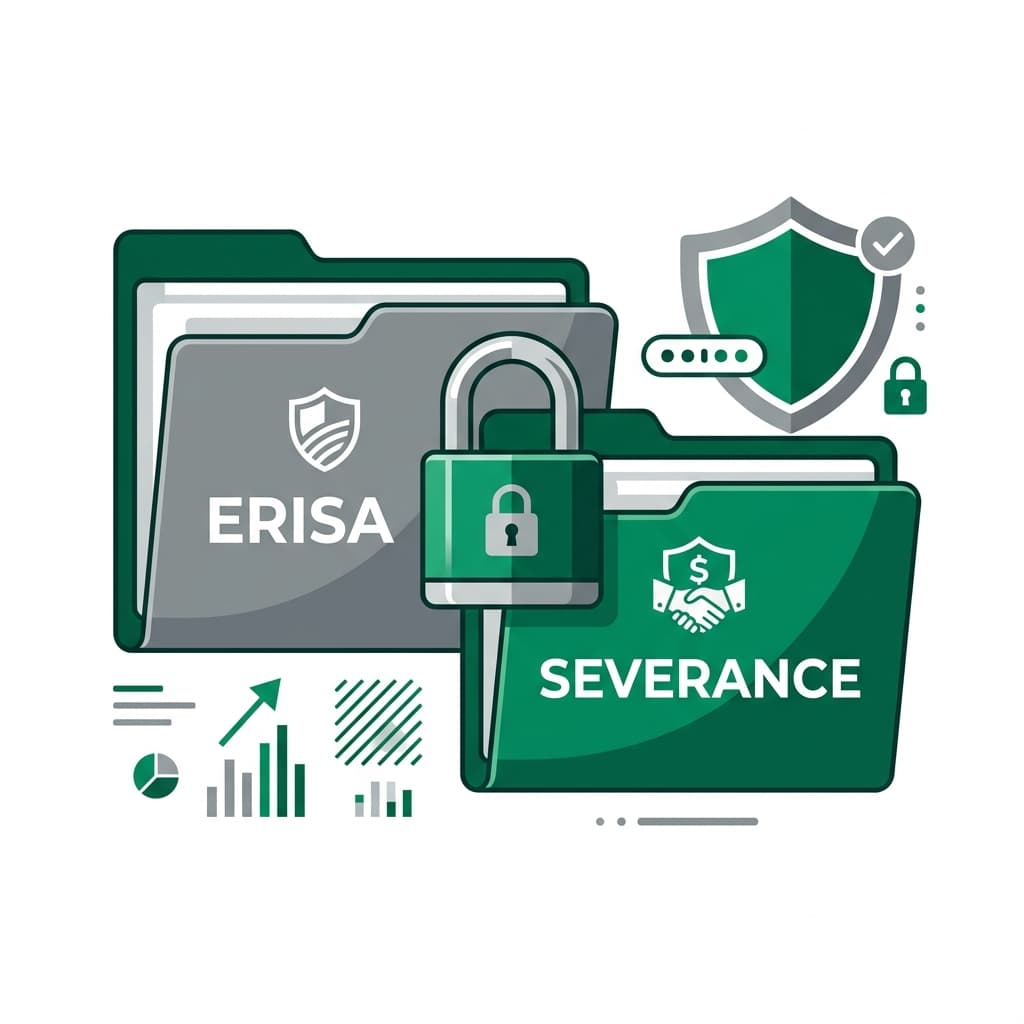
In Orabona v. Santander Bank, N.A. (2026), the U.S. Court of Appeals for the First Circuit reviewed a critical legal shield for employers: ERISA preemption of state-law claims. A terminated employee filed a state-court lawsuit for breach of contract, wrongful termination, and fraud, arguing the bank terminated her "for cause" as a pretext to deny her severance benefits.
The Court affirmed summary judgment in favor of the bank, holding that because the severance policy was an ERISA-covered plan, all state-law claims were preempted. The ruling underscores the immense structural advantage for employers who maintain formal, ERISA-governed benefit plans rather than informal, ad-hoc severance arrangements.
Sources and review notes
This article is written for U.S. small-business HR teams in 2026 and should be checked against your own policy, state requirements, and counsel guidance before use in a contested employment decision. AI SoloHR provides workflow structure, reviewed drafting support, and educational resources; it does not provide legal advice or make final employment decisions.
Statutory Sources & Regulatory Citations
This compliance document references official regulatory guidance from federal employment enforcement agencies:
The Plaintiff, Lorna Orabona, worked as a mortgage development officer at Santander Bank. In 2026, Santander terminated Orabona's employment for cause. The bank alleged that Orabona had violated its Code of Conduct by forwarding encrypted client emails containing sensitive customer data to her personal email account.
Under Santander’s established, ERISA-governed severance benefit policy, employees who are terminated "for cause" (including violations of the bank’s code of conduct and information security policies) are explicitly deemed ineligible to receive severance pay.
Bypassing the Plan's Internal Appeal Process
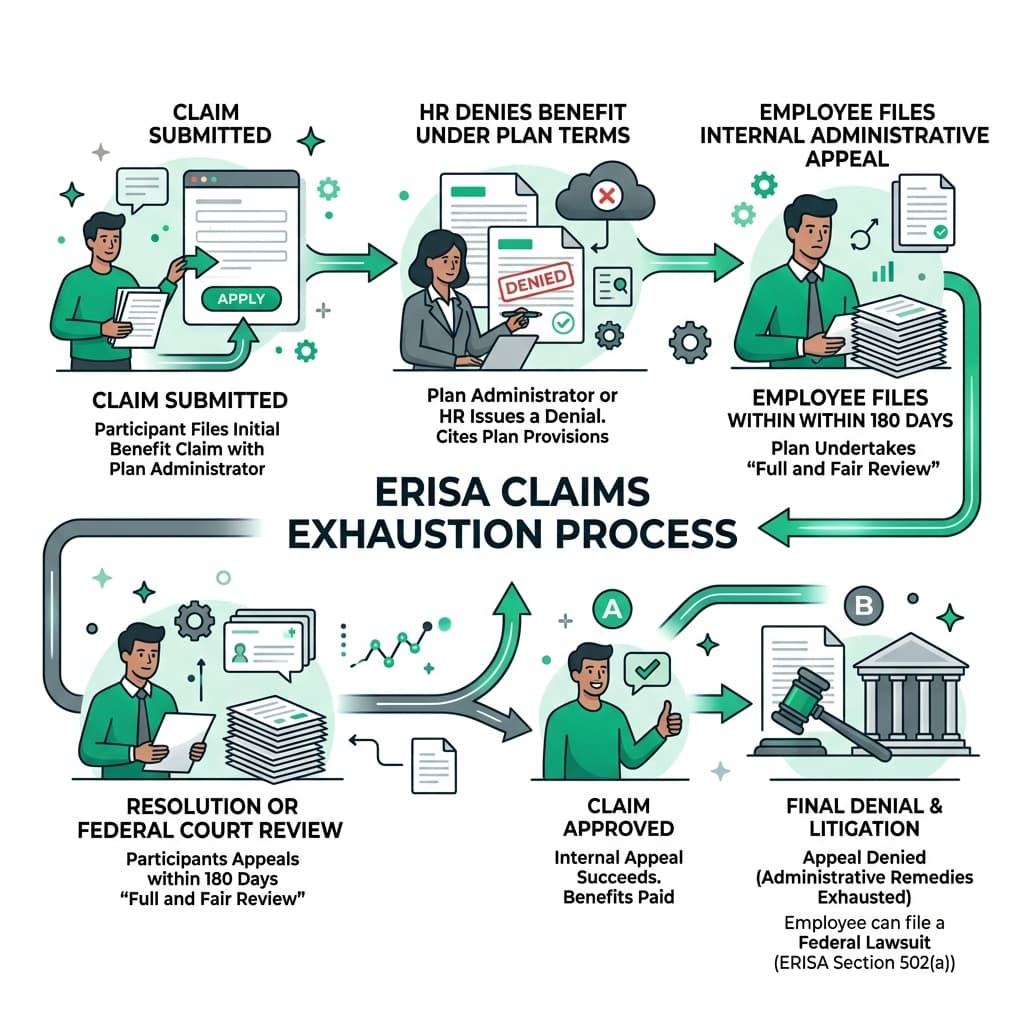
Santander’s severance policy contained a detailed, ERISA-compliant administrative review process. The policy required that any employee who disagreed with a benefit denial must first submit a formal, internal claim to the Plan Administrator and, if denied, exhaust the plan's internal administrative appeal process.
Instead of utilizing this internal review process, Orabona immediately filed a lawsuit in Rhode Island state court. She asserted common-law claims for breach of contract, wrongful termination, fraud, and negligent misrepresentation. Orabona argued that the bank’s stated reason for her termination—the email security violation—was a fabricated pretext designed specifically to avoid paying her the substantial severance benefits she would have otherwise received.
2. The Legal Bypass: State Court vs. ERISA Administrative Appeals
Click to expand
The Preemption Defense
Santander removed the case from state court to federal court and moved for summary judgment. The bank argued that because its severance policy was an ERISA-governed welfare benefit plan, all of Orabona's state-law claims were preempted under ERISA Section 514(a).
ERISA Section 514(a) is a powerful preemption clause stating that ERISA supersedes any and all state laws that "relate to" an employee benefit plan. The bank argued that because Orabona's claims directly challenged the denial of severance benefits, they could not be litigated under state common law.
The "Orabona Rule": Relating to the Plan
Orabona argued that her lawsuit was primarily a wrongful termination and breach of contract dispute, and the severance benefits were merely a measure of her damages.
The federal courts rejected her arguments. The courts held that to determine whether the bank owed her severance pay, the court would have to interpret the severance plan’s definitions of "cause," "voluntary termination," and the bank's underlying Code of Conduct.
Because the lawsuit could not be resolved without consulting and interpreting the terms of the ERISA plan, the claims directly "related to" the plan and were preempted.
3. Legal Analysis & The Court's Ruling
Click to expand
Affirming the Power of ERISA Preemption
The First Circuit Court of Appeals affirmed the district court’s grant of summary judgment in favor of Santander. The Court held that:
Under ERISA Section 514(a), state-law claims are preempted if they have a "connection with" or "reference to" an ERISA plan.
Orabona’s claims for breach of contract, fraud, and misrepresentation were direct challenges to the plan administrator's determination of her eligibility.
ERISA’s civil enforcement mechanism (Section 502(a)) provides the exclusive remedy for plan participants seeking to recover benefits. State-law claims seeking similar remedies are preempted to maintain a uniform federal benefit standard.
The Exhaustion of Administrative Remedies Requirement
A critical consequence of ERISA preemption is the "exhaustion requirement." Before a plan participant can file a federal lawsuit under ERISA Section 502(a) to challenge a benefit denial, they must first exhaust the plan's internal administrative claims and appeals process.
Because Orabona chose to bypass the internal process and file a state-law lawsuit instead, her claims were legally barred. The ruling highlighted that ERISA protects employers from being dragged into state courts over benefit disputes, forcing employees to utilize the structured, cost-effective internal appeal processes first.
EEOC Compliance Alert
Formal ERISA-governed benefit plans (including severance policies) protect employers from state-law contract and fraud claims. Employees who challenge benefit denials must exhaust the plan's internal administrative appeal process before they can file a lawsuit.
4. HR Practical Takeaways for Severance and Benefit Administration
To leverage the significant legal protections of ERISA preemption and manage severance benefits compliantly, HR departments must implement the following practices:
Action 1: Formalize Severance Policies under ERISA
Establish Written ERISA Plan Documents: Avoid informal, unwritten severance agreements or ad-hoc practices. Work with benefits counsel to draft a formal, written severance policy that explicitly states it is governed by ERISA.
Incorporate Internal Claim and Appeal Procedures: Ensure your plan documents outline a detailed, step-by-step process for filing claims, receiving denial notices, and submitting administrative appeals, including strict timelines (e.g., 60 days to appeal).
Action 2: Enforce Strict Code of Conduct Documentation
Document "For Cause" Terminations Objectively: Because severance eligibility often hinges on whether a termination was "for cause," HR must maintain clear, timestamped documentation of the policy violation (e.g., IT logs showing email forwarding, warning notices, and signed acknowledgments of the Code of Conduct).
Maintain Uniform Enforcement Trails: Ensure that policy violations resulting in "for cause" termination are enforced consistently across the organization to prevent claims of discriminatory pretext.
Action 3: Provide Compliant Summary Plan Descriptions (SPDs)
Distribute SPDs to All Employees: Provide employees with a Summary Plan Description that outlines their benefit rights, eligibility criteria, and the mandatory internal appeal process.
Include ERISA Rights Statements: Ensure SPDs contain the legally required statement of ERISA rights, informing employees that they must exhaust administrative remedies before filing a lawsuit.
Action 4: Centralize Benefit and Termination Records
Secure Audit Logs of Termination Files: Use a secure, centralized HR platform to store all documentation related to code of conduct violations, termination notices, and benefits correspondence to support the plan administrator's decisions.
5. Next Steps for HR: Proactively Securing Your Compliance
To audit your company's benefits administration and secure your severance compliance:
Log ERISA Interactive Appeal Steps: Record all benefit claims and administrative appeals chronologically using the ADA Process Timeline Calculator.
Track Termination and Separation Timelines: Map out notice periods and separation timelines with our FMLA Eligibility & FTE Calculator.
If you want to secure your organization with an unalterable audit trail of employee policy acknowledgments and benefit decisions, Start Your Free Trial of AI SoloHR Today.
Disclaimer: This case study is for educational and informational purposes only and does not constitute legal advice. AI SoloHR does not provide legal opinions or represent businesses in judicial disputes. For complex compliance questions, please consult qualified labor counsel.