ComplianceJul 17, 2026 10:32by AI SoloHR Team5 min read
How to Handle Open-Ended Intermittent FMLA Requests for Migraines
For U.S. employers and small-business HR teams.
#open ended fmla certification#fmla frequency and duration of episodes#requesting clarification on fmla form#managing intermittent leave abuse
Fact-Checked & Regulatory AuditVERIFIED E-E-A-T
Verified by AI SoloHR Compliance & Editorial Team (U.S. Employment Law & Regulatory Compliance Research Group)
Last Audit: Aug 2, 2026 18:02
How to Handle Open-Ended Intermittent FMLA Requests for Migraines
Managing employee leaves is a core HR duty, but few requests create as much frustration and confusion as intermittent FMLA requests for chronic migraine headaches.
Because migraine symptoms are invisible and unpredictable, managers often worry about potential leave abuse, especially when absences frequently occur on Mondays or Fridays.
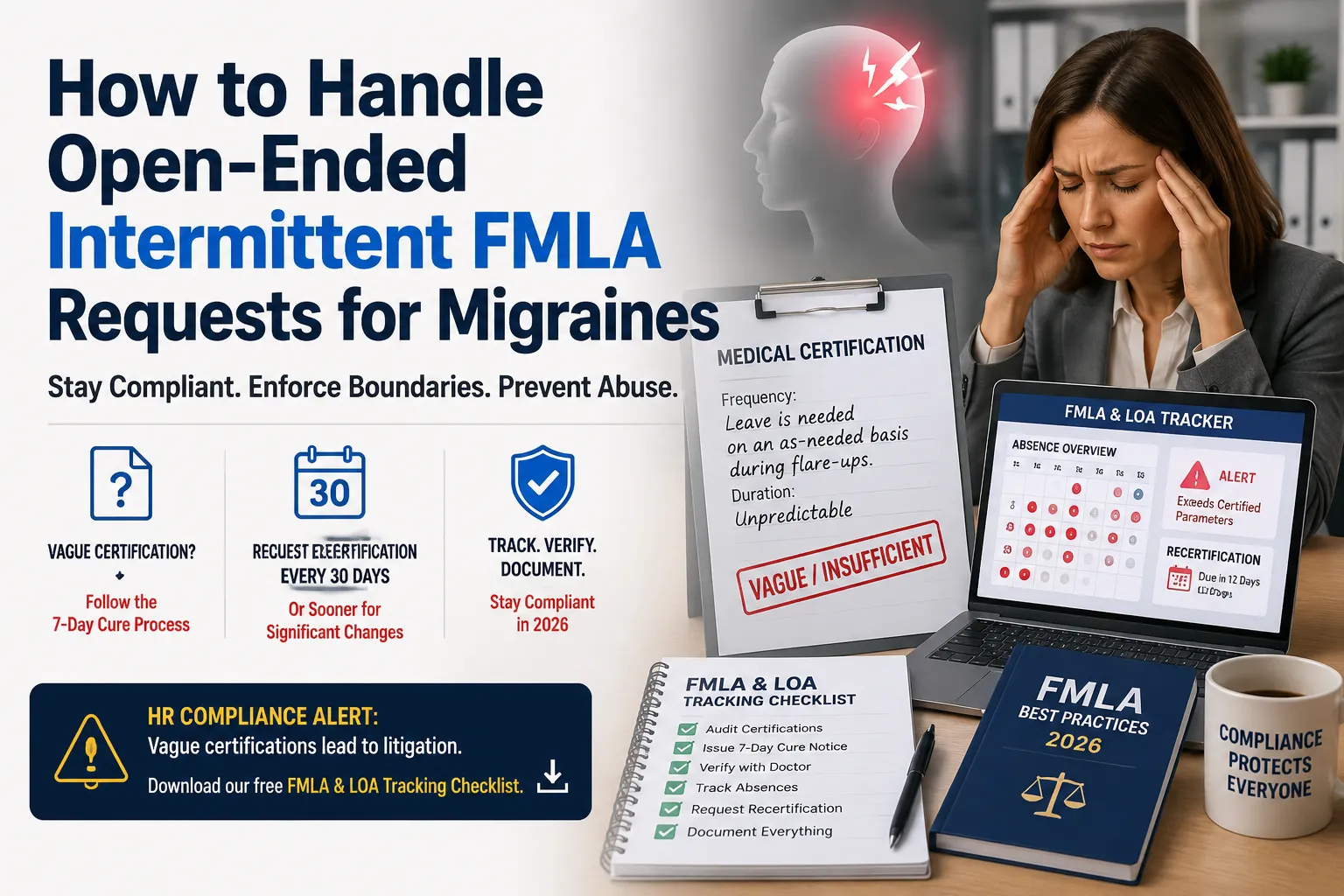
HR departments often receive medical certification forms where the physician has left the frequency and duration parameters vague, writing statements like "leave is needed on an as-needed basis during flare-ups."
In 2026, trying to manage these open-ended requests by rejecting the note or accusing the employee of fraud is a major compliance risk. To protect your organization, you must follow the strict Department of Labor certification and recertification guidelines.
🛠 "HR Compliance Alert": Vague medical certifications lead to litigation. Download our free
Sources and review notes
This article is written for U.S. small-business HR teams in 2026 and should be checked against your own policy, state requirements, and counsel guidance before use in a contested employment decision. AI SoloHR provides workflow structure, reviewed drafting support, and educational resources; it does not provide legal advice or make final employment decisions.
Statutory Sources & Regulatory Citations
This compliance document references official regulatory guidance from federal employment enforcement agencies:
to learn how to enforce certification parameters and audit intermittent absences safely.
The Migraine Headache: HR's Most Challenging Compliance Pattern
Intermittent leave allows employees to take time off in small increments (hours or days) to manage chronic health conditions.
The Front Desk Receptionist Gotcha
Consider a real gotcha case that occurred in early 2026 at a manufacturing facility. The front desk receptionist submitted a medical certification form for severe migraines. Under the frequency section, the doctor wrote: "leave duration and frequency are unpredictable and must be determined by the employee during flare-ups."
The HR director, believing this open-ended language was an attempt to bypass attendance rules, rejected the note and told the receptionist they could not take time off without a specific schedule. The receptionist called out sick during their next migraine and was terminated for a no-call, no-show.
The employee sued. The federal court ruled in the employee's favor, finding that the employer committed FMLA interference by rejecting the note without issuing a written 7-day cure notice. The company was fined $115,000. The judge noted that while the form was vague, the employer was legally required to follow the formal cure process before taking disciplinary action.
Enforcing the Certification Parameters: Establishing the Bounds
You do not have to accept a completely open-ended FMLA certification. The law allows you to require the physician to define the expected boundaries of the leave.
Audit vague form: Flag vague, open-ended, or blank medical certifications returned by the employee.
Issue 7-Day Cure Notice: Send a written letter detailing the exact missing information and grant 7 calendar days to correct the paperwork.
Verify with doctor or seek second opinion: Contact the doctor for direct clarification or, if suspicious of abuse, initiate the FMLA second opinion process at the employer's expense.
Requiring Specific Frequency and Duration Parameters
Under DOL FMLA guidelines, a medical certification must be complete and sufficient. The signing physician must provide an estimate of the frequency and duration of the episodes (e.g., "1-2 episodes per month, lasting 1-2 days per episode"). If the doctor fails to provide these estimates, the form is legally insufficient.
Enforcing the 7-Day Cure Notice for Vague Paperwork
If you receive a vague form, you must follow this process:
Provide Written Notice: Detail exactly what information is missing (e.g., "the healthcare provider must specify the estimated frequency and duration of the episodes").
Provide 7 Days to Fix: The employee must be given exactly 7 calendar days to return the corrected form.
Clarification: If they return the form and it remains vague, only an HR professional or a leave administrator can contact the doctor directly to clarify the parameters.
The Recertification Loop: When Can HR Request a New Note?
If an employee’s absences exceed the parameters established on their medical certification, you can monitor the situation using the recertification process.
The 30-Day Rule for Regular Recertifications
Under FMLA rules, an employer can request recertification of a chronic condition no more than once every 30 days in connection with an absence. If the certification states the condition will last indefinitely, you can still request a new certification every 30 days.
Managing Significant Changes in Absence Patterns
You can request recertification in less than 30 days if:
The circumstances change: For example, if the certification allows "1 episode per month," but the employee calls out sick 5 times in a three-week period.
Absence Patterns Shift: If the employee consistently calls out on the days immediately preceding or following their weekends (Monday/Friday pattern), this constitutes a "significant change in circumstances" that allows HR to request an early recertification.
Mitigating Abuse with Structured Tracking Tools
Manually auditing YTD timesheets to cross-reference FMLA migraine call-outs against their doctor-certified parameters is extremely tedious.
Shifting to an automated intermittent leave tracker secures your process. AI SoloHR automatically cross-references every call-out date against the employee’s certified parameters, flags when absences exceed the limits, and prompts HR when a 30-day recertification window is reached.
This ensures your company manages intermittent leaves efficiently and stays fully compliant in 2026.
Frequently Asked Questions
Can you fire an employee if they exceed their FMLA certificate parameters?
No. You cannot terminate them immediately. If an employee exceeds their certified parameters, you must first request a recertification. This gives the doctor an opportunity to update the parameters (e.g., confirming the migraines have worsened).
If the doctor does not update the parameters and the employee continues to take excess time off, those excess absences are not protected, and you can apply your standard disciplinary policies.
What counts as a 'significant change in circumstances' to request early recertification?
A significant change includes a dramatic increase in the frequency or duration of the absences, or a suspicious pattern of absences, such as calling out sick only on Mondays and Fridays or on days when they were scheduled to work overtime.
Legal Disclaimer
This article is for educational and informational purposes only and does not constitute formal legal advice. HR professionals and business owners should consult with a qualified employment attorney to evaluate specific FMLA compliance scenarios in 2026.