ComplianceJun 6, 2026 03:02by AI SoloHR Team8 min read
Misconduct Preempts Accommodation: Wilkin v. Community Hospital
Analyze the pre-termination misconduct rule in Wilkin v. Community Hospital. Learn why eve-of-termination accommodation requests can be legally denied.
Verified by AI SoloHR Compliance & Editorial Team (U.S. Employment Law & Regulatory Compliance Research Group)
Last Audit: Sep 17, 2026 12:42
Click to expand
Case at a Glance
In Wilkin v. Community Hospital of the Monterey Peninsula (2026), the California Court of Appeal reviewed a critical B2B employment law doctrine: the pre-termination misconduct rule. A registered nurse was terminated after the hospital discovered severe, repeated discrepancies in her handling and documentation of controlled substances, alongside a history of chronic absenteeism.
The nurse sued, alleging disability discrimination, failure to accommodate, and FMLA/CFRA retaliation, pointing out that she had requested a medical leave of absence as an accommodation on the "eve of her termination." The appellate court affirmed summary judgment in favor of the hospital, holding that an employer is not required to rescind a pre-finalized termination decision due to a subsequent accommodation request.
Sources and review notes
This article is written for U.S. small-business HR teams in 2026 and should be checked against your own policy, state requirements, and counsel guidance before use in a contested employment decision. AI SoloHR provides workflow structure, reviewed drafting support, and educational resources; it does not provide legal advice or make final employment decisions.
Statutory Sources & Regulatory Citations
This compliance document references official regulatory guidance from federal employment enforcement agencies:
The ruling provides a powerful compliance framework for HR professionals managing employee misconduct and late-stage accommodations.
1. Factual Background
Click to expand
Chronic Attendance Issues and FMLA/CFRA Leave
Prior to her termination, Kimberly Wilkin worked as a registered nurse in the Main Pavilion Department of Community Hospital, where her duties included direct patient care and administering medications. Throughout 2026, Wilkin compiled a history of poor attendance, receiving written disciplinary notices in January, February, and March 2026, alongside multiple courtesy warnings.
In March 2026, Wilkin requested intermittent FMLA leave, which was approved. In May 2026, after she failed to renew her nursing license, the hospital issued her a disciplinary probation. Concurrently, HR Leave Specialist Carol Ann Eason noted that Wilkin’s absences exceeded her certified frequency and that she frequently failed to specify which calls were FMLA-related.
From August 4 to September 10, 2026, Wilkin took an approved leave of absence after being the victim of a violent crime. While she was not penalized for this leave, her general unexcused absences by mid-September 2026 placed her in line for termination review.
Drug Documentation Failures and Missing Narcotics
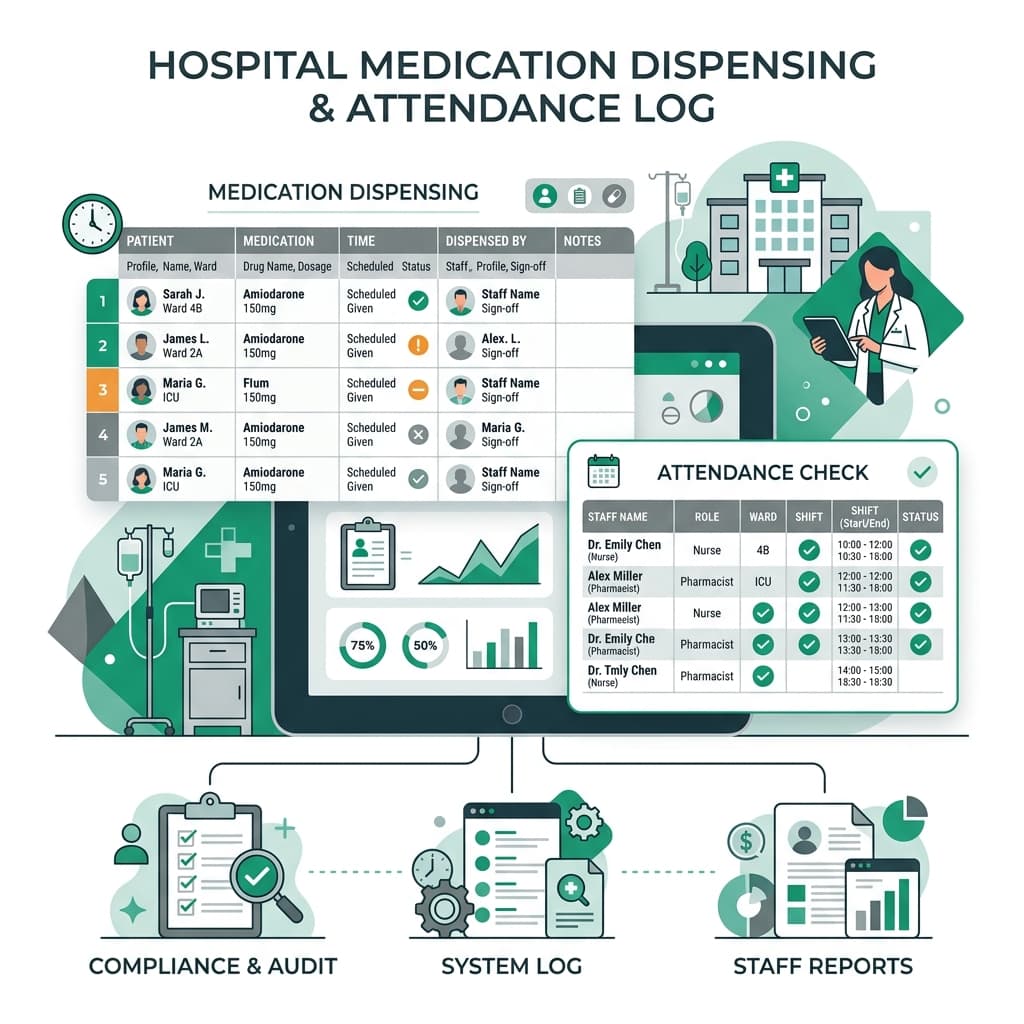
In mid-2026, Main Pavilion Director Diana Poudrier launched an investigation into Wilkin’s handling of controlled substances after a patient was administered medication without supporting paperwork. Poudrier’s audit of the dispensing machine logs and patient records revealed a pattern of severe documentation discrepancies.
In June 2026, Wilkin pulled a 4-mg syringe of morphine, gave the patient 2 mg, and failed to document the disposal ("wasting") of the remaining 2 mg. In July 2026, she pulled 10 mg of morphine, administered 4 mg, and left 6 mg unaccounted for.
On other occasions, she pulled Lorazepam without documenting disposal, used system overrides to withdraw morphine without written physician orders, and backdated administration logs. During her deposition, Wilkin admitted that she occasionally disposed of unused narcotics by herself—violating the hospital’s strict policy requiring a second nurse to witness and sign off on drug disposal—and admitted she "forgot" to document medications.
The Eve-of-Termination Accommodation Request
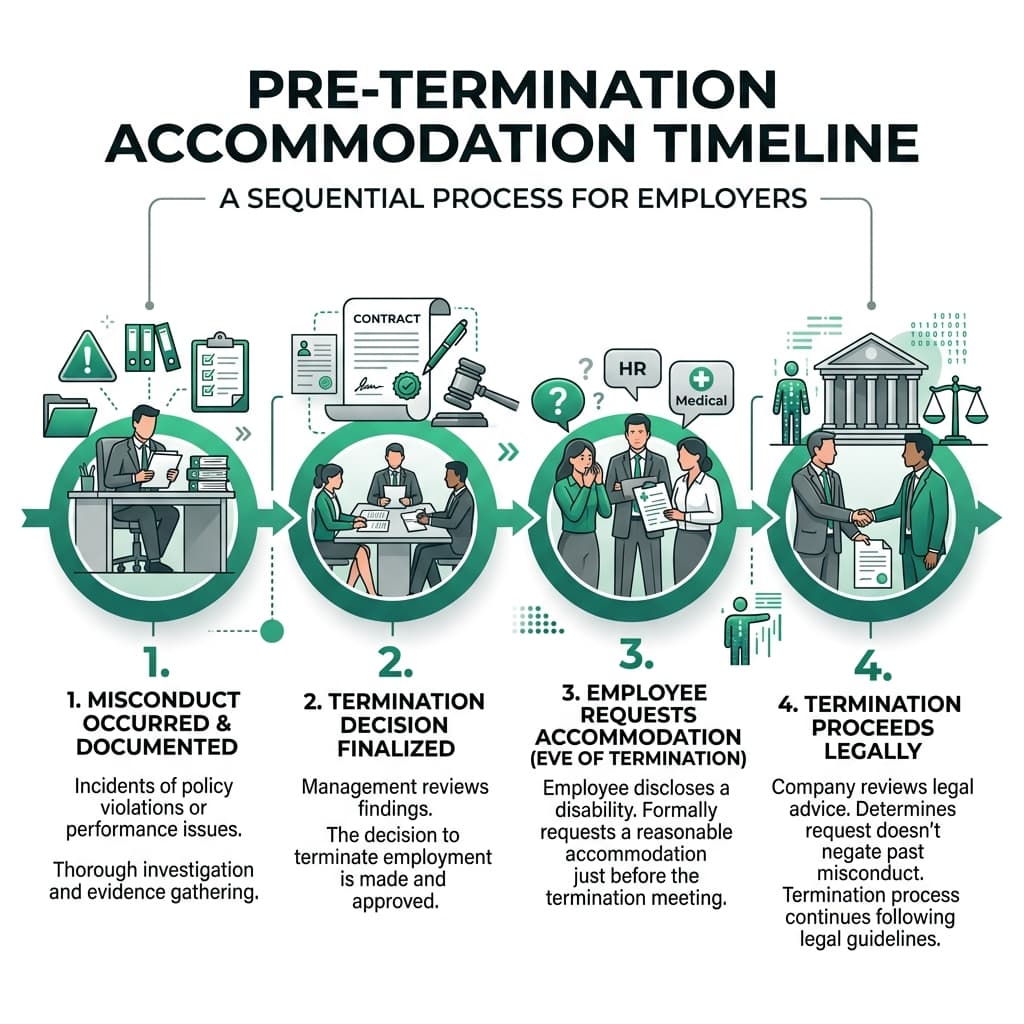
By late September 2026, Poudrier and HR decided to terminate Wilkin’s employment due to her critical drug documentation violations and chronic absenteeism. On September 24, 2026, Poudrier called Wilkin to schedule a formal termination meeting.
During this call, Wilkin informed Poudrier that she was requesting a reasonable accommodation in the form of a medical leave of absence. To review the request and complete the drug audit, the hospital suspended Wilkin for one week instead of immediately discharging her.
During her suspension, Wilkin emailed Poudrier admitting her charting and waste errors, writing, "I will be much more diligent about my charting and waste... if given the opportunity." Following the review, the hospital proceeded with the termination, discharging Wilkin on October 6, 2026.
The Core Violation: Wasting Narcotics Without a Witness
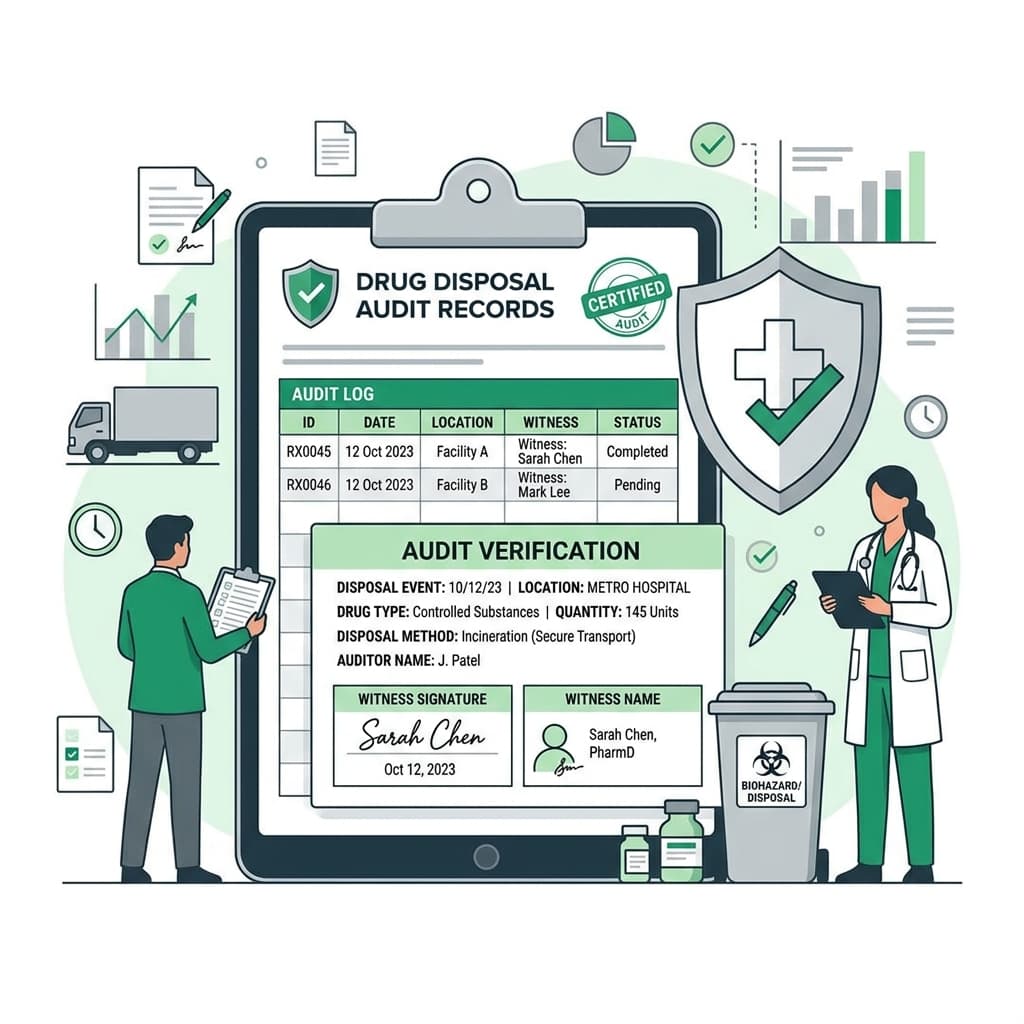
The hospital’s drug handling policy was designed to comply with federal controlled substance laws and prevent drug diversion. Under this policy, registered nurses are strictly required to have a licensed witness present when discarding any portion of a controlled substance.
The witness must electronically verify and sign off on the disposal. Wilkin’s admission that she routinely "wasted" morphine and Lorazepam without a witness constituted a direct breach of safety protocols. In healthcare and safety-sensitive industries, such violations are treated as severe misconduct, exposing the employer to regulatory sanctions.
Disproving Retaliation Through Pre-Existing Performance Logs
Wilkin argued that the hospital used the drug discrepancies as a pretext to retaliate against her for taking protected medical leave. To defeat this argument, the hospital produced a comprehensive, contemporaneous paper trail. The documentation showed that the hospital had actively audited, logged, and discussed Wilkin’s attendance and charting issues long before she requested FMLA leave or disclosed any medical conditions.
Poudrier’s email communications with HR, dating back several months, demonstrated that the hospital’s investigations were triggered by objective patient billing discrepancies, not discriminatory animus.
EEOC Compliance Alert
HR departments must ensure that performance reviews, attendance logs, and internal audits are documented and dated in real-time. When an employer can present a pre-existing paper trail of documented performance issues, courts will reject the employee's claims that a subsequent termination was a retaliatory response to a protected leave request.
3. Legal Analysis & The Court's Ruling
Click to expand
The 'Alamillo' Standard: Eve-of-Termination Accommodation Requests
The primary legal issue in Wilkin centered on whether the hospital was obligated to engage in the interactive process and grant her medical leave request after deciding to terminate her. The California Court of Appeal, citing the landmark federal ruling in Alamillo v. BNSF Railway Co.
(2017), held that an employer’s duty to accommodate and engage in the interactive process is not triggered if the termination decision was finalized prior to the accommodation request. Because Wilkin’s misconduct had already occurred and the hospital had finalized the termination decision before she requested leave on September 24, the hospital was legally permitted to proceed with the discharge.
Honest Belief Rule vs. Mistaken Timekeeping Pretext
Wilkin attempted to show pretext by pointing to timekeeping errors in the hospital's Kronos system, which had occasionally misclassified her FMLA days. The court rejected this argument, noting that the hospital had actively corrected all timekeeping discrepancies once they were identified.
The court emphasized that a plaintiff cannot establish pretext simply by showing that the employer's record-keeping was wrong or mistaken. Under the "honest belief" rule, as long as the employer honestly and reasonably believed in the legitimate reason for the discharge (the drug discrepancies and absenteeism) at the time the decision was made, the employer lacks discriminatory intent.
The Strict Separation of Protected Leave from Behavioral Misconduct
The court affirmed that while FMLA and CFRA protect employees from being penalized for taking medical leave, they do not shield employees from the consequences of violating company policies or engaging in workplace misconduct. The court ruled that Wilkin was not terminated for taking FMLA leave, but rather for repeatedly violating safety-sensitive narcotic handling protocols.
The California Court of Appeal affirmed summary judgment in favor of the hospital, ruling that the record was completely devoid of evidence of pretext or discriminatory animus.
4. In-Depth HR Practical Takeaways
To secure your organization against late-stage accommodation claims and ensure compliant terminations, HR managers must implement the following procedures:
Action 1: Enforce Strict Documentation for Safety-Sensitive Roles
Establish Clear Dual-Verification Protocols: For any role involving controlled substances, financial transactions, or heavy machinery, mandate dual-verification and witness signatures for critical actions. Define a failure to secure a witness signature as a severe policy violation subject to immediate termination.
Perform Regular Audits: Implement automated, random audits of dispensing machines, transaction logs, and employee entries to detect discrepancies early, preventing patterns of undocumented behavior.
Action 2: Audit Timekeeping Systems for Consistent Leave Classification
Implement Cloud-Based Leave Integrations: Do not rely on supervisors to manually classify FMLA or CFRA absences. Use a timekeeping system that integrates with your leave management software to automatically deduct approved FMLA hours from the employee's balance.
Establish a Correction Audit Trail: If a timekeeping mistake occurs, document the correction process immediately, showing that the company actively audits and rectifies errors, which helps disprove allegations of retaliatory intent.
Action 3: Establish Clear Pre-Termination Finalization Records
Document the Finalized Termination Decision: Before scheduling a termination meeting, ensure that HR and executive leadership sign and date a formal termination authorization memo. This memo serves as physical proof that the decision was finalized before the employee could submit a late-stage accommodation request.
Conduct a Suspension-for-Review Period: If an employee requests an accommodation on the eve of termination, follow the hospital's approach: suspend the employee for a brief period to review the request, ensuring that the company has fully considered and documented the legal implications before proceeding.
5. Next Steps for HR: Proactively Securing Your Compliance
To evaluate your company's accommodation workflows and audit your leave compliance:
Map Out the Interactive Process: Ensure your team follows the correct steps during accommodations using the ADA Process Timeline Calculator.
Log and Verify Employee Leave Hours: Replace manual tracking spreadsheets with the secure FMLA Leave Calculator to prevent timekeeping errors.
Assess Management Compliance Risks: Run a quick audit on your supervisors' communication practices using the FMLA Interference Risk Evaluator.
If you are ready to secure your organization with an unalterable audit log of progressive discipline, leave approvals, and pre-termination decisions, Start Your Free Trial of AI SoloHR Today.
Disclaimer: This case study is for educational and informational purposes only and does not constitute legal advice. AI SoloHR does not provide legal opinions or represent businesses in judicial disputes. For complex compliance questions, please consult qualified labor counsel.