ComplianceJul 18, 2026 01:32by AI SoloHR Team5 min read
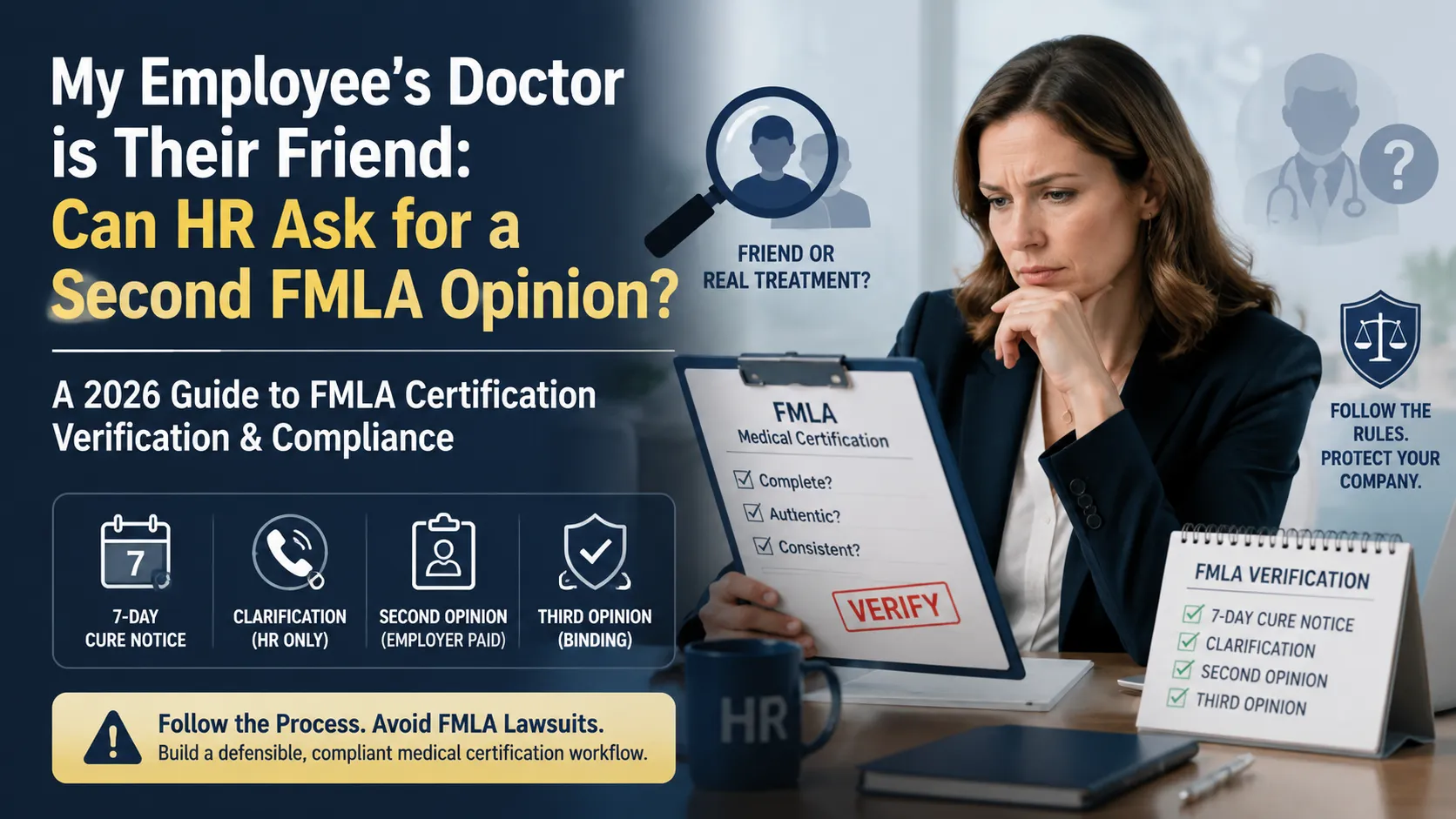
My Employee's Doctor is Their Friend: Can HR Ask for a Second FMLA Opinion?
For U.S. employers and small-business HR teams.
#suspicious fmla medical certification#fmla second opinion cost#verify fmla certification validity#fmla cure letter 7 days
Fact-Checked & Regulatory AuditVERIFIED E-E-A-T
Verified by AI SoloHR Compliance & Editorial Team (U.S. Employment Law & Regulatory Compliance Research Group)
Last Audit: Oct 5, 2026 20:37
My Employee's Doctor is Their Friend: Can HR Ask for a Second FMLA Opinion?
Reviewing medical certification forms is a routine part of HR administration. However, sometimes a document raises red flags. If an employee frequently requests intermittent leave for migraines, and you discover the signing physician is the employee’s college roommate or a close personal friend, your immediate reaction might be skepticism.
You might ask yourself: Can we reject this note? Can I call the doctor to verify if they actually performed an exam? Can we demand a second opinion from a company-selected doctor?
In 2026, acting on suspicion without following strict statutory protocols carries immense legal liability. The FMLA has highly specific, rigid rules governing how employers can verify, clarify, and challenge medical certifications.
🛠️ HR Compliance Alert: Documenting medical certifications requires strict procedural compliance. Use our FMLA & LOA Tracking Checklist
Sources and review notes
This article is written for U.S. small-business HR teams in 2026 and should be checked against your own policy, state requirements, and counsel guidance before use in a contested employment decision. AI SoloHR provides workflow structure, reviewed drafting support, and educational resources; it does not provide legal advice or make final employment decisions.
Statutory Sources & Regulatory Citations
This compliance document references official regulatory guidance from federal employment enforcement agencies:
to draft compliant cure letters, verify forms, and manage verification timelines.
The Suspicion Trap: Handling Suspect Medical Documentation
Skepticism about medical documentation is common, but taking unauthorized steps to investigate is a direct compliance violation.
The Logistics Clinic Note Gotcha
Consider a real gotcha case that occurred in early 2026 involving a regional logistics center. A warehouse operator requested intermittent FMLA leave for severe asthma, submitting a certification form signed by a local family physician.
The HR coordinator searched the doctor's name online and discovered the physician was a close personal friend and college classmate of the employee. Suspecting fraud, the HR coordinator called the doctor's clinic directly, questioned the receptionist about the doctor's relationship with the employee, and verbally denied the FMLA request.
The employee sued, and the federal court ruled against the company. The judge noted that the HR coordinator’s direct phone call violated FMLA's strict contact restrictions, committing FMLA interference. The company was forced to pay $120,000 in liquidated damages. The court reiterated that HR cannot deny a note simply because the physician is a personal contact of the employee.
HR's Legal Recourse: The Clarification and Second Opinion Framework
If you suspect a medical note is invalid or incomplete, the FMLA provides a structured, legal pathway for verification.
Audit the Medical Certification: Review the form to ensure all fields are complete and do not contain obvious signs of suspicious alterations.
Issue a 7-Day Cure Letter: If the certification is incomplete or vague, provide written notice specifying the missing data and grant 7 calendar days to correct it.
Verify the Form Authenticity: Contact the healthcare provider only for clarification or authentication of the signature (completed by HR or a leave administrator, never by the direct supervisor).
Clarification: Verifying Signature and Authenticity
Under FMLA rules, an employer can contact the employee’s health care provider for purposes of clarification or authentication of the medical certification.
Authentication: Providing a copy of the certification to the provider and asking them to confirm that the information was entered and signed by them.
Clarification: Asking the doctor to explain the handwriting or clarify the meaning of a specific medical term.
Crucially, the direct manager or supervisor cannot make this contact. It must be handled by an HR professional, a leave administrator, or a company healthcare representative. Furthermore, you must give the employee an opportunity to authorize the release of this information; you cannot access private medical histories without consent.
Enforcing the 7-Day Cure Notice for Incomplete Forms
If the certification form is vague, incomplete, or missing key parameters (such as the frequency and duration of intermittent episodes), you cannot reject it immediately.
Under DOL FMLA Fact Sheet #28G, you must state in writing what information is missing and give the employee exactly 7 calendar days to cure the deficiencies. Only if the employee fails to return the corrected paperwork within this window can you deny FMLA protection.
The Second and Third Opinion Process (The Strict Protocols)
If the form is complete but you still have reason to doubt its validity, you can request a second opinion.
When Can You Request a Second Opinion?
If you have a legitimate, objective reason to doubt the certification, you can require the employee to obtain a second medical opinion.
Employer Paid: The company must pay for the entire cost of the second opinion exam, including the doctor's fee and reasonable travel expenses for the employee.
Neutral Doctor: The second opinion physician cannot be a doctor that the company employs or contracts with regularly. It must be a neutral, independent healthcare provider.
The High Cost and Binding Status of the Third Opinion
If the second opinion differs from the original certification, the employer can pay for a third opinion.
Mutual Agreement: The third provider must be mutually agreed upon by both the employer and the employee.
Binding Ruling: The opinion of the third healthcare provider is final and legally binding on both the company and the worker.
Because of the high cost of paying for multiple medical exams, most employers only trigger the second opinion process in clear, high-stakes scenarios of suspected abuse.
Structuring Medical Audit Workflows in 2026
Manually managing cure letters and second-opinion requests on paper or loose files is highly error-prone.
Shifting to an automated compliance management workflow secures your process. AI SoloHR automatically checks the completeness of medical forms, sets alerts for the 7-day cure window, guides HR through the strict boundaries of doctor contacts, and logs all communication securely. This ensures your medical verifications are legally bulletproof.
Frequently Asked Questions
Who pays for the second and third medical opinions under FMLA?
The employer is legally required to pay for the entire cost of the second and third medical opinions, including the exam fees, diagnostic tests, and the employee's travel expenses. The employee cannot be charged any out-of-pocket costs.
Can HR deny FMLA leave if the employee refuses a second opinion?
Yes. If the employer has legally requested a second opinion and is paying for the exam, and the employee refuses to participate, the employer can deny FMLA leave protection for that condition until the exam is completed.
Legal Disclaimer
This article is for educational and informational purposes only and does not constitute formal legal advice. HR professionals and business owners should consult with a qualified employment attorney to evaluate specific FMLA compliance scenarios in 2026.