FMLA Rolling Calendar Calculator: Track the 12-Month Period Legally (2026)
For U.S. employers and small-business HR teams.
#download fmla rolling calendar calculator excel#fmla 12-month rolling period calculator#employer guide to fmla compliance#automated fmla leave tracking#fmla rolling backward calculator
Fact-Checked & Regulatory AuditVERIFIED E-E-A-T
Verified by AI SoloHR Compliance & Editorial Team (U.S. Employment Law & Regulatory Compliance Research Group)
Last Audit: Oct 2, 2026 21:05
Rolling method
Rolling FMLA tracking needs a calculation plus a defensible timeline
A rolling method is easier to trust when the calculation, absence dates, and supporting case history stay together instead of being recreated from separate systems.
Use a consistent 12-month method and document which leave year your employer applies.
Keep each absence date and hour deduction tied to the case timeline.
Use calculator output as a working record, then preserve the final decision inside the case file.
Managing federal leave compliance under FMLA guidelines is a primary responsibility for B2B HR professionals and small business owners. When employees request family or medical leave, employers must document every day of absence within a specific 12-month period.
Using a standardized calendar system is essential to maintaining compliance. However, relying on manual calculations exposes your business to significant date errors and regulatory risks. Upgrading to a secure digital tracking system ensures your business maintains an audit-proof trail.
In 2026, leave management and strict adherence to federal labor guidelines remain top priorities for business operations. As companies coordinate varying shift schedules and adapt workspace standards, establishing a clear, legally sound process for managing medical certifications has become a routine HR requirement.
Failing to properly calculate FMLA rolling periods or missing critical FMLA response timelines can expose your business to significant legal risk. We at AI SoloHR believe that a structured, objective, and documented approach to form processing is the best way to support your team while keeping your business secure.
Sources and review notes
This article is written for U.S. small-business HR teams in 2026 and should be checked against your own policy, state requirements, and counsel guidance before use in a contested employment decision. AI SoloHR provides workflow structure, reviewed drafting support, and educational resources; it does not provide legal advice or make final employment decisions.
Statutory Sources & Regulatory Citations
This compliance document references official regulatory guidance from federal employment enforcement agencies:
This guide covers FMLA rules, details the fmla rolling calendar calculator, and outlines a compliant workflow.
1. FMLA Rolling Calendar Calculator Framework and Common Manual Processing Limitations
Click to expand
Before downloading calendar spreadsheets or reviewing medical certifications, employers must understand FMLA compliance frameworks and the limits of manual date tracking.
Understanding the Design Framework of a Rolling Calendar Calculator
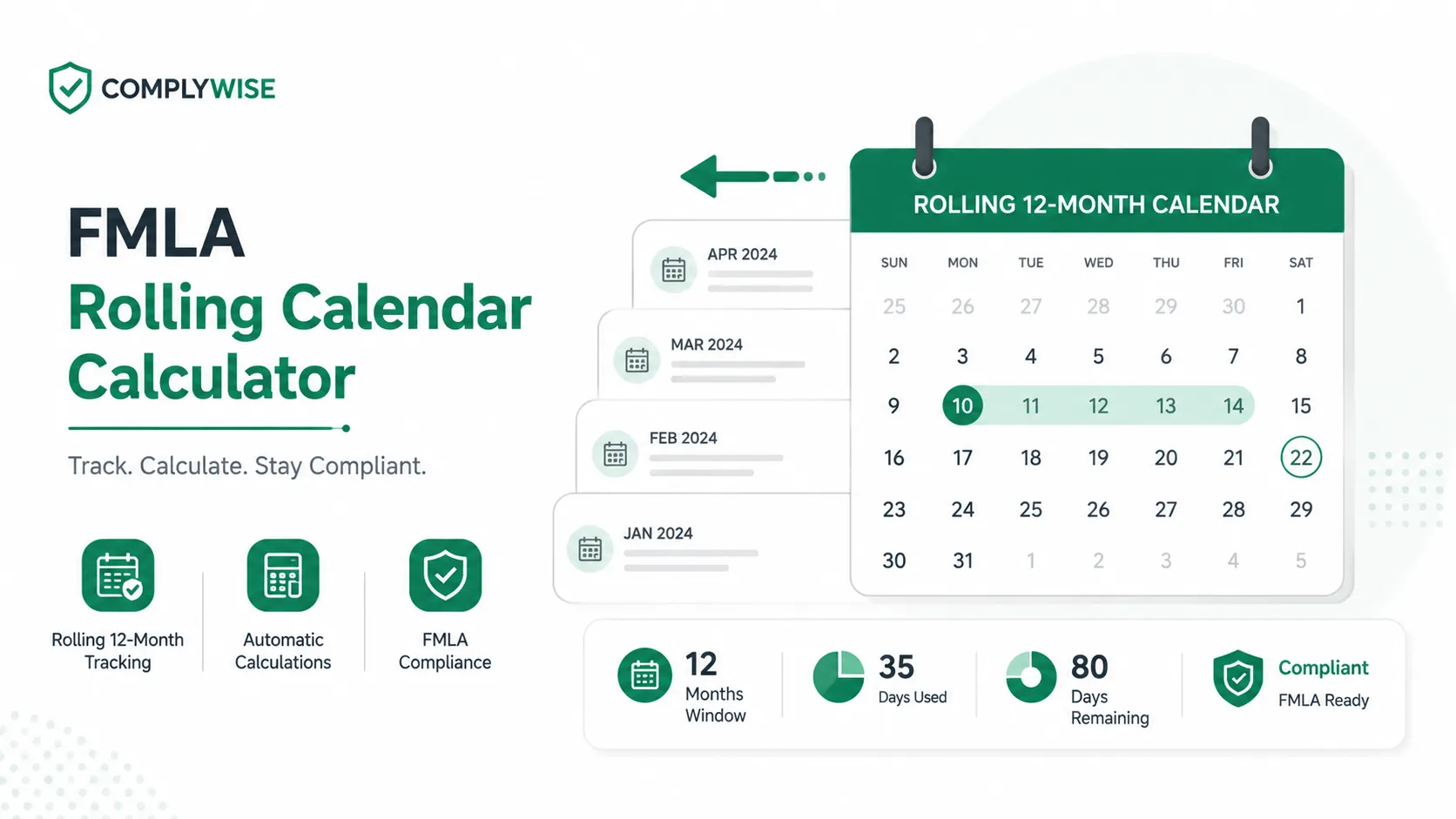
A rolling calendar calculator is designed to track FMLA leave by looking backward from the date an employee uses any leave:
The rolling backward method: Calculating the amount of FMLA leave an employee has used during the 12 months immediately preceding the date of any requested leave.
Remaining balance calculations: Subtracting the number of hours or weeks used during that 12-month window from the employee's total 12-week (or 480-hour) entitlement.
Shifting windows: Recognizing that the 12-month calculation period shifts daily as time progresses, meaning the employee's available balance can change day by day.
Employers should refer to the official Department of Labor (DOL) guidelines to ensure their tracking methods align with federal standards.
The Hidden Compliance Risks of Manual Date Tracking
Attempting to calculate shifting 12-month periods and deadlines on manual spreadsheets is a major security and compliance risk.
Manual date tracking often leads to missed timelines, such as failing to issue eligibility notices promptly or miscalculating the remaining FMLA balance. Additionally, storing sensitive medical data in general employee personnel files violates FMLA and ADA confidentiality mandates.
If an employer fails to maintain separate, secure medical files, they can face severe penalties during a Department of Labor (DOL) audit.
2. Upgrading to AI SoloHR for Automated Leave Case Management
Click to expand
Transitioning from manual calculations to a secure, digital platform is the most effective way to eliminate administrative errors and maintain FMLA compliance.
Streamlining Rolling Calendar Calculations and FMLA Compliance in Three Steps
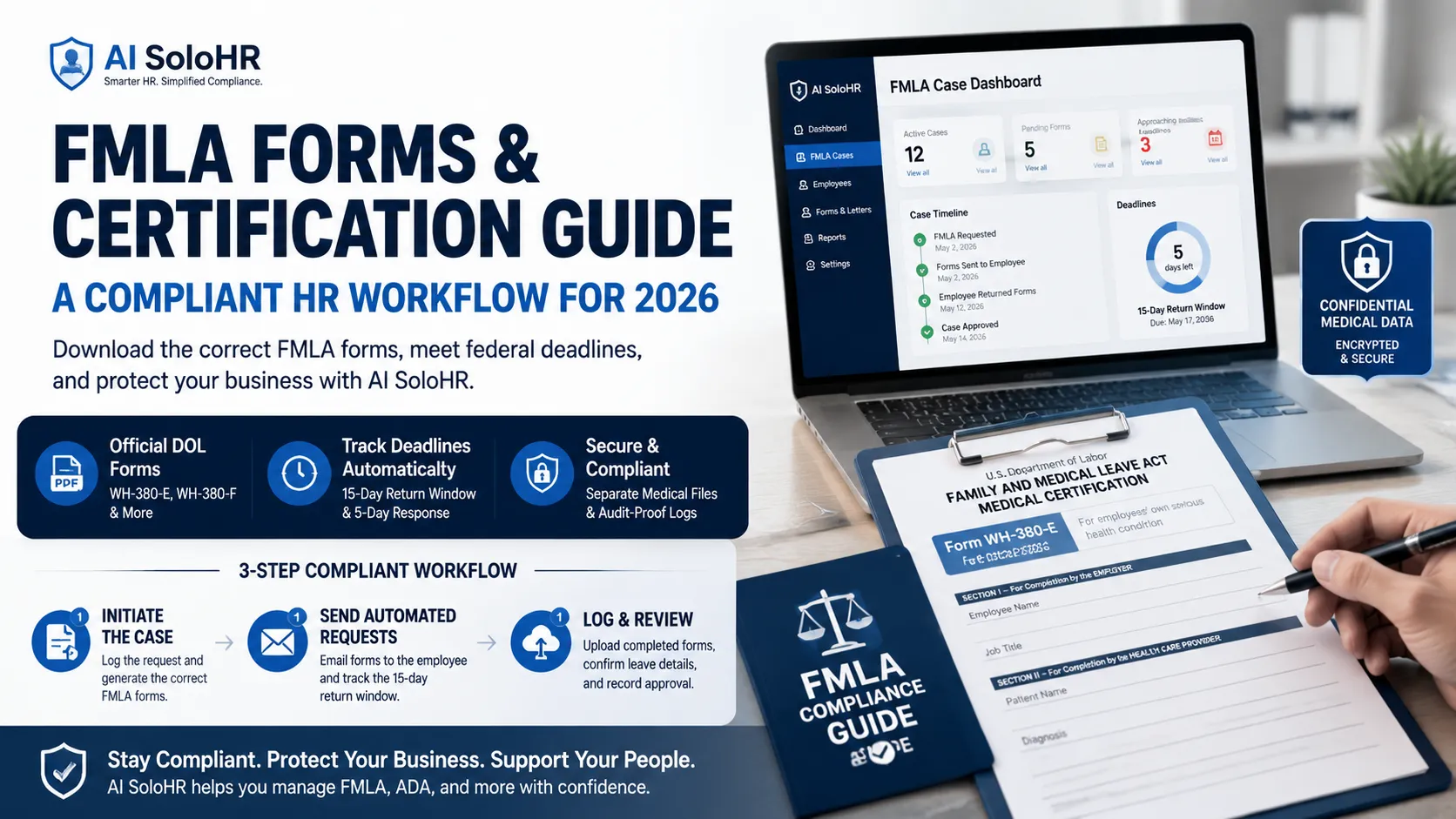
AI SoloHR simplifies FMLA case management by organizing the entire intake process into a structured digital workflow:
Initiate the Case: When FMLA leave is requested, log the employee's profile in AI SoloHR to automatically generate the appropriate tracking schedules.
Automated Calculations: The system automatically calculates remaining FMLA hours using the rolling 12-month method, eliminating manual date errors.
Log and Review: Keep all communications and leave logs recorded in the secure portal, establishing a defensive history.
This automated process ensures that all deadlines are met and reduces the administrative burden on your HR team.
Securing Employee Case Files and Establishing Audit-Proof Paper Trails
Maintaining confidential medical records in a secure, separate environment is a key requirement for regulatory compliance.
AI SoloHR secures all medical files in an encrypted vault, separate from standard employee personnel files. Our platform tracks interactive timelines, records every email notification, and maintains an audit-proof paper trail of approvals and denials.
By replacing manual logs with automated workflows, you protect your business from liability. Whether you are managing FMLA leaves or tracking fmla leave tracking and ADA cases, AI SoloHR keeps your organization organized and fully compliant.
Frequently Asked Questions
How does the FMLA rolling calendar calculation work?
Under the rolling backward method, the employer looks back at the 12-month period immediately preceding the date FMLA leave is to be used. The available FMLA leave is the balance of the 12 weeks that has not been used during that 12-month period.
For example, if an employee requests leave on June 10, 2026, the employer calculates the FMLA leave used between June 10, 2025, and June 9, 2026, and subtracts that from 12 weeks.
Why is relying on manual spreadsheets for rolling year calculations risky?
Because the 12-month calculation window shifts with every new day of absence, manual spreadsheets require constant recalculations and custom formulas that are easy to break. A single date entry error can lead to an incorrect available FMLA balance, resulting in an employer either unlawfully denying job-protected leave or granting excess leave, both of which invite legal liability.
Legal Disclaimer: The information provided on this website does not, and is not intended to, constitute legal advice; instead, all information, content, and materials available on this site are for general informational purposes only. Information on this website may not constitute the most up-to-date legal or other information.