FMLA and Remote Workers: How to Apply the 75-Mile Radius Rule to WFH Employees (2026)
For U.S. employers and small-business HR teams.
#fmla remote employees#fmla 50 employees within 75 miles#report to office rule fmla#wfh leave of absence#remote work leave tracking
Fact-Checked & Regulatory AuditVERIFIED E-E-A-T
Verified by AI SoloHR Compliance & Editorial Team (U.S. Employment Law & Regulatory Compliance Research Group)
Last Audit: Sep 17, 2026 12:58
The rise of distributed teams has transformed the modern workplace, but it has also introduced significant compliance challenges for human resource departments. In 2026, managing a workforce spread across multiple states requires leave administrators to look beyond traditional office boundaries.
When a work-from-home (WFH) employee requests an extended medical leave, managers frequently struggle to determine eligibility. If your company has 60 total employees, but they are scattered across 15 states, does federal leave protection apply to them?
Understanding the intersection between fmla and remote workers is essential for maintaining compliance. We at AI SoloHR frequently work with growing SaaS companies and distributed small businesses that inadvertently violate leave rights simply because they calculated remote worksites incorrectly.
This guide details the Department of Labor rules and provides an action plan for managing remote leaves of absence defensibly.
Sources and review notes
This article is written for U.S. small-business HR teams in 2026 and should be checked against your own policy, state requirements, and counsel guidance before use in a contested employment decision. AI SoloHR provides workflow structure, reviewed drafting support, and educational resources; it does not provide legal advice or make final employment decisions.
Statutory Sources & Regulatory Citations
This compliance document references official regulatory guidance from federal employment enforcement agencies:
1. Core Compliance: FMLA Eligibility Criteria for Dispersed Teams
Click to expand
To evaluate remote leave requests correctly, employers must first establish their status as a covered employer and then analyze the employee's specific location metrics.
Standard FMLA Headcount Thresholds for Covered Employers
Under federal rules, a private-sector employer is covered by the FMLA if they employ 50 or more employees during 20 or more calendar workweeks in either the current or preceding calendar year. This initial threshold counts all employees on your payroll, including full-time, part-time, and remote workers, regardless of their location.
If your total company payroll contains 55 employees—even if they are all WFH in different states—you are a covered employer. This means you must maintain a written FMLA policy, display the required federal postings, and review all leave requests in accordance with federal standards.
Deconstructing the 50 Employees within 75 Miles Rule
While your company may be covered, individual employees are only eligible to take FMLA leave if they meet three criteria: they must have completed 12 months of tenure, have worked at least 1,250 hours in the preceding 12 months, and work at a location where the employer employs 50 or more employees within a 75-mile radius.
This 75-mile radius rule is measured by surface miles using public roads. For traditional brick-and-mortar offices, this rule is straightforward. If a branch office employs 10 people and there are no other company facilities within 75 miles, those 10 employees are ineligible for FMLA leave, even if the parent company has 500 total employees.
The law includes this exception because small, isolated facilities would face severe operational hardship if a key employee took a 12-week absence.
2. The 'Report-To' Rule: Deconstructing Remote Worksite Definitions
Click to expand
Applying the 75-mile radius rule to telecommuters requires leave administrators to understand the specific statutory definitions established by federal regulators.
Why an Employee's Home is Not a Worksite
When an employee works full-time from a home office, HR must not treat the home address as an independent worksite. Under the Department of Labor (DOL) regulations, a remote worker's personal residence is never considered their official worksite for FMLA eligibility calculations.
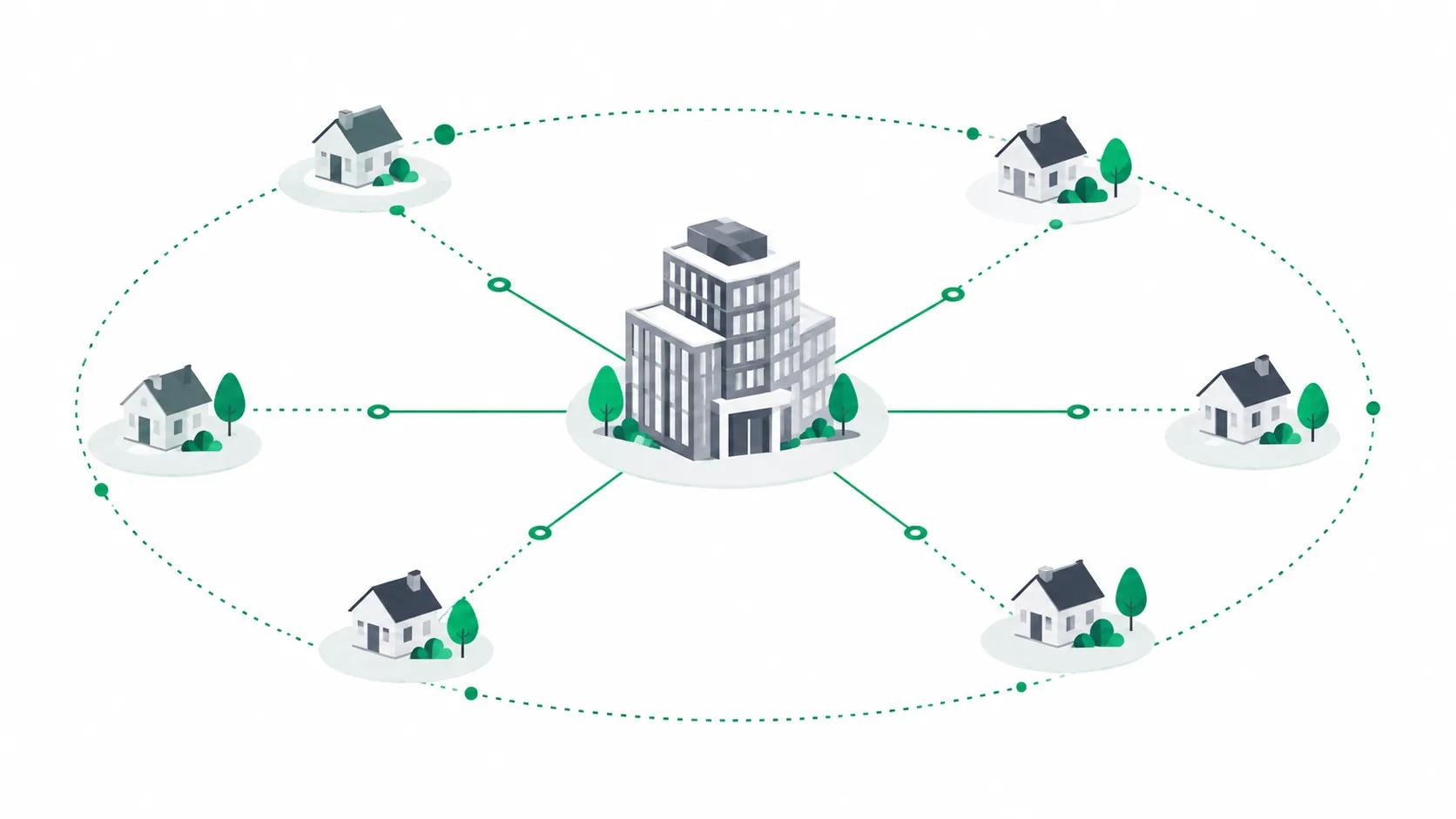
If an employer were to treat each remote home as a worksite, almost all WFH employees would be automatically ineligible for FMLA, as they would be the only employee within a 75-mile radius of their home. To prevent this outcome, federal rules require remote workers to be mapped back to a physical company facility for eligibility purposes.
Mapping Remote Workers to the Assignment Office Headcount
The FMLA guidelines state that a remote employee's worksite is the office to which they report or from which their work is assigned.
For example, if your company has a physical headquarters in Chicago with 52 employees on-site, and you employ a remote customer support agent who lives in Florida but reports directly to the Chicago office, the remote agent’s worksite is Chicago.
Because the Chicago office has more than 50 employees, the remote agent in Florida meets the 75-mile radius headcount requirement. If they meet the 12-month tenure and 1,250-hour service thresholds, they are eligible for FMLA leave, despite being the only company employee residing in Florida.
To prevent compliance errors and manage distributed leaves of absence safely, small businesses must establish a standardized, digital verification process.
Establishing a Regional Worksite Audit Protocol
Before approving or denying a remote employee's leave request, HR coordinators should follow a structured worksite verification protocol:
Identify the Assignment Hub: Document the physical company office from which the remote employee’s work is assigned or to which they report.
Audit the Hub Headcount: Calculate the total number of employees mapped to that assignment hub, including local workers and all remote employees reporting to it.
Check Co-Located Worksites: Use mapping tools to identify if other company offices or worksites fall within a 75-mile radius of the assignment hub, and combine those headcounts if applicable.
Document the Decision: Save a detailed record of the headcount calculations in the employee’s leave file to establish a defensible audit trail.
If the assignment hub headcount is under 50, the employee is ineligible for federal FMLA. However, you must immediately check the state leave laws of the employee's residential state, as many states have paid family leave mandates with much lower headcount thresholds (e.g., California or New York).
Automating Remote Headcount Checks with AI SoloHR
Attempting to track reporting lines, regional worksite radiuses, and employee hours on manual spreadsheets is highly inefficient and creates significant exposure to compliance audits. Utilizing a premium fmla case management software platform is the only way to manage distributed teams securely.
AI SoloHR integrates directly with your payroll and organizational charts to track worksite headcounts automatically. Our system maps remote employees to their correct reporting hubs, calculates worksite radiuses, and instantly verifies FMLA eligibility when a request is submitted.
By automating your fmla leave tracking, you protect your business with a clear, defensible audit trail and support your remote workforce with complete legal confidence.
Frequently Asked Questions
Are out-of-state remote employees eligible for FMLA?
Yes, out-of-state remote employees are eligible for FMLA leave if they meet the standard eligibility criteria (12 months of service, 1,250 hours worked) and report to or receive assignments from a company worksite that employs 50 or more workers (including remote staff reporting to that office).
Their physical location in another state does not disqualify them from federal protection.
How does state-mandated paid family leave coordinate with WFH FMLA?
If a remote worker resides in a state with a paid family leave (PFL) mandate (such as California, New Jersey, or Massachusetts) but the employer is located in a different state, the employer must typically comply with the laws of the state where the employee performs the work.
This means you must coordinate the employee's unpaid federal FMLA protections with the payroll tax deductions and wage replacement benefits of their home state.
Do you count remote contractors toward the 50-employee threshold?
No. Independent contractors are not employees and are not counted toward the 50-employee threshold for employer coverage or worksite eligibility. However, employers must ensure that their remote contractors are legally classified correctly under the FLSA.
If the DOL or IRS reclassifies your contractors as employees, you could be retroactively covered under FMLA, exposing your company to significant liability for past denied leaves.
Legal Disclaimer: The information provided on this website does not, and is not intended to, constitute legal advice; instead, all information, content, and materials available on this site are for general informational purposes only. Information on this website may not constitute the most up-to-date legal or other information.