HR documentation that stays connected to the work
Keep notes, files, AI drafts, tasks, and decisions attached to the case they belong to instead of spreading the record across folders and inboxes.
Built for U.S. employers and small-business HR teams.
Key takeaways
- Searchable timeline
- Private files
- Case context
- Audit readiness
Why disconnected HR documentation creates risk
Documentation is only useful if the team can find it quickly and understand what it means. When notes, files, and updates live in different places, HR loses both speed and context.
The record gets rebuilt over and over
Every time a manager, leader, or counsel asks for background, HR has to pull the story together from folders, messages, and memory.
Critical details lose their timeline
A file by itself does not show what happened before it arrived, why it mattered, or what decision came next.
What HR documentation should stay tied to a case
The strongest record keeps the working history and the supporting materials together.
Working history
Track the actions that explain how the case moved.
Supporting materials
Keep the related evidence attached to that same record.
How AI SoloHR keeps documentation usable
AI SoloHR organizes documentation around HR cases so the document trail follows the actual workflow instead of living in disconnected folders.
How a Documentation-Centered Workflow Works
Case Intake and Starting Facts
Sensitive workplace concerns require objective, factual documentation rather than subjective notes.
Evidence and Notes Added Over Time
Record factual check-in notes, upload signed witness statements, and document the final corrective action.
Review and Export at the End
Transitioning away from manual spreadsheets to tracked cases improves overall workflow visibility.
What a Defensible Documentation Packet Includes
A Clear Sequence of Events
Transitioning away from manual spreadsheets to tracked cases improves overall workflow visibility.
Supporting Records and Attachments
Open case files at the first trigger to record intake details and keep next actions clearly visible.
Outcome Notes That Explain What Happened
Sensitive workplace concerns require objective, factual documentation rather than subjective notes.
Where Teams Usually Lose Defensibility
Facts Without Sequence
U.S. small businesses face unique compliance pressures when operating with lean HR resources.
Files Without Labels
U.S. small businesses face unique compliance pressures when operating with lean HR resources.
Decisions Without Written Rationale
Transitioning away from manual spreadsheets to tracked cases improves overall workflow visibility.
How to read this use-case page
A use-case page is meant to help you judge workflow fit. If the problem described here sounds like your current HR process, that usually means you need a clearer case record, a more visible task flow, better document handling, and a stronger timeline than spreadsheets or inboxes provide.
- Use the page to compare your current process against a structured case workflow
- Look for where deadlines, documents, and communication tend to drift today
- Use the product and pricing pages if the use case already matches active work inside your team
What this page does not claim
This use-case page explains workflow support and documentation structure. It does not claim that AI SoloHR makes legal decisions, replaces an HRIS, or automates protected-employment judgments for your team.
AI SoloHR is designed to support case records, tasks, documents, timelines, and reviewed AI drafts inside one workflow. It is not a substitute for legal, medical, benefits, or policy review where those are needed.
Keep Exploring
Frequently asked questions
What is HR documentation software supposed to do?
It should help HR keep notes, files, decisions, tasks, and communication history connected to the same issue so the team can understand both current status and prior context.
Why is a shared folder not enough for HR documentation?
A folder can store files, but it usually does not show ownership, status, timeline history, or the next action tied to those files.
How does AI SoloHR improve documentation workflows?
AI SoloHR connects files, notes, tasks, and reviewed drafts to the same case timeline, making the record easier to search, explain, and maintain.
Related Interactive Calculators & Tools
Related Compliance Articles & Guides
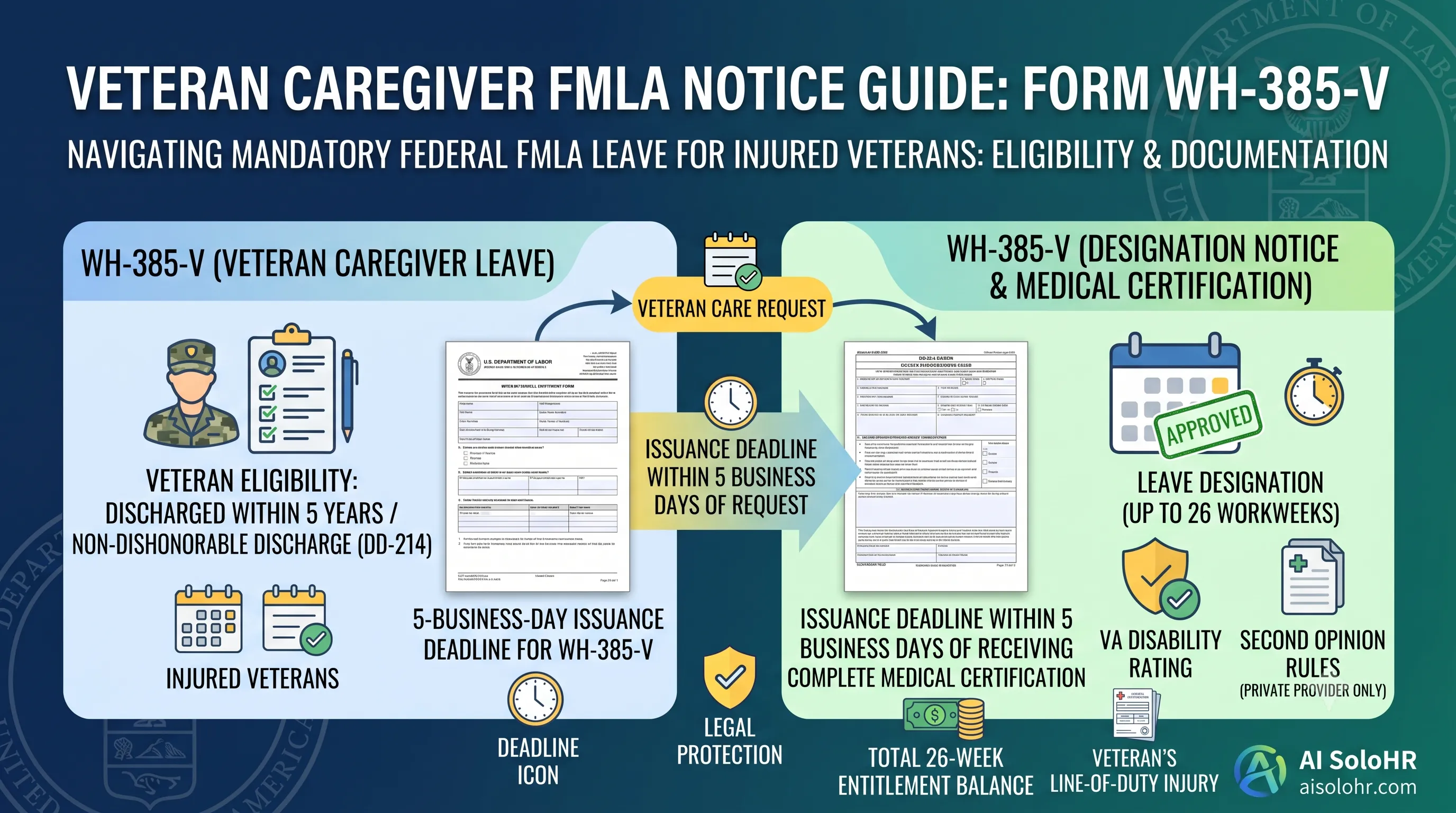
WH-385-V Instructions: Complete FMLA Veteran Caregiver Leave Certification Guide (2026)
A section-by-section guide to completing DOL Form WH-385-V for veteran military caregiver leave. Master the 5-year post-discharge rule, DD-214 verification, bad vs. good certification examples, and 26-week entitlement limits.
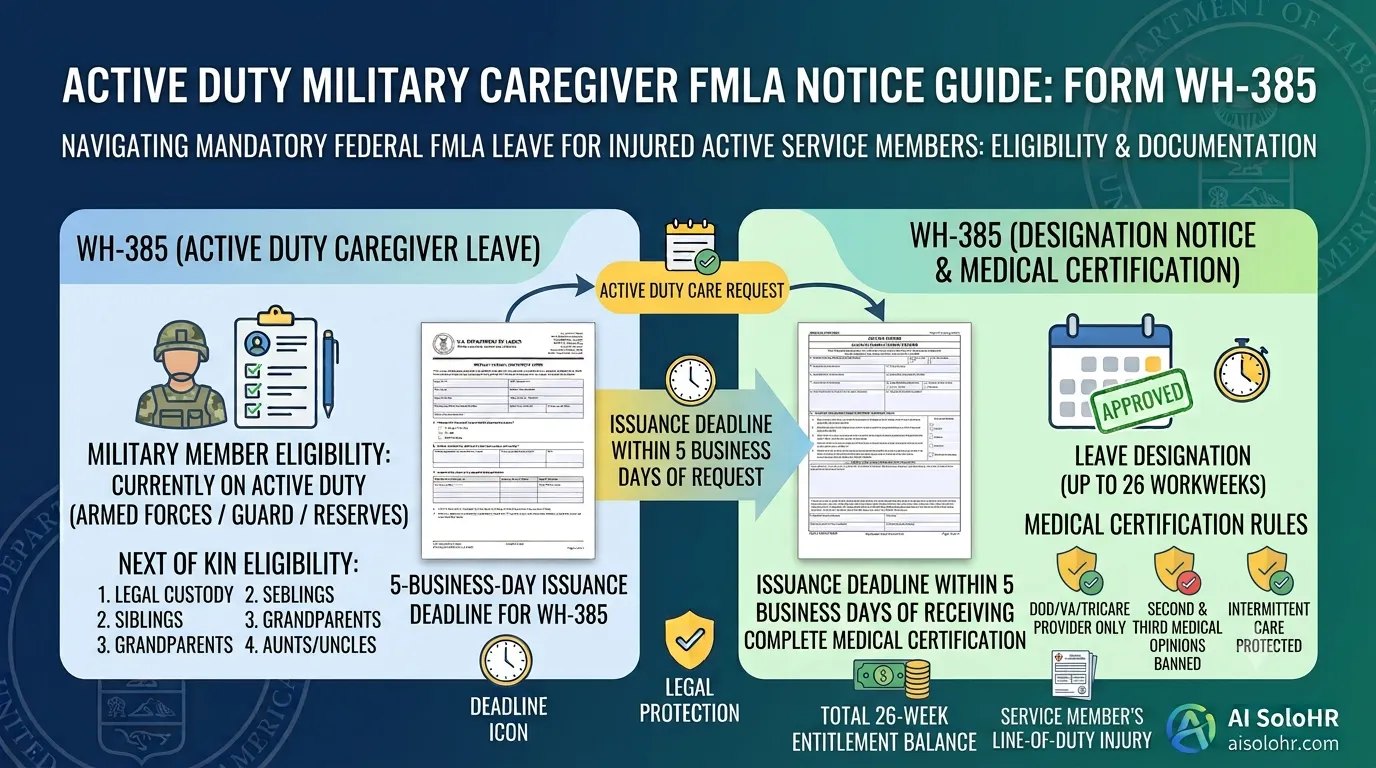
WH-385 Instructions: FMLA Military Caregiver Leave Certification Guide (2026)
A section-by-section HR guide to completing DOL Form WH-385 for active duty military caregiver leave. Master 26 workweeks entitlement, Next of Kin relationship rules, DOD medical certifications, and real-world case examples.
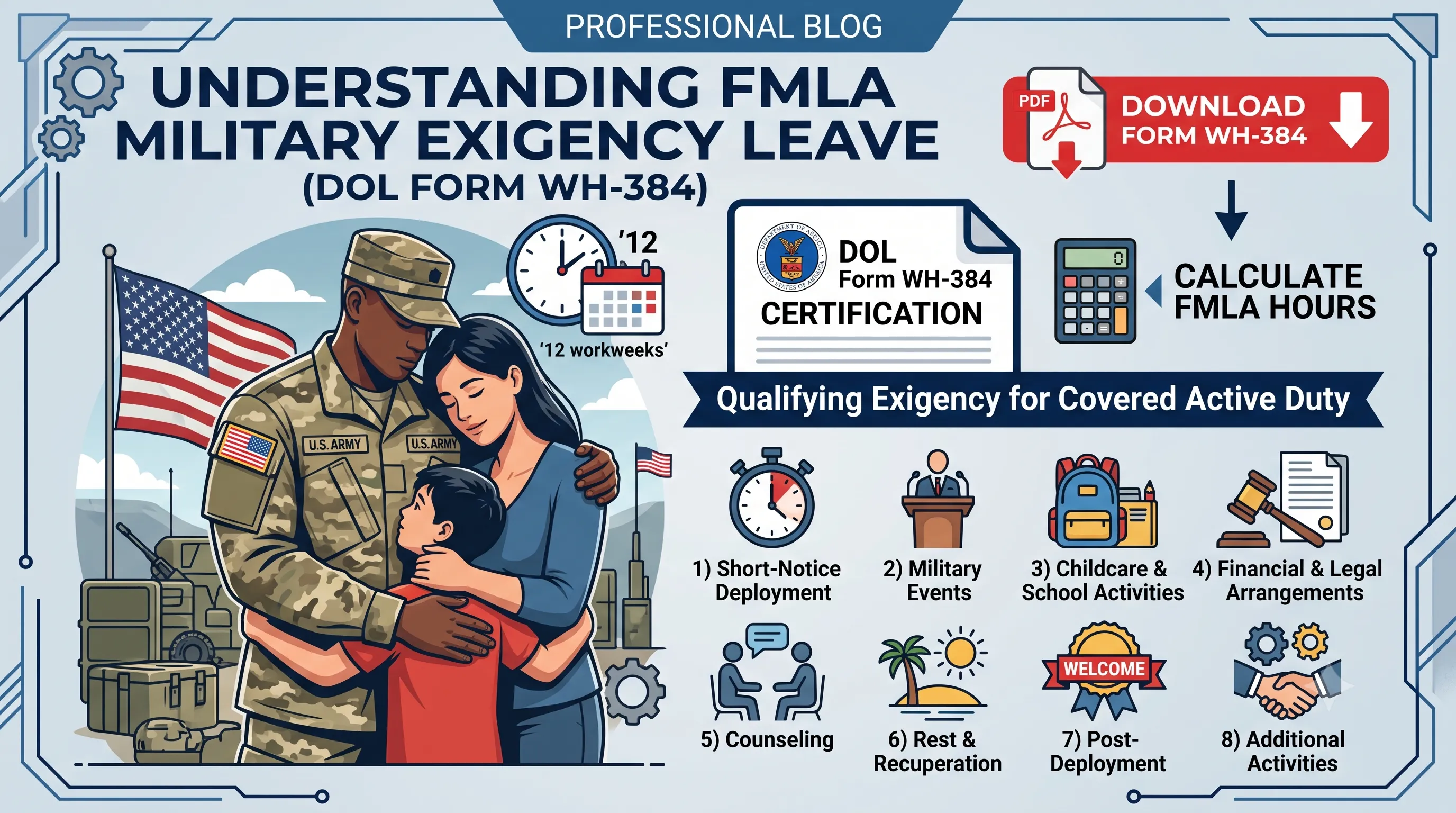
WH-384 Instructions: FMLA Qualifying Exigency Leave Certification Guide (2026)
A section-by-section HR guide to completing DOL Form WH-384 for military exigency leave. Master the 8 statutory exigency categories, active duty order verification, bad vs. good certification examples, and 12-week entitlement rules.
Manual Process Risk Warning
Static documents and manual spreadsheets are great for initial tracking. However, as deadlines pile up and files scatter, human errors can trigger costly regulatory compliance audits.
Put this guidance into action
AI SoloHR helps U.S. small-business HR teams turn manual compliance steps into tracked tasks, defensible timelines, secure document records, and reviewed AI drafts.
- 14-day full platform access
- Up to 3 active cases
- Up to 30 employee records
- All 7 U.S. case types unlocked
This resource is intended for U.S. HR operations and educational purposes only, and does not constitute legal advice. Consult a qualified professional or employment attorney regarding your specific federal and state compliance obligations.