PIP & FMLA/ADA safe harbor checklist
A risk-mitigation checklist for employers when an employee under a Performance Improvement Plan (PIP) requests FMLA leave or ADA accommodations.
Built for U.S. employers and small-business HR teams.
Key takeaways
- Retaliation risk
- Safe harbor audit
- Timeline tracking
- Performance standards
Managing performance during protected leave
When an employee on a PIP requests leave or accommodations, HR must navigate the overlapping requirements of performance management and federal leave protections. Retaliation claims are a major risk in these scenarios.
The overlap vulnerability
An employee placed on a PIP may request FMLA or ADA adjustments, creating a risk that subsequent disciplinary action is viewed as retaliatory. Clear timelines and objective metrics are essential.
Establishing documentation precedence
Ensure that performance deficiencies were documented, discussed, and logged prior to the employee raising a medical leave or accommodation request.
Defining non-retaliatory intent
HR must show that all disciplinary actions are based strictly on pre-existing, objective standards that are applied consistently across all team members.
How to Structure the Safe Harbor Audit
A safe harbor audit helps HR establish a factual timeline to separate performance management from medical leave protections.
Chronological events sequencing
Map out all warnings, performance discussions, and PIP meetings alongside FMLA or ADA request dates. This chronological record is vital for defending against retaliation claims.
Isolating protected requests
Confirm that leave requests or medical accommodations did not influence performance metrics or trigger the performance improvement plan.
Objective comparator testing
Verify that other employees with similar performance issues who did not request leave were placed on similar performance improvement plans.
Safe harbor audit checklist
Review these steps to ensure compliance before taking disciplinary action.
HR compliance checks
Confirm that the performance expectations are consistent with other employees in the same role, and that all accommodations were properly considered.
Manager conversation guidance
Managers must be trained to keep performance conversations focused on work output and avoid discussing medical leaves or restrictions during PIP reviews.
PIP adjustment formulas
If an ADA accommodation is approved (e.g., speech-to-text software), adjust PIP deliverables and timelines to reflect the new workflow tools.
Managing the PIP Timeline During/After Leave
Properly managing the PIP timeline when FMLA leave is taken ensures the organization respects federal leave protections.
The pause and resume protocol
If the employee takes FMLA leave during a PIP, pause the PIP. The remaining duration of the PIP should resume only after the employee returns to work.
Return-to-work review gates
Upon return, re-orient the employee, confirm they have the tools needed, and document the new completion date of the PIP in writing.
Ensuring absolute retaliation safety
Do not count FMLA absences against the PIP completion timeline or use them as a factor in evaluating PIP success.
Download PIP & FMLA/ADA Safe Harbor Checklist
Download our free safe harbor checklist (Excel format) to mitigate retaliation risks, document pre-existing deficiencies, and pause performance standards during leaves.
| Audit Step | Focus Description | Retaliation Risk Flag | Action |
|---|---|---|---|
How to use a template without overrelying on it
A template helps most when you need a repeatable starting structure, but it is still only one part of the workflow. The real work usually includes follow-up tasks, status changes, supporting documents, and communication that should stay connected to the same issue over time.
- Use the template to create consistency across repeated HR work
- Add dates, owners, and supporting notes so the template stays actionable
- Move into a structured case workflow once deadlines, files, or multiple follow-ups start stacking up
What this template page is and is not
This page can help you structure HR workflow documentation, but it should not be treated as legal advice or a promise that one form alone will solve the underlying process. Human review and professional judgment still matter.
AI SoloHR is designed to support case records, tasks, documents, timelines, and reviewed AI drafts inside one workflow. It is not a substitute for legal, medical, benefits, or policy review where those are needed.
Keep Exploring
Frequently asked questions
Can an employee on a PIP be terminated?
Yes, an employee on a PIP can still be terminated for failure to meet performance standards, provided the decision is based strictly on documented, objective performance metrics and not influenced by their FMLA or ADA request.
How do we handle ADA accommodation requests during a PIP?
Treat the accommodation request separately from the PIP. Engage in the interactive process immediately. If an accommodation is approved, adjust the PIP expectations if the accommodation changes how the work is completed.
Related Interactive Calculators & Tools
Related Compliance Articles & Guides
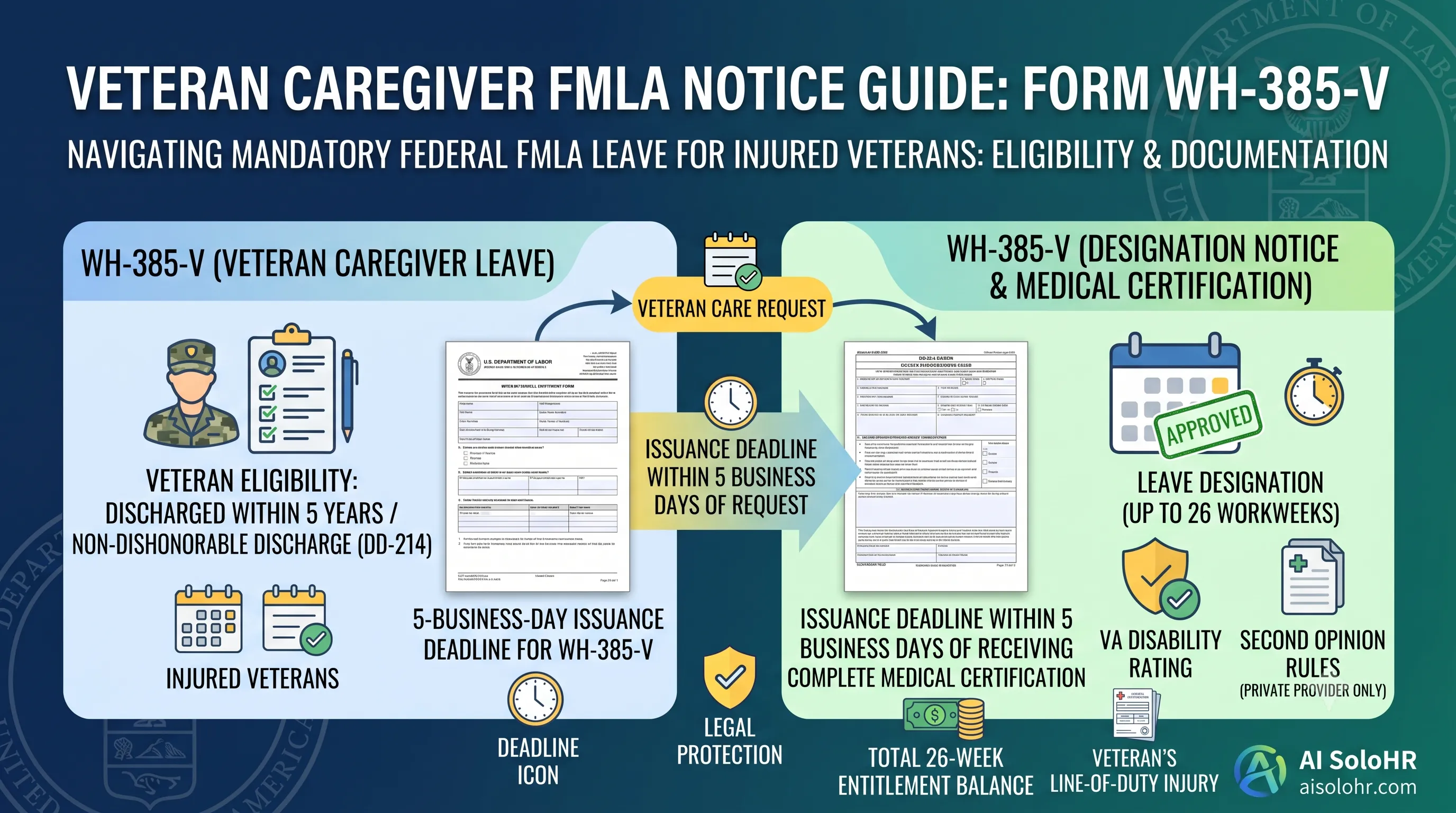
WH-385-V Instructions: Complete FMLA Veteran Caregiver Leave Certification Guide (2026)
A section-by-section guide to completing DOL Form WH-385-V for veteran military caregiver leave. Master the 5-year post-discharge rule, DD-214 verification, bad vs. good certification examples, and 26-week entitlement limits.
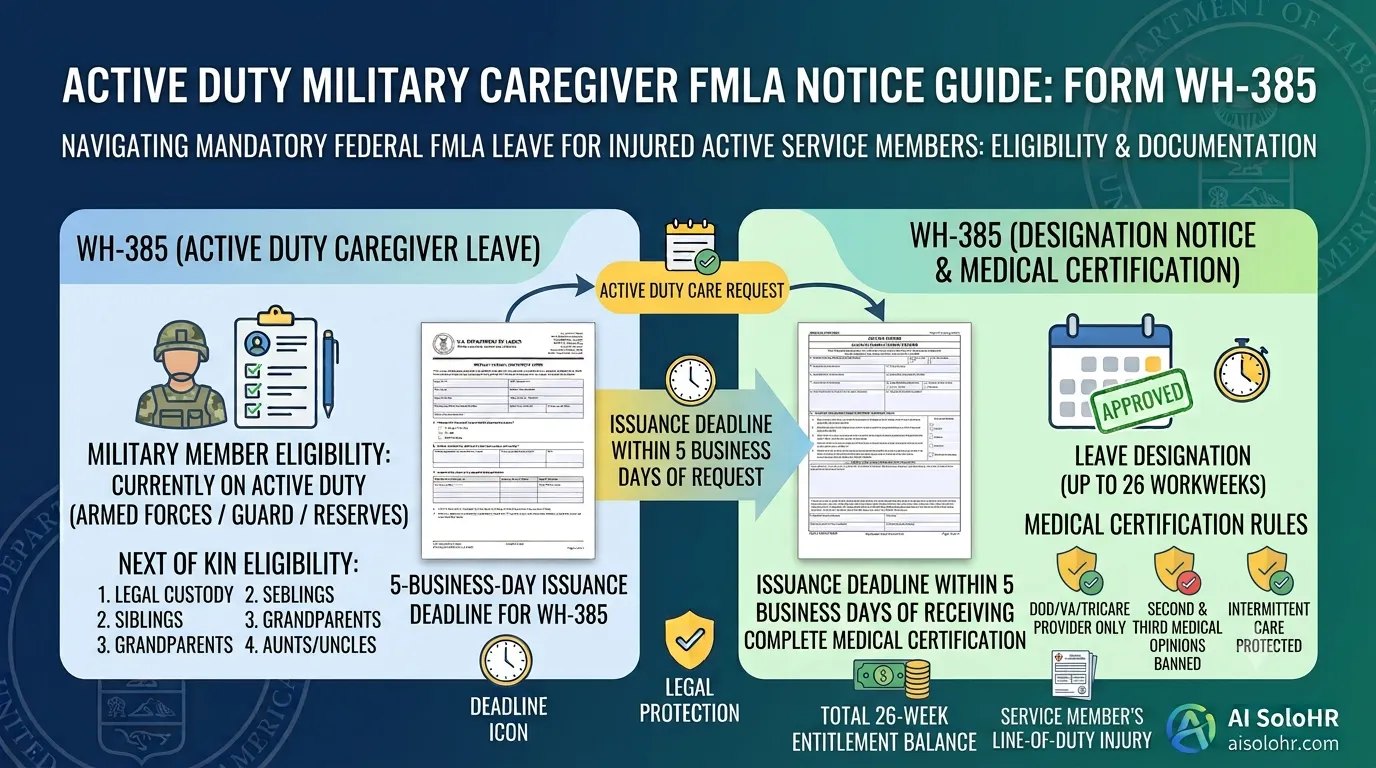
WH-385 Instructions: FMLA Military Caregiver Leave Certification Guide (2026)
A section-by-section HR guide to completing DOL Form WH-385 for active duty military caregiver leave. Master 26 workweeks entitlement, Next of Kin relationship rules, DOD medical certifications, and real-world case examples.
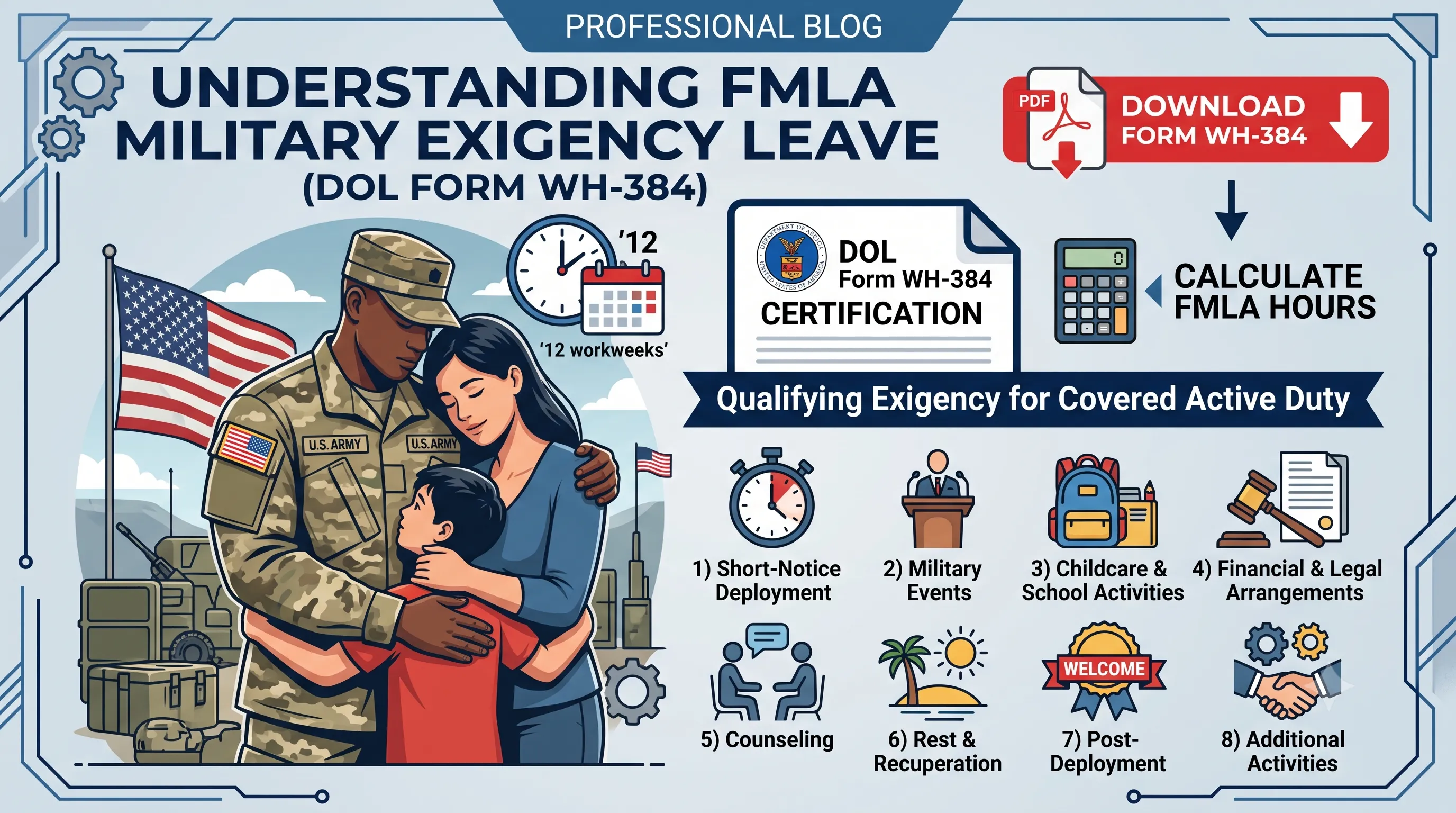
WH-384 Instructions: FMLA Qualifying Exigency Leave Certification Guide (2026)
A section-by-section HR guide to completing DOL Form WH-384 for military exigency leave. Master the 8 statutory exigency categories, active duty order verification, bad vs. good certification examples, and 12-week entitlement rules.
FMLA Spreadsheet Disruption Warning
Manual tracking of medical certifications (15-day cure window), rolling balances, and intermittent schedules across multiple managers invites high risk of FMLA interference claims. When leaves pile up, static files fail to protect the company.
Put this guidance into action
AI SoloHR helps U.S. small-business HR teams turn manual compliance steps into tracked tasks, defensible timelines, secure document records, and reviewed AI drafts.
- 14-day full platform access
- Up to 3 active cases
- Up to 30 employee records
- All 7 U.S. case types unlocked
This resource is intended for U.S. HR operations and educational purposes only, and does not constitute legal advice. Consult a qualified professional or employment attorney regarding your specific federal and state compliance obligations.