FLSA Independent Contractor Misclassification: Weckesser v. Knight Enterprises
Analyze the FLSA independent contractor misclassification rules in Weckesser v. Knight. Learn how uniforms and equipment requirements destroy contractor status.
Case at a Glance
Court / Jurisdiction:U.S. District Court for the District of South Carolina
Date Decided:2026-07-22
Official Citation:391 F. Supp. 3d 529 (D.S.C. 2026)
Judicial Outcome:Plaintiffs' Motion for Final FLSA Collective Certification Granted
Click to expand
Case at a Glance
In Weckesser v. Knight Enterprises S.E., LLC (2026), the U.S. District Court for the District of South Carolina evaluated a major FLSA independent contractor misclassification lawsuit. A group of cable installation technicians brought a collective action alleging they were misclassified as independent contractors and deprived of overtime and minimum wage.
Analyze the pre-termination misconduct rule in Wilkin v. Community Hospital. Learn why eve-of-termination accommodation requests can be legally denied.
Analyze the FLSA misclassification claim in Diaz v. United States. Learn about the federal appointment doctrine, CDA jurisdictional bars, and HR compliance rules.
Although the employer argued that the technicians signed standard independent contractor agreements, operated as separate corporate entities, and filed taxes as sole proprietors, the court granted final collective certification for the class.
The ruling underscores the primacy of the economic realities test over formal contracts and corporate structures, providing a critical compliance warning for B2B companies utilizing 1099 contractor workforces.
1. Factual Background
Click to expand
Uniforms, Logos, and Strict Schedule Controls
Prior to the litigation, Patrick Weckesser and 33 other installation technicians performed cable installation services for customers of Time Warner on behalf of Defendant Knight Enterprises. To manage operations, Knight classified all technicians as independent contractors.
However, in practice, the technicians were subject to strict controls. Knight established and maintained the technicians' daily work schedules and assigned specific work locations. The technicians were required to wear standardized Knight uniforms during their shifts, display the Knight logo on their personal delivery trucks, and adhere to operational guidelines set by the company.
Mandatory Equipment and Exclusive Services Restrictions
In addition to scheduling and branding controls, the technicians were required to use specific software programs and specialized computer equipment provided by Knight to log their daily assignments. The company also enforced exclusivity rules: technicians were prohibited from providing services to other cable installation firms or competitors.
While Knight paid the technicians under a piece-rate system based on completed installations rather than an hourly wage, the company maintained complete oversight over their job requirements and daily routines.
Standardized Independent Contractor Service Agreements
The primary basis for Knight’s independent contractor classification was a uniform "Independent Contractor Services Agreement" that every technician was required to sign before beginning work. The agreement explicitly declared that the technician was an independent contractor and not an employee, stating that they were responsible for their own taxes and were not entitled to overtime pay or benefits.
Because of this agreement, Knight did not track the technicians' hours or pay overtime for hours worked in excess of forty per week.
2. The Legal Mirage: Corporate Entities & Tax Reporting Defenses
Click to expand
Why Setting Up an LLC/Sole Proprietorship Does Not Evade the FLSA
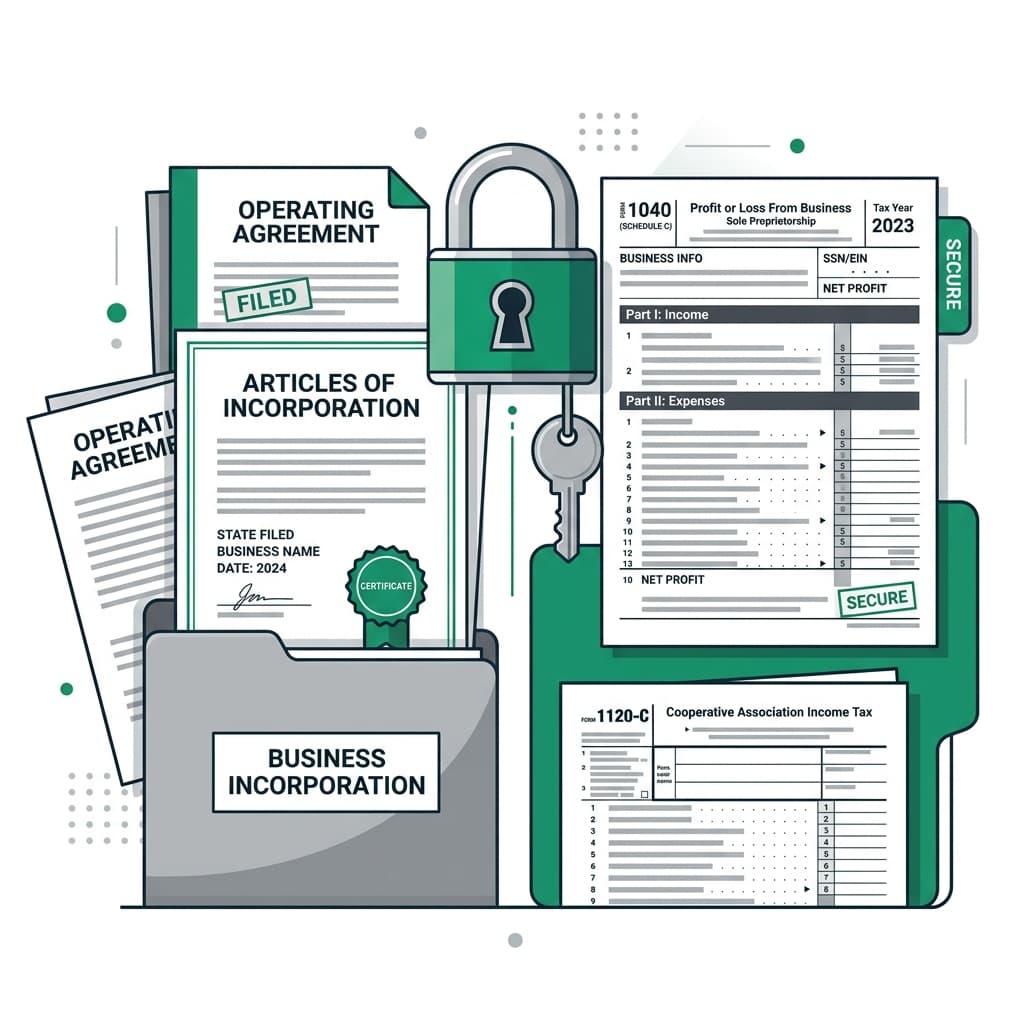
In defending against the lawsuit, Knight argued that because several technicians had incorporated their own businesses or contracted as sole proprietorships, they were independent business entities rather than employees. The court flatly rejected this defense.
Citing established federal precedent, the court held that the technical formation of a corporation or LLC does not automatically defeat an FLSA misclassification claim. If the economic realities show that the individual is not truly in business for themselves and remains financially dependent on the hiring entity, they are legally classified as an employee regardless of their corporate structure.
Rejecting the IRS Tax Filing Estoppel Defense
Knight also asserted a defense of equitable estoppel, arguing that the plaintiffs were barred from claiming employee status because they had reported their earnings as business income and deducted business expenses on their IRS tax filings.
The court rejected this defense as well, noting that allowing employers to escape FLSA liability because they forced or required workers to report as sole proprietors would completely undermine the purpose of the Fair Labor Standards Act. An employee cannot contract away their statutory rights under the FLSA.
EEOC Compliance Alert
Requiring workers to establish LLCs, sign independent contractor agreements, or file IRS Schedule C forms does not protect a company from FLSA misclassification liability. Under federal guidelines, if the worker's operational environment reflects employment, all formal business declarations and tax reporting methods are treated as a legal mirage.
3. Legal Analysis & The Court's Ruling
Click to expand
Applying the 6-Factor Economic Realities Test on a Classwide Basis
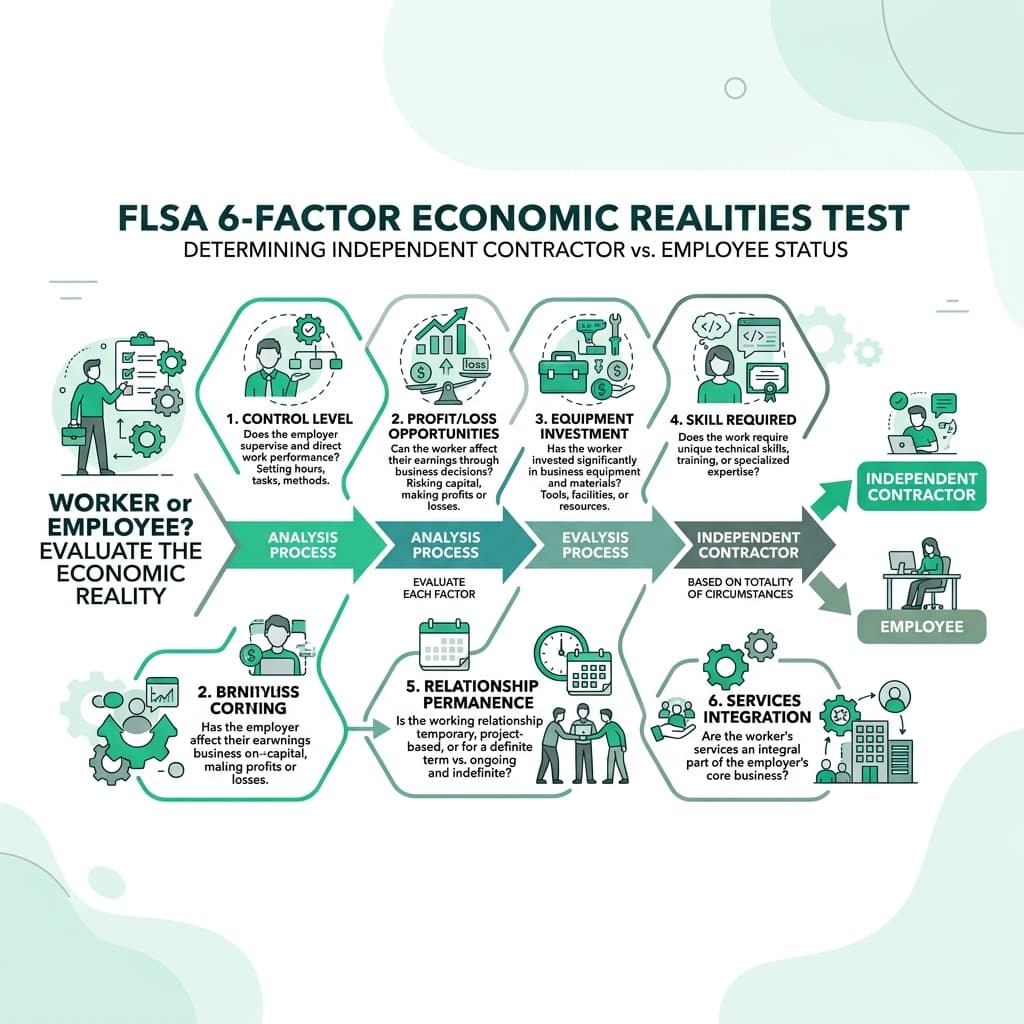
To determine employee status under the Fair Labor Standards Act, courts must evaluate the six-factor economic realities test enforced by the U.S. Department of Labor (DOL) Wage and Hour Division. These factors include: (1) the employer's degree of control; (2) the worker's opportunity for profit or loss; (3) the worker's investment in equipment; (4) the skill required; (5) the permanence of the relationship; and (6) the degree to which the services are integral to the business.
The court found that because Knight applied uniform policies (uniforms, scheduling, exclusive contracts, and piece-rate pay) to all technicians, the economic realities test could be evaluated on a class-wide basis.
The Heightened Standard for Final Collective Certification
At the second stage of FLSA collective litigation—following the completion of discovery—courts apply a heightened, fact-specific standard to evaluate whether the plaintiffs are "similarly situated" under 29 U.S.C. § 216(b). The court assessed three factors: the factual settings of the individual plaintiffs, the individualized defenses available to the employer, and fairness and procedural considerations.
The court ruled that the technicians shared a "meaningful nexus"—their uniform classification as contractors and similar oversight by Knight—outweighing minor differences in individual supervisors or profit margins.
Balancing Individualized Damages with Common Liability Questions
Knight argued that the collective action should be decertified because the court would need to make individualized assessments of damages, noting that some technicians worked zero overtime hours according to their expert analysis. The court rejected this decertification request, holding that the need for individual calculations of hours worked and damages does not defeat collective certification once class-wide liability is established.
The court granted the plaintiffs' motion for final FLSA collective certification, allowing the 34 technicians to proceed as a group.
4. In-Depth HR Practical Takeaways
To secure your B2B organization against independent contractor misclassification audits and collective actions, HR teams must enforce the following practices:
Action 1: Discontinue Mandatory Uniforms and Branding for Contractors
Remove Branding Requirements: Do not require independent contractors to wear company-branded uniforms or place company logos on their personal vehicles. Contractors should use their own branded gear and vehicles.
Abolish Company-Controlled Scheduling: Independent contractors must retain the right to set their own hours and reject assignments. If your company dictates the start times, end times, and lunch breaks of contractors, they are legally employees.
Action 2: Rely on Substantive Operations Rather Than Formal Agreements
Do Not Rely on Contractor Agreements: Understand that signed "Independent Contractor Agreements" have very little weight in regulatory audits or courtrooms. Focus instead on the operational reality: do the workers have opportunities for independent profit or loss, and do they invest in their own business infrastructure?
Allow Non-Exclusivity: Contractors must be permitted to work for competitors and other clients. Enforcing non-compete or exclusivity clauses on 1099 workers is immediate proof of employment status.
Action 3: Review Piece-Rate and Time-Tracking Systems
Track Time for Misclassified Workforces: If your organization pays piece-rate workers (such as installation technicians or delivery drivers) and classifies them as contractors, review their hours. If there is a risk they are working over forty hours a week, transition them to W-2 employees to avoid massive back-overtime liability.
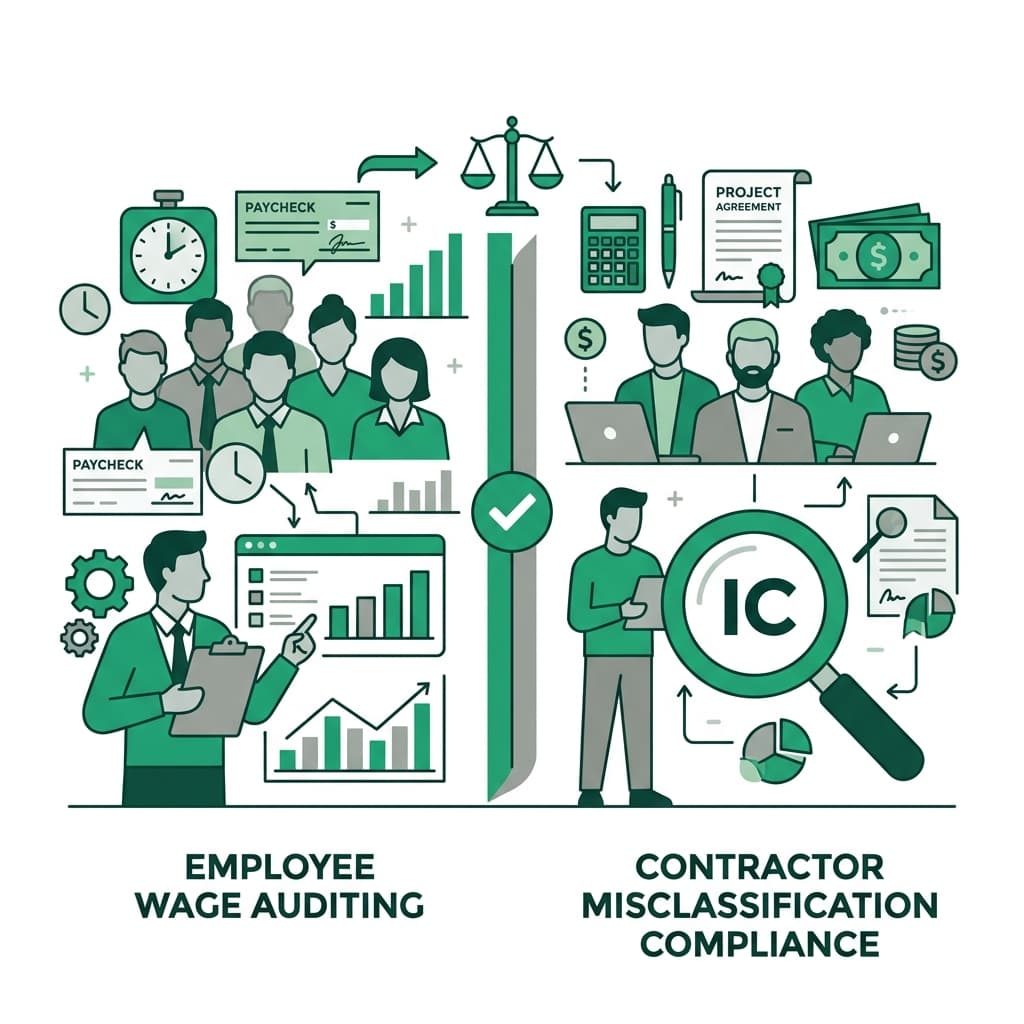
Perform Regular Classification Audits: Use objective checklist tools to review all 1099 positions, ensuring that contractors are performing specialized services that are not integral to the company's core business offerings.
5. Next Steps for HR: Proactively Securing Your Compliance
To evaluate your company's contractor relationships and audit your compensation compliance:
Audit Independent Contractor Status: Review your worker classifications and schedule tracking systems using the ADA Process Timeline Calculator.
Evaluate FLSA Overtime Exposures: Track piece-rate and hourly requirements systemically using the FMLA Leave Calculator.
Identify Operational Control Risks: Audit supervisor scheduling and communication controls using the FMLA Interference Risk Evaluator.
If you are ready to secure your organization with an unalterable audit log of employee agreements, W-2 onboarding verification, and compliant time-tracking, Start Your Free Trial of AI SoloHR Today.
Disclaimer: This case study is for educational and informational purposes only and does not constitute legal advice. AI SoloHR does not provide legal opinions or represent businesses in judicial disputes. For complex compliance questions, please consult qualified labor counsel.
Share this case study
Factual DisclaimerThis case study is published for educational and informational purposes only and does not constitute legal advice. AI SoloHR does not provide legal opinions or represent businesses in judicial disputes. For complex compliance questions, please consult qualified labor counsel.
Analyze the FMLA leave retaliation claim in Linson v. ODRC. Learn why documentation safety and objective incident logs are critical for U.S. employer compliance.
 Click to expand