ERISA Retaliation & Self-Insurance Spikes: Kairys v. Southern Pines Trucking
Analyze the ERISA retaliation claim in Kairys v. Southern Pines Trucking. Learn how self-insured healthcare cost spikes can trigger Section 510 liability.
Case at a Glance
Court / Jurisdiction:U.S. Court of Appeals for the Third Circuit
Date Decided:2026-07-25
Official Citation:75 F.4th 153 (3d Cir. 2026)
Judicial Outcome:Affirmed Judgment for Employee on ERISA Retaliation & Interference
Click to expand
Case at a Glance
In Kairys v. Southern Pines Trucking, Inc. (2026), the U.S. Court of Appeals for the Third Circuit reviewed a high-stakes ERISA Section 510 retaliation and interference claim. A former Vice President of Sales was terminated four months after undergoing hip replacement surgery, which had caused a substantial spike in the employer's self-insured health insurance costs.
Analyze ERISA fiduciary duties and reservation of rights in In re Unisys. Learn why informal benefit promises create huge legal liabilities for employers.
Although a jury returned verdicts for the employer on the employee’s age and disability discrimination claims, the District Court judge independently found for the employee on the ERISA claim, awarding front pay and substantial attorneys' fees.
The Third Circuit affirmed, confirming that an employer’s benefit-related financial motives are legally distinct from age or disability discrimination, and providing critical compliance rules for self-insured employers.
1. Factual Background
Click to expand
Recruitment, Arthritis, and Hip Replacement
In early 2026, the owner and Chief Executive Officer of Southern Pines Trucking, Inc., Pat Gallagher, recruited Thomas Kairys to serve as the company's Vice President of Sales. At the time, the company had only a few operational employees. Shortly after starting, Kairys was diagnosed with degenerative arthritis, requiring a total hip replacement surgery.
Kairys requested one week of vacation time for the procedure from his supervisor, which was approved. He underwent the surgery on January 30, 2026, and returned to work after missing seven days.
Self-Insurance Spikes and the Highlighted Invoice
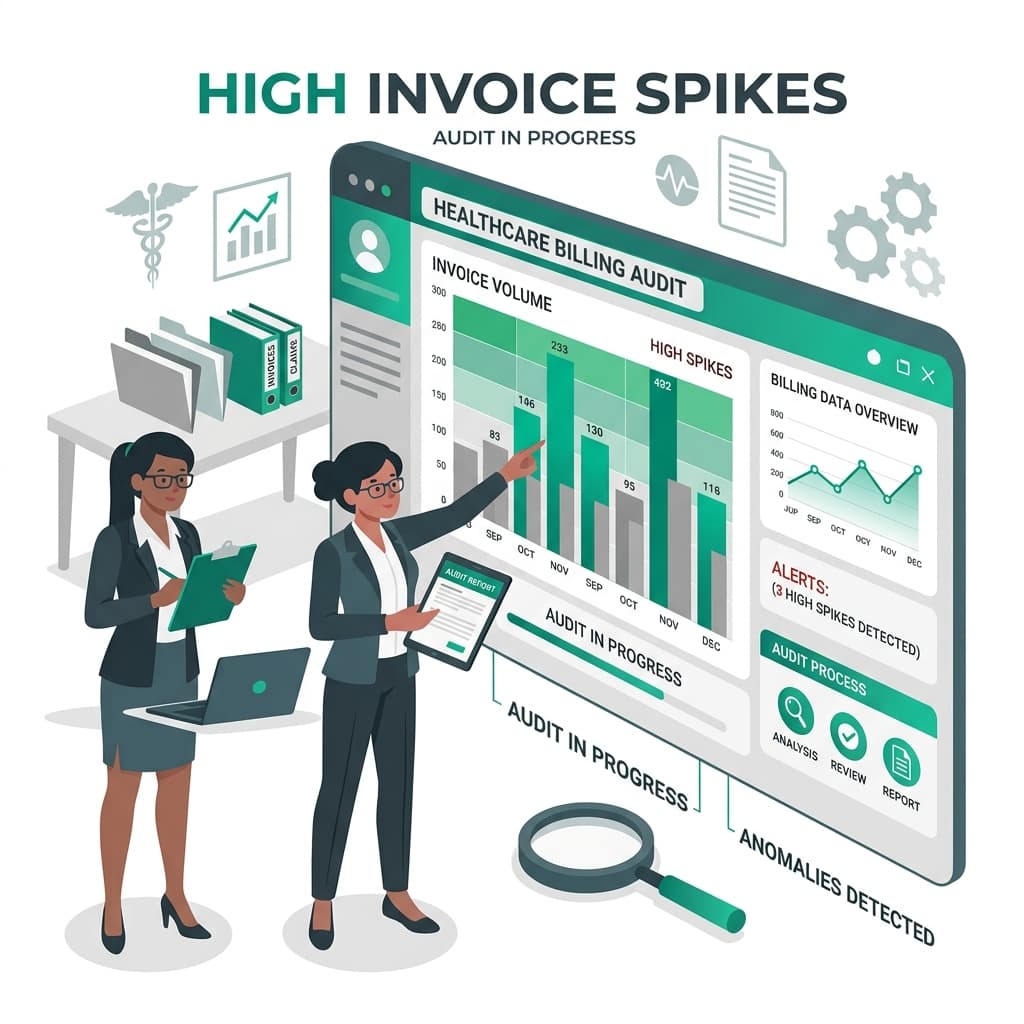
Because Southern Pines was a self-insured employer, it paid a portion of all healthcare claims made under its employee policy. Following Kairys's surgery, the company’s health insurance invoice for the week of February 10–16, 2026, spiked to $23,277.07.
This was the highest weekly amount the company had paid in a six-month period by nearly $8,000, and $13,394.94 of that amount was specifically billed under the employee payroll code "SP01," which represented Kairys. During subsequent legal discovery, it was revealed that this specific "SP01" row was highlighted on every single healthcare invoice Southern Pines produced.
The "Lay Low" Warning and Unexplained Termination
After Kairys returned to the office in February 2026, the company’s Vice President of Operations, Bob Gallagher (the CEO's brother), warned Kairys to "lay low" because the CEO, Pat Gallagher, was extremely upset about the high cost of the surgery.
Four months later, on June 23, 2026, Pat Gallagher terminated Kairys’s employment. The CEO claimed that the position was being eliminated because the company’s cryogenic trucking sales potential was "maxed out." However, within two months, the company hired a new employee from an affiliate business to work part-time in a hybrid operational and sales support role that assumed several of Kairys's former duties.
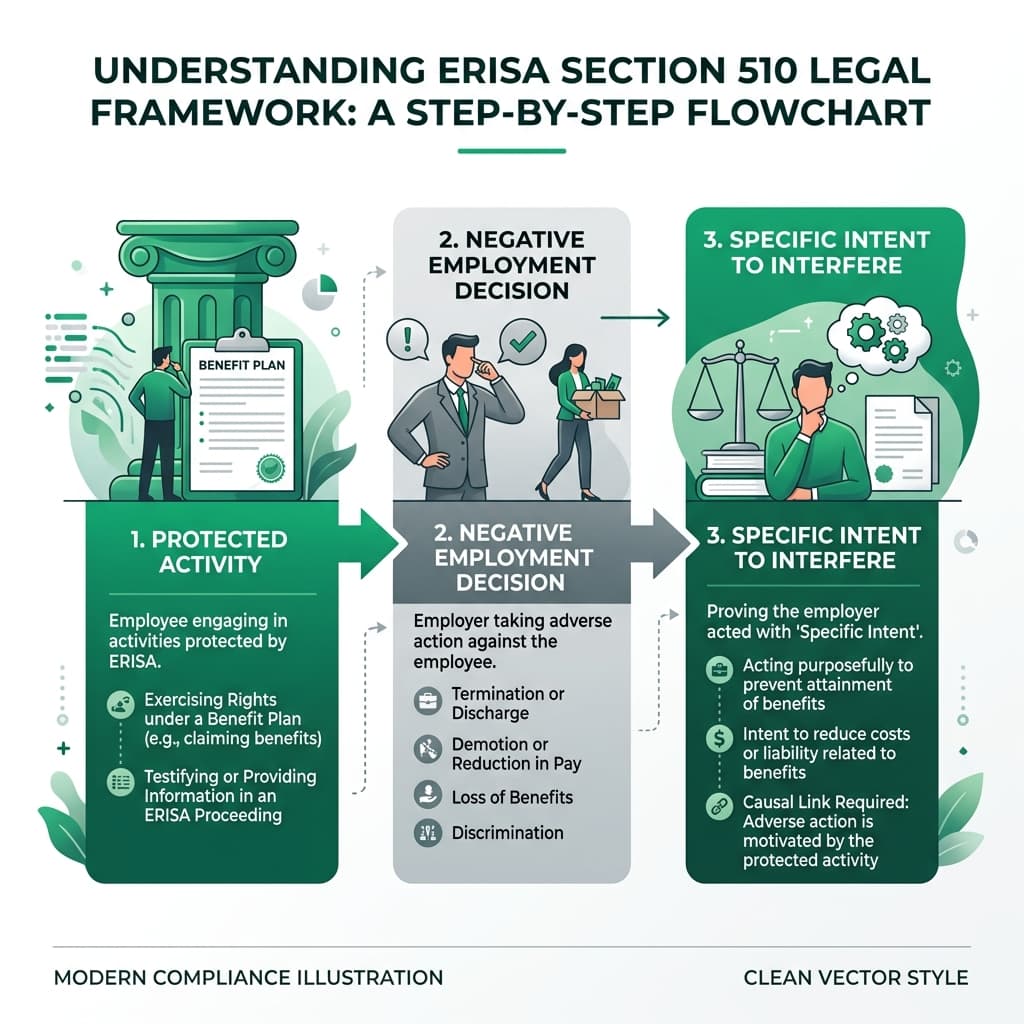
In federal retaliation and interference claims under Section 510 of the Employee Retirement Income Security Act (ERISA), plaintiffs must demonstrate that the employer acted with the specific intent to interfere with or retaliate for the use of protected benefits.
In this case, Kairys presented two critical pieces of direct evidence. First, the physical invoices produced during discovery showed that the row indicating Kairys's specific medical claims expenses was consistently highlighted. This proved that management was actively auditing and monitoring the individual financial impact of his surgery.
The Impact of Internal Executive Conversations
Second, the Vice President of Operations' statement advising Kairys to "lay low" because the CEO was upset about the surgery costs provided a direct link between the cost audit and management's animus. Even though the employer argued that the comment was hearsay or casual office talk, the court treated it as a significant reflection of the CEO's state of mind.
EEOC Compliance Alert
Under the federal ERISA guidelines enforced by the U.S. Department of Labor Employee Benefits Security Administration (EBSA), any evidence showing that an employer tracked individual claims costs and discussed them in connection with employment decisions is treated as direct proof of a Section 510 violation.
Self-insured employers must strictly separate claims invoicing from personnel management.
3. Legal Analysis & The Court's Ruling
Click to expand
Advisory vs. Binding Verdicts Under the Seventh Amendment
Because Kairys sought equitable relief (front pay and attorneys' fees) rather than legal damages on his ERISA claim, he had no right to a jury trial on that count. The trial court utilized an advisory jury, which returned a verdict in favor of the employer on all claims, including ERISA.
However, the District Court judge chose to reject the advisory verdict on ERISA and independently found that the employer had retaliated. Southern Pines appealed, arguing that under the Seventh Amendment, the judge was bound by the jury's factual findings on the common claims (ADA and age discrimination).
Defining the Distinct Legal Elements of ERISA Section 510
The Third Circuit Court of Appeals rejected the employer's argument. The Court explained that while a judge is bound by a jury's findings on common facts, a judge is only bound by findings that are necessarily implied by the jury's verdict.
In this case, the jury's finding that Southern Pines did not discriminate against Kairys based on age or disability did not necessarily mean it did not retaliate against him for his health insurance claims. An employer can be motivated purely by the financial cost of an employee's medical claims (which violates ERISA) without harboring animus toward their age or physical disability status.
Why General Verdict Ambiguity Does Not Bar Judicial Rulings
Because the jury returned a general verdict without specific findings of fact, it was unclear exactly why they rejected the ADA and age discrimination claims. They could have found that Kairys was not "disabled" under the law, or that his request for a week of leave was not a motivating factor under the ADA.
Because the jury's verdict did not necessarily resolve the factual question of whether the company fired Kairys to avoid health insurance costs, the District Court was free to make its own factual findings. The Third Circuit affirmed the $67,500 front pay award and the $111,981.79 award for attorneys' fees and costs under 29 U.S.C. § 1132(g).
4. In-Depth HR Practical Takeaways
To prevent health plan cost spikes from translating into costly federal ERISA retaliation claims, HR departments must implement the following administrative firewalls and protocols:
Action 1: Erect Firewalls to Restrict Executive Access to Claims Data
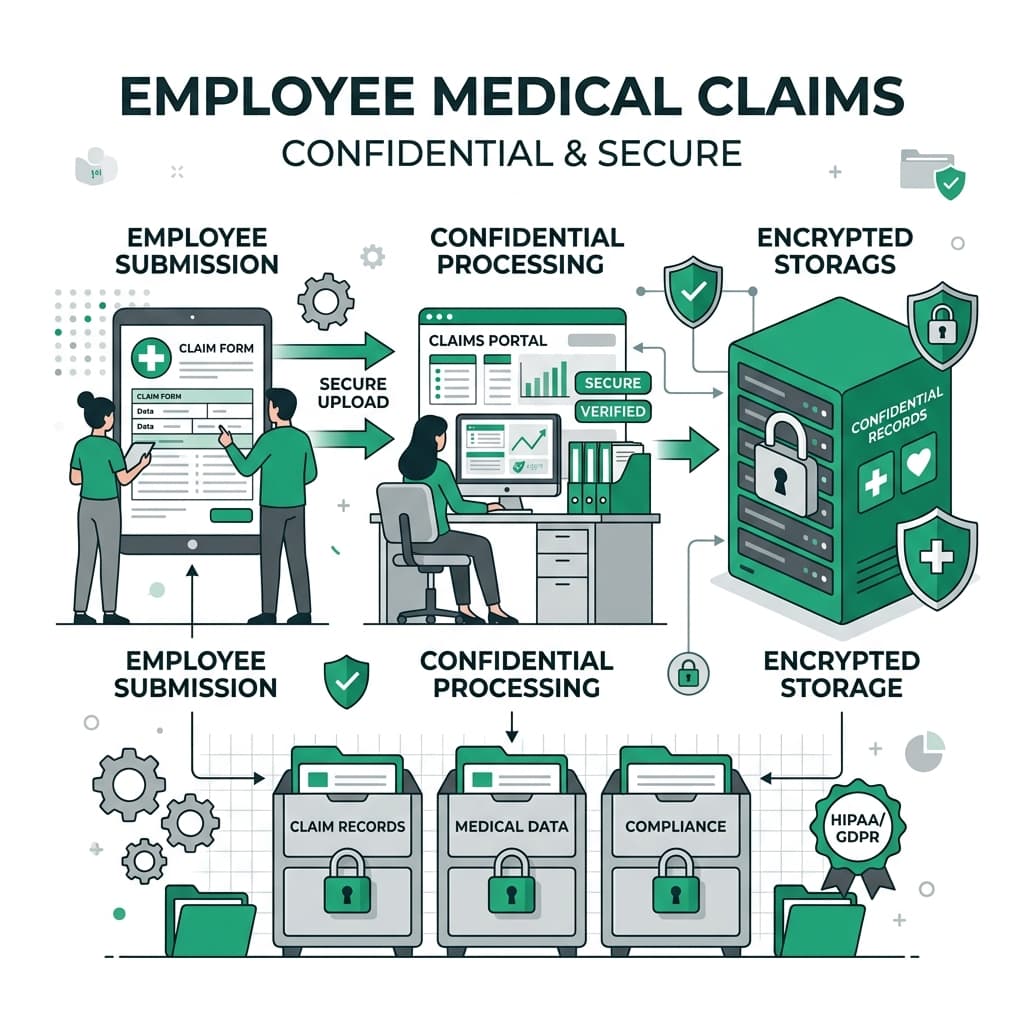
Anonymize Healthcare Invoices: Self-insured employers should ensure that all weekly or monthly claims invoices sent by Third-Party Administrators (TPAs) are strictly anonymized. Executive leadership, operations managers, and supervisors should never have access to invoices showing individual names, employee payroll codes, or highlighted rows representing specific employee treatments.
Designate a Single Benefits Administrator: Restrict access to detailed claims data to a single, designated benefits coordinator who is completely isolated from hiring, firing, and performance evaluation decisions. This coordinator must maintain strict confidentiality, preventing claims details from entering general management discussions.
Action 2: Establish Strict Supervisor Training on Cost-Related Remarks
Conduct Cost-Conscious Communication Training: Train all managers and officers that comments regarding the cost of an employee’s healthcare claims, surgeries, or benefits usage are strictly prohibited. A supervisor advising an employee to "lay low" because of benefits costs creates an immediate, un-dismissible inference of discriminatory intent.
Implement Safe Reporting Channels: Ensure that employees have a clear, confidential path to report benefits-related harassment or supervisor comments directly to HR, allowing the organization to investigate and correct the behavior before it leads to termination and litigation.
Action 3: Secure Objective Position Elimination Documentation
Document Restructuring Prior to Cost Spikes: If an organization must eliminate a position due to economic shifts or "maxing out" sales potential, the business rationale, financial data, and transition plans must be thoroughly documented in writing before any employee medical claims spikes occur.
Avoid Immediate Hybrid Replacements: If a role is eliminated, do not hire or transfer another employee into a substantially similar hybrid role within the immediate months following the termination. Doing so serves as clear evidence of pretext in federal court, destroying the employer's operational defense.
5. Next Steps for HR: Proactively Securing Your Compliance
To evaluate your company's benefits administration and ensure compliance with federal leave and accommodation rules:
Track Critical Accommodation Steps: Document and schedule all interactive process milestones chronologically using our ADA Process Timeline Calculator.
Audit Leave and Staffing Coverage: Ensure your medical leave tracking complies with federal limits using the FMLA Leave Calculator.
Assess Organizational Risk: Run a risk diagnostic of your supervisor's communication and management behaviors using the FMLA Interference Risk Evaluator.
If you are ready to secure your business with an unalterable audit log of benefit administrations, leave approvals, and compliance workflows, Start Your Free Trial of AI SoloHR Today. Take control of your HR compliance and eliminate litigation risks.
Disclaimer: This case study is for educational and informational purposes only and does not constitute legal advice. AI SoloHR does not provide legal opinions or represent businesses in judicial disputes. For complex compliance questions, please consult qualified labor counsel.
Share this case study
Factual DisclaimerThis case study is published for educational and informational purposes only and does not constitute legal advice. AI SoloHR does not provide legal opinions or represent businesses in judicial disputes. For complex compliance questions, please consult qualified labor counsel.
Analyze the FMLA leave retaliation claim in Linson v. ODRC. Learn why documentation safety and objective incident logs are critical for U.S. employer compliance.
 Click to expand