FMLA & ADA Discrimination Risks: Caldwell v. UniFirst Corporation
Analyze the FMLA leave and ADA retaliation risk in Caldwell v. UniFirst. Learn why requiring employees to be 'fully functional' violates U.S. employment laws.
Case at a Glance
Court / Jurisdiction:Missouri Court of Appeals
Date Decided:2026-05-28
Official Citation:Mo. App. E.D. 2026 (No. ED111923)
Judicial Outcome:Reversed JNOV for Employee on Disability Discrimination & Retaliation
Click to expand
Case at a Glance
In Caldwell v. UniFirst Corporation (2026), the Missouri Court of Appeals reviewed a major jury verdict in favor of a District Service Manager who was terminated after taking FMLA leave and requesting back injury accommodations. The case serves as an essential compliance warning against standard but illegal HR practices, such as maintaining "100% healed" or "fully functional" return-to-work policies, and highlights the risk of supervisor conversations that reveal discriminatory intent.
Analyze the FMLA leave retaliation claim in Linson v. ODRC. Learn why documentation safety and objective incident logs are critical for U.S. employer compliance.
Analyze FMLA privacy and mental health leave constraints in Remmick v. Magellan Health. Learn why forced medical disclosure to coworkers is an HR violation.
The Plaintiff, Scott Caldwell, worked as a District Service Manager (DSM) at UniFirst’s St. Louis office from 2012 through his termination in 2026. As a DSM, Caldwell was a mid-level manager supervising a District Service Supervisor (DSS), several Route Service Representatives (RSRs), and warehouse personnel.
His primary duties involved managing accounts, training staff, and performing administrative functions. Although the DSM job description included "route coverage" as an essential function—which required lifting up to 80 pounds—Caldwell only covered routes when no RSRs or DSS were available, averaging once or twice a month.
In early 2026, Caldwell sustained a serious back injury (disc extrusion and lumbar disc protrusion) while covering a route. To help him continue working, the branch manager at the time, J.S., provided an accommodation: a warehouse helper was assigned to accompany Caldwell on the rare occasions he covered a route to assist with heavy lifting.
With this helper accommodation, Caldwell successfully performed his duties, and corporate representatives admitted he was fully capable.
The New Manager's Hostility
In late 2026, Michael Dean Seever II took over as the Branch Manager. Seever immediately demonstrated hostility toward Caldwell’s medical restrictions. When Caldwell submitted a physician's note requesting temporary light duty after a pain-management injection, Seever phoned him, berated the request as "unacceptable," and told him to "find a new doctor." Seever also mocked Caldwell's weight, telling him that if he lost weight he wouldn't have back problems, and privately stated he only wanted "full" and "able-bodied" employees on his team.
2. Revocation of Accommodations & Forced FMLA Leave
Click to expand
Revoking the "Helper" and Declaring "Undue Hardship"
In March 2026, as Caldwell prepared for back surgery, UniFirst's Human Resources department drafted a "non-reasonable accommodation letter" which Seever signed and issued to Caldwell. The letter claimed that UniFirst could no longer accommodate Caldwell’s 10-pound lifting restriction and that no reasonable accommodations were available that would not cause the company "undue hardship."
The letter informed Caldwell that he must be "fully functional" to return to his role, which Seever testified meant performing all duties without any restrictions or accommodations. As a result, UniFirst forced Caldwell to go on FMLA leave starting March 13, 2026.
The Supervisor's Scheme to "Burn Up" Protected Time
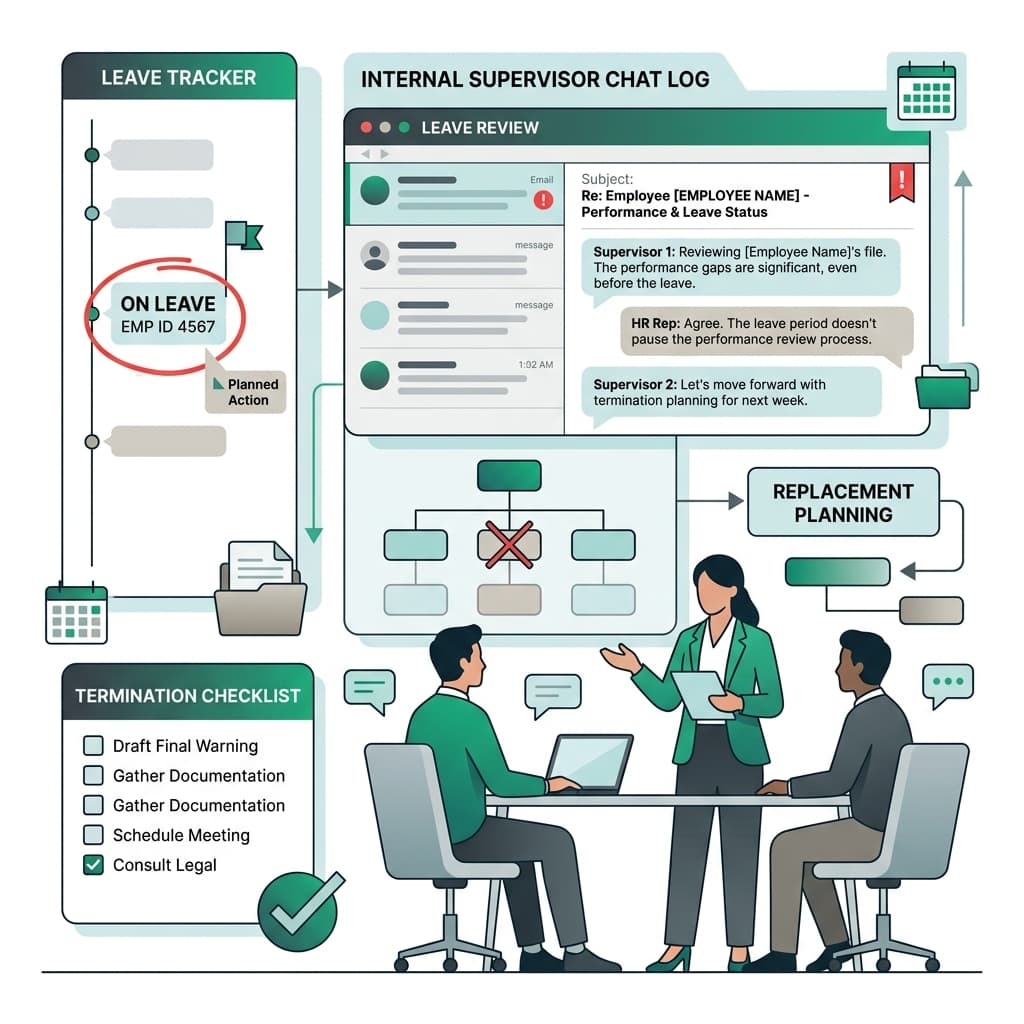
During the litigation, a crucial piece of testimony emerged from one of Caldwell's coworkers. The coworker testified that Seever frequently discussed "ways to get rid of Caldwell" because of his persistent light-duty notices and restrictions.
The coworker revealed that Seever believed Caldwell was faking his injury, mocked him when he lifted items, and actively plotted to force Caldwell onto leave to "burn up" his protected FMLA and discretionary leave time, thereby clearing a path to terminate him.
Seever was quoted as saying that Caldwell "going out for surgery was a perfect excuse to get rid of him."
3. Legal Analysis & The Court's Ruling
Click to expand
The "100% Healed" Rule is a Per Se Violation
The primary legal issue in Caldwell centered on UniFirst's requirement that Caldwell be "fully functional" (i.e., 100% healed and restriction-free) before being allowed to return. Under federal Americans with Disabilities Act (ADA) and state Missouri Human Rights Act (MHRA) guidelines, a policy that requires an employee to be fully recovered without restrictions before returning to work is a per se violation of the law.
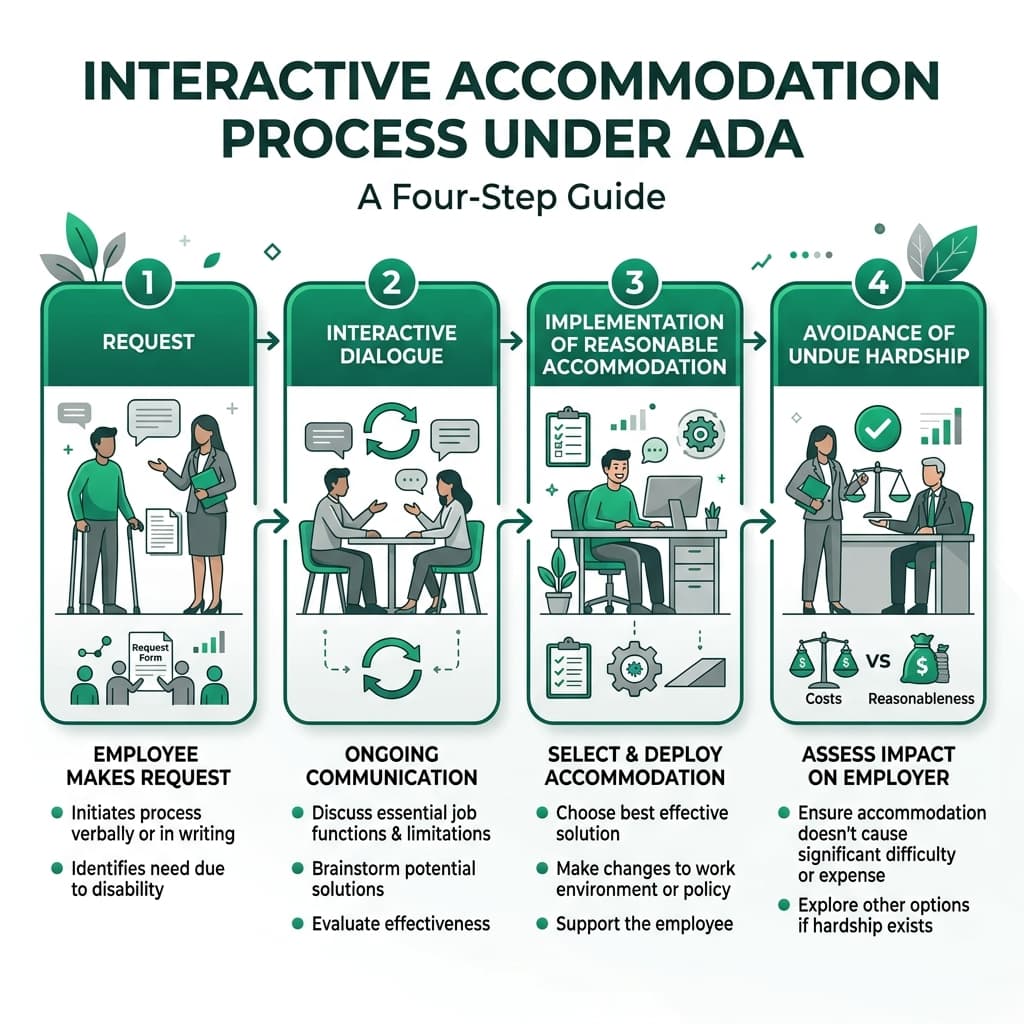
It completely bypasses the employer's statutory duty to engage in the interactive process and evaluate reasonable accommodations.
The Court of Appeals emphasized that the 80-pound lifting requirement was a manner of performing route coverage, not the essential function itself. Because Caldwell could cover routes using a helper or carts, he was a "disabled person" under the law who could perform the essential functions of his job with a reasonable accommodation.
EEOC Compliance Alert
Requiring an employee to be "100% healed" or "fully functional" before returning to work is an automatic compliance violation. HR must always engage in an individualized interactive process to determine if restrictions can be accommodated, rather than applying blanket recovery rules.
Defining "Opposition" in Retaliation Claims
UniFirst argued that Caldwell had not engaged in "protected activity" under the MHRA. However, the Court pointed to an email Caldwell sent on May 8, 2026. In the email, Caldwell wrote that he was ready and willing to work, stated that he disagreed with the claim that lifting 80 pounds five days a week was an essential function of his job, and detailed his concern that he was forced onto FMLA leave immediately after filing a workers' compensation claim.
The Court ruled that this email constituted clear opposition to discriminatory practices, supporting his retaliation claim.
The Court of Appeals reversed the trial court's JNOV (Judgment Notwithstanding the Verdict) on the disability discrimination and retaliation claims, reinstating the jury's verdict in favor of Caldwell. However, the Court affirmed JNOV on the workers' compensation retaliation claim, finding insufficient evidence that the filing of the workers' comp claim itself was a contributing factor to the termination.
4. HR Practical Takeaways for Leave & Disability Management
To safeguard your organization from the multi-million dollar liabilities demonstrated in this case, HR teams must enforce the following strict compliance measures:
Action 1: Eliminate "Fully Functional" or "100% Healed" Return Rules
Prohibit Restriction-Free Requirements: Ban any manager from stating that an employee cannot return to work until they are "100% healed" or "have no restrictions." Ensure your handbooks and return-to-work letters reflect this.
Individual Interactive Audits: For every doctor's note listing a restriction, initiate a formal interactive dialogue. Document the options explored, the cost of accommodations, and the exact operational impact before claiming "undue hardship."
Action 2: Audit Manager Discussions and Internal Collusion Risks
Train Supervisors on Retaliation: Train managers that discussing "ways to get rid of" an employee who requests accommodation is direct evidence of discriminatory animus that will defeat summary judgment in court.
Enforce Objective Discipline Trails: Any performance issues must be documented objectively prior to an employee requesting leave. If a manager starts plotting termination post-injury, HR must intervene immediately to pause disciplinary action.
Action 3: Differentiate "Essential Functions" from "Manner of Performance"
Review Job Description Metrics: Ensure job descriptions define the core goal of a role rather than a specific physical manner. If a task is only performed 1-2 times a month, or can be completed using mechanical assistance (carts) or team support (helpers), it may not be legally classified as an unaccommodatable essential function.
Action 4: Centralize Leave and Accommodation Workflows
Use Cloud-Based Compliance Tracking: Do not leave accommodation dialogues and return-to-work clearance emails in supervisors' local email accounts. Use a secure, central system to log all interactive process steps.
5. Next Steps for HR: Proactively Securing Your Compliance
To audit your company's exposure to leave and accommodation discrimination risks, use our interactive tools:
Assess Accommodation Paths: If an employee has complex physical limitations, outline your required interactive workflow using the ADA Process Timeline Calculator.
Evaluate Return-to-Work Risk: Run a diagnostic on your manager's communication behaviors with the FMLA Interference Risk Evaluator.
Track Leave Balances Legally: Replace spreadsheets with our secure FMLA Eligibility & FTE Calculator to ensure you do not "burn up" protected time unlawfully.
If you want to secure your workplace with an unalterable, compliant audit log of every interactive process and leave request, Start Your Free Trial of AI SoloHR Today.
Disclaimer: This case study is for educational and informational purposes only and does not constitute legal advice. AI SoloHR does not provide legal opinions or represent businesses in judicial disputes. For complex compliance questions, please consult qualified labor counsel.
Share this case study
Factual DisclaimerThis case study is published for educational and informational purposes only and does not constitute legal advice. AI SoloHR does not provide legal opinions or represent businesses in judicial disputes. For complex compliance questions, please consult qualified labor counsel.
Analyze the ADA reasonable accommodation and shift requirement standard in Ferguson v. UH. Learn when staffing demands outweigh individual shift preferences.
 Click to expand