Using AI for HR drafts safely
How to use AI-generated HR drafts as a starting point while keeping human review, policy judgment, and compliance boundaries intact for U.S. employer workflows.
Built for U.S. employers and small-business HR teams.
Key takeaways
- Draft only
- Human review
- No automatic sending
- No legal advice
Hi team, as we prepare for Jane's return, we will follow the accommodation schedule outlined in the case timeline...
What AI should do inside an HR workflow
AI can help turn case facts into draft emails, summaries, and briefs. It should not make final HR decisions or send messages without review.
The safest role for AI is first-draft support
AI is most useful when it reduces blank-page work and organizes existing facts, while HR stays responsible for judgment, policy interpretation, and the final message.
Context matters more than speed
A helpful draft starts with the case details HR already has, not with a generic prompt disconnected from the workflow.
A safe review checklist for HR-generated drafts
Before using a draft, confirm facts, tone, policy alignment, legal boundaries, and whether professional guidance is needed.
Review the substance first
Make sure the draft reflects the actual case.
Review the boundary next
Make sure the draft stays within an appropriate HR role.
How AI SoloHR keeps drafts inside a controlled workflow
AI SoloHR ties draft generation to the underlying case so HR can review context, edit output, and keep the communication history connected to the same record.
A Review Checklist by Draft Type
Employee-Facing Messages
Maintaining a chronological timeline of check-ins and resolution steps is crucial for employee relations.
Manager-Facing Messages
Streamlining your system setup allows administrative HR actions to run smoothly and predictably.
Leadership Summaries and Internal Notes
Maintaining a chronological timeline of check-ins and resolution steps is crucial for employee relations.
Safe and Unsafe Input Patterns
Inputs That Improve Draft Quality
Setting up custom categories and private files creates a clear structure for ongoing documentation.
Inputs That Create Accuracy Risk
Streamlining your system setup allows administrative HR actions to run smoothly and predictably.
Inputs That Need Extra Review Before Use
Streamlining your system setup allows administrative HR actions to run smoothly and predictably.
Where AI Stops and Human Judgment Starts
Fact Accuracy Decisions
Setting up custom categories and private files creates a clear structure for ongoing documentation.
Policy Interpretation Decisions
Setting up custom categories and private files creates a clear structure for ongoing documentation.
Escalation and Counsel Decisions
Connecting integrated tools ensures case notes and follow-up reminders stay visible inside one workspace.
How this guide fits the real workflow
A guide page is most useful when HR already knows the issue but needs a clearer operating pattern. The goal is not just to define the topic. It is to make the next step, the right record, and the workflow sequence easier to see before something slips.
- Use the guide to standardize what should be documented
- Share the workflow with managers or teammates who need the same context
- Move into a template or a case workflow when the issue becomes active work
Important boundary for this content
This page is written for HR operations and education. It is meant to support documentation, workflow clarity, and communication planning. It does not provide legal advice, medical judgment, eligibility determinations, or automatic employment decisions.
AI SoloHR is designed to support case records, tasks, documents, timelines, and reviewed AI drafts inside one workflow. It is not a substitute for legal, medical, benefits, or policy review where those are needed.
Keep Exploring
Frequently asked questions
Can AI write HR emails for me?
AI can help create a first draft, but HR should review, edit, and approve the message before it is used. Sensitive HR communication should not be sent without human review.
What should HR review before using an AI draft?
HR should check facts, tone, policy alignment, confidentiality, and whether the issue requires legal or professional guidance before using any AI-generated content.
How does AI SoloHR handle AI-generated drafts?
AI SoloHR keeps drafts connected to the case context and designed for review. It is built to support operational drafting, not to replace HR judgment or provide legal advice.
Related Interactive Calculators & Tools
Related Compliance Articles & Guides
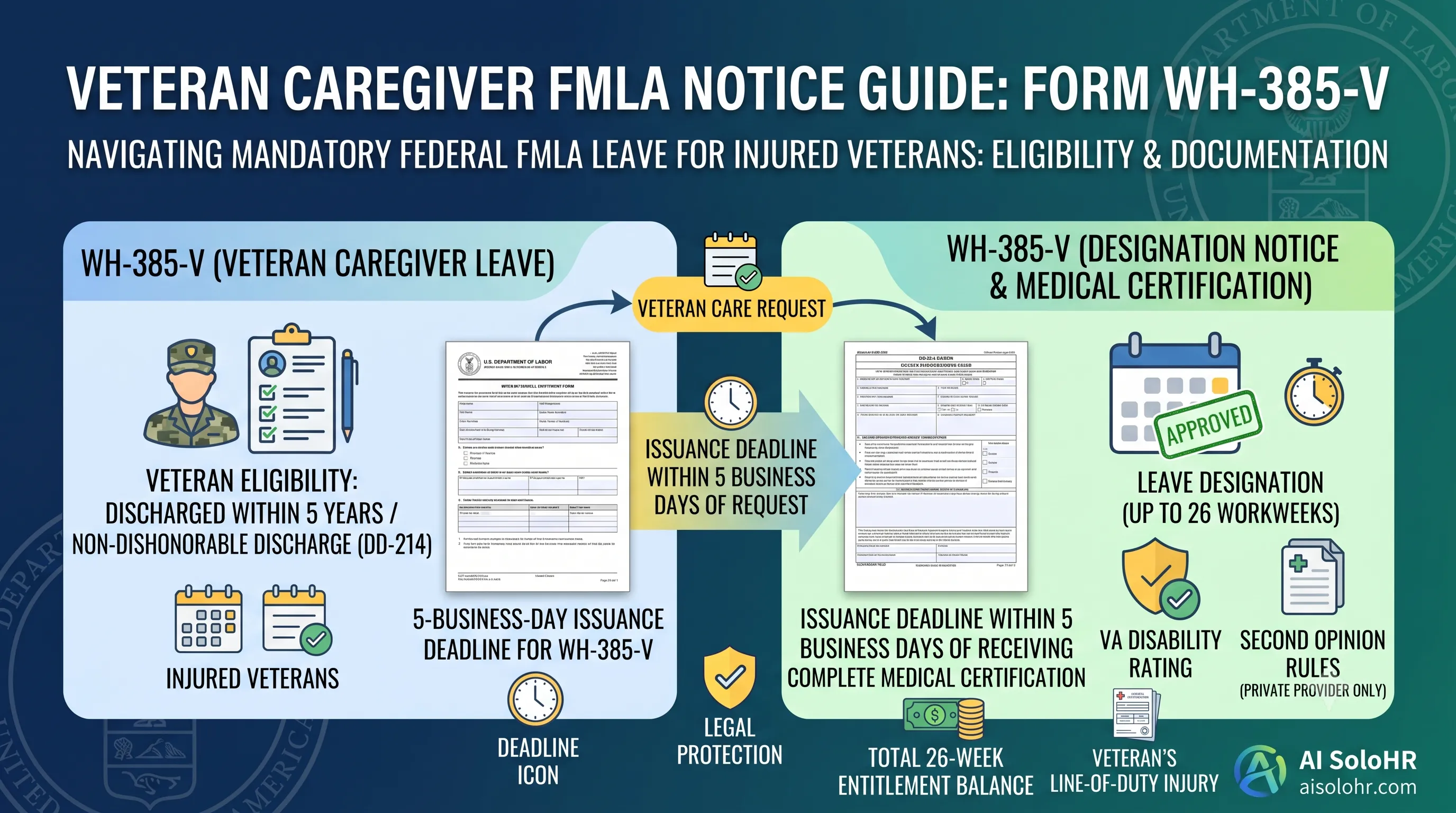
WH-385-V Instructions: Complete FMLA Veteran Caregiver Leave Certification Guide (2026)
A section-by-section guide to completing DOL Form WH-385-V for veteran military caregiver leave. Master the 5-year post-discharge rule, DD-214 verification, bad vs. good certification examples, and 26-week entitlement limits.
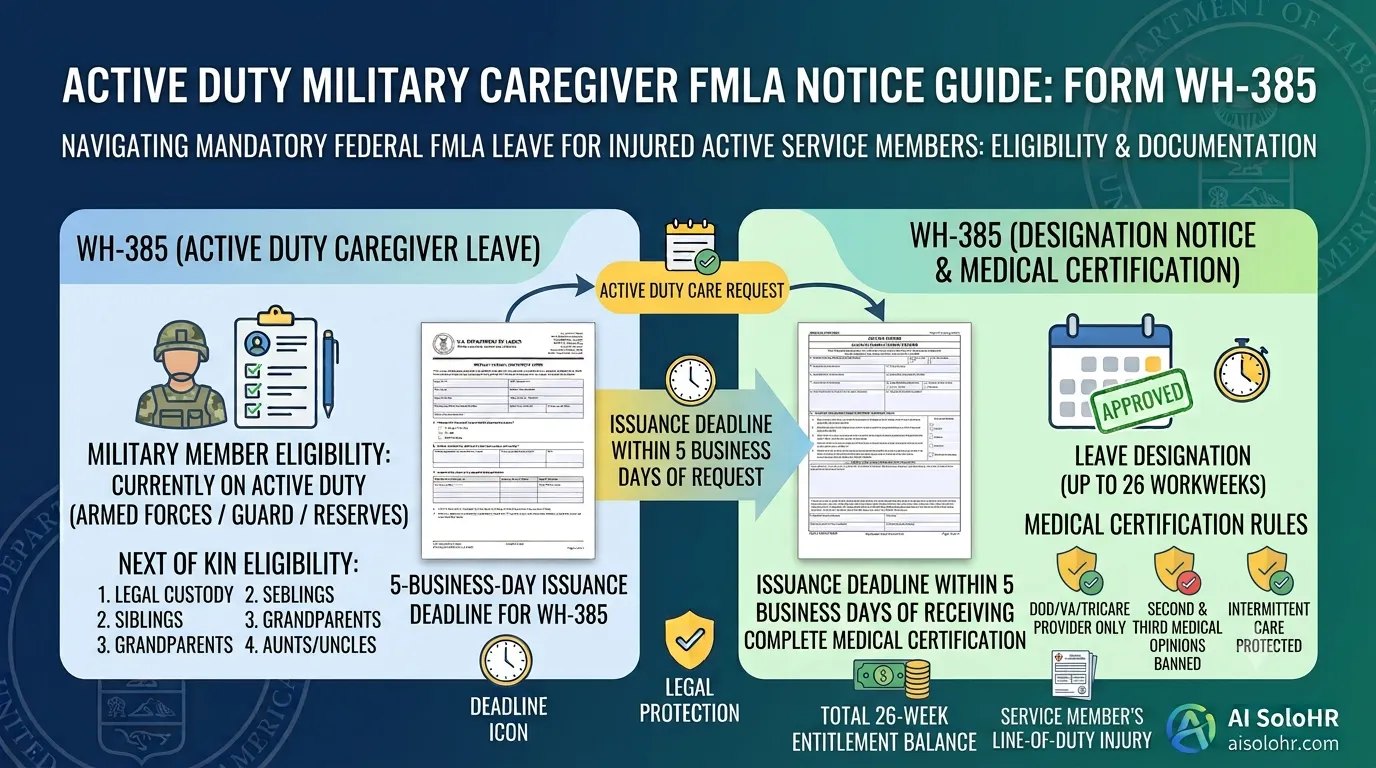
WH-385 Instructions: FMLA Military Caregiver Leave Certification Guide (2026)
A section-by-section HR guide to completing DOL Form WH-385 for active duty military caregiver leave. Master 26 workweeks entitlement, Next of Kin relationship rules, DOD medical certifications, and real-world case examples.
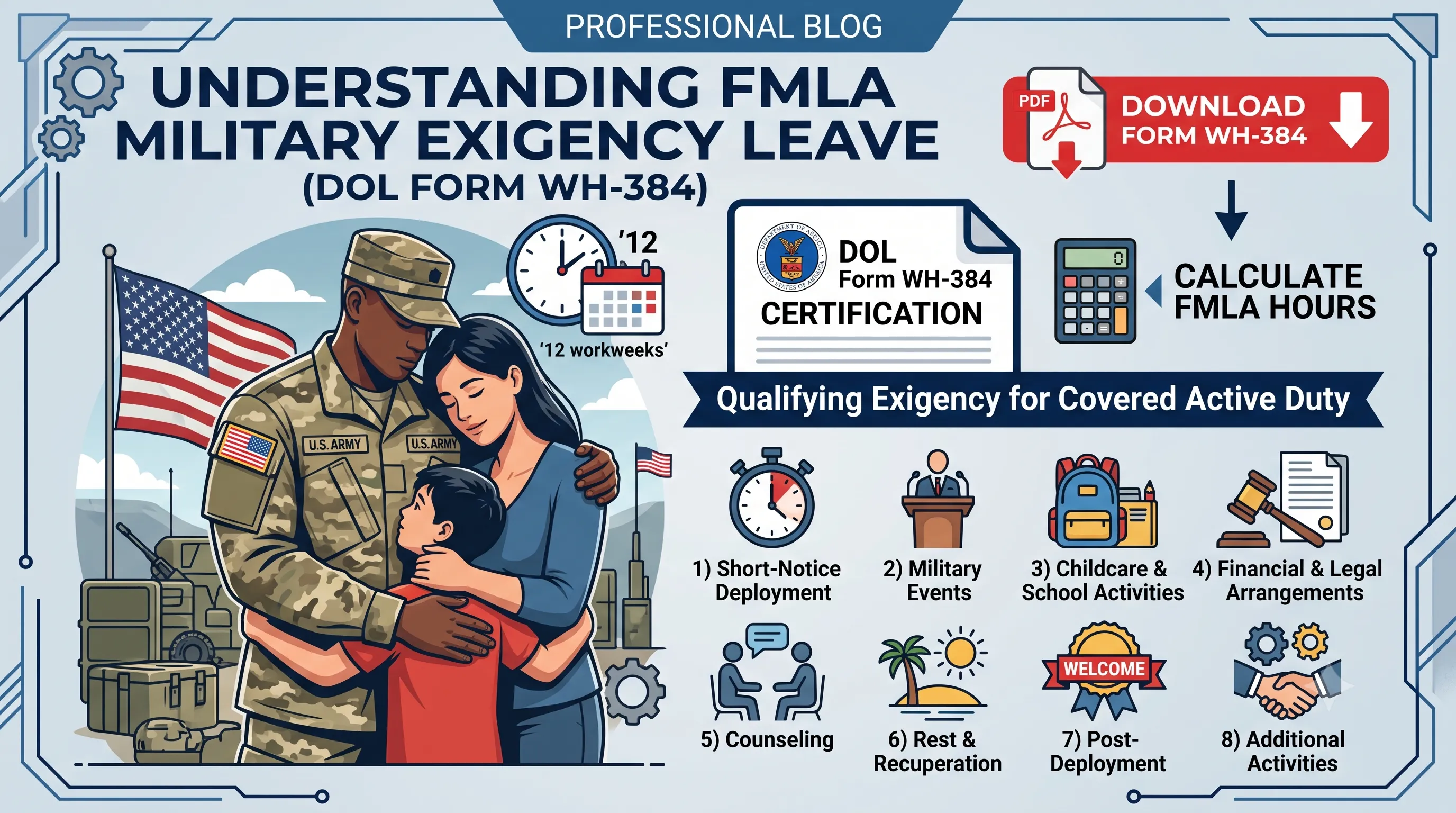
WH-384 Instructions: FMLA Qualifying Exigency Leave Certification Guide (2026)
A section-by-section HR guide to completing DOL Form WH-384 for military exigency leave. Master the 8 statutory exigency categories, active duty order verification, bad vs. good certification examples, and 12-week entitlement rules.
Manual Process Risk Warning
Static documents and manual spreadsheets are great for initial tracking. However, as deadlines pile up and files scatter, human errors can trigger costly regulatory compliance audits.
Put this guidance into action
AI SoloHR helps U.S. small-business HR teams turn manual compliance steps into tracked tasks, defensible timelines, secure document records, and reviewed AI drafts.
- 14-day full platform access
- Up to 3 active cases
- Up to 30 employee records
- All 7 U.S. case types unlocked
This resource is intended for U.S. HR operations and educational purposes only, and does not constitute legal advice. Consult a qualified professional or employment attorney regarding your specific federal and state compliance obligations.